
Speech Recognition - Ready for Prime Time?
- Posted in
- Smartphones
- Mobile
Processor Utilization - Precise Dictation
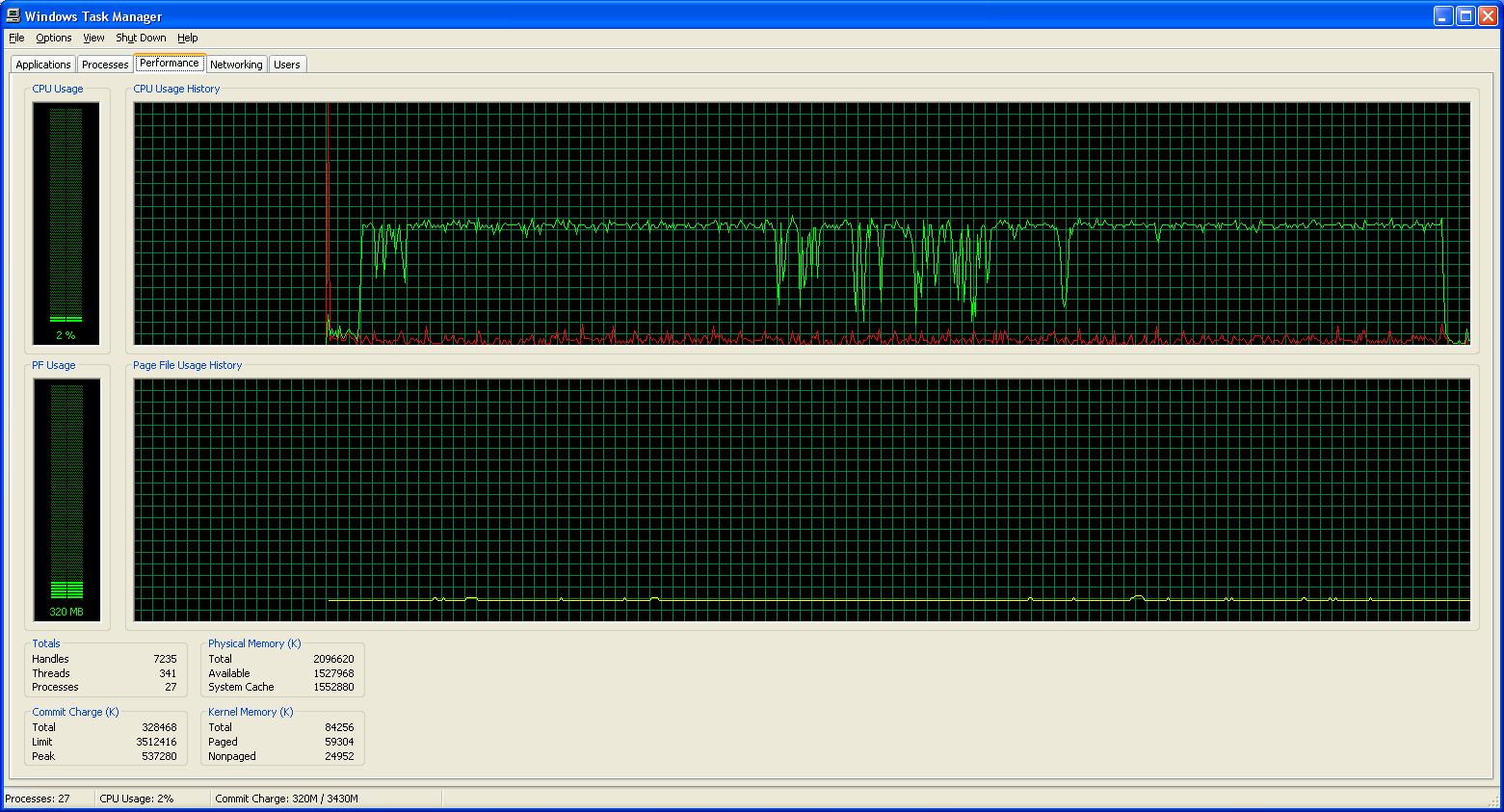
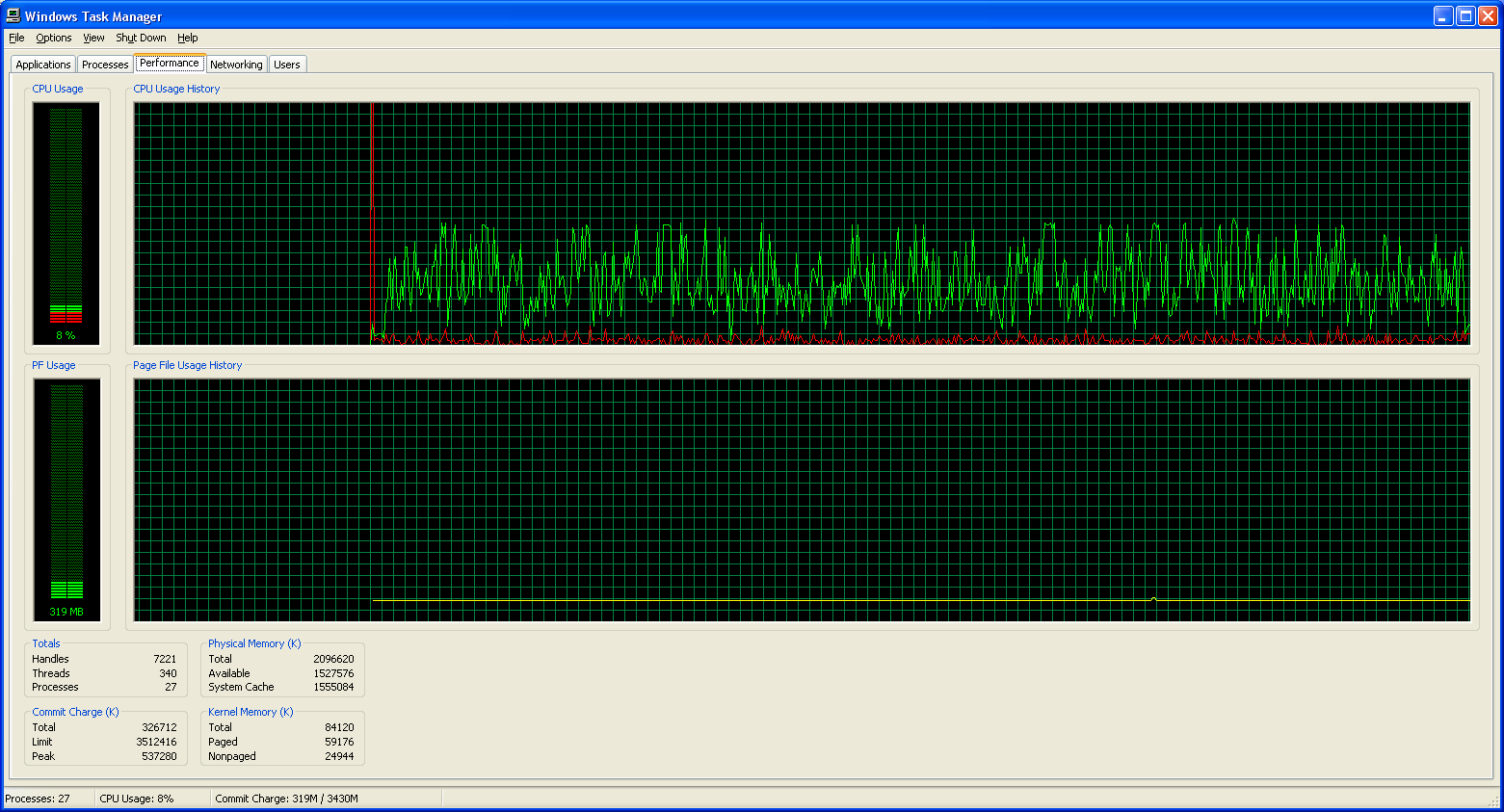
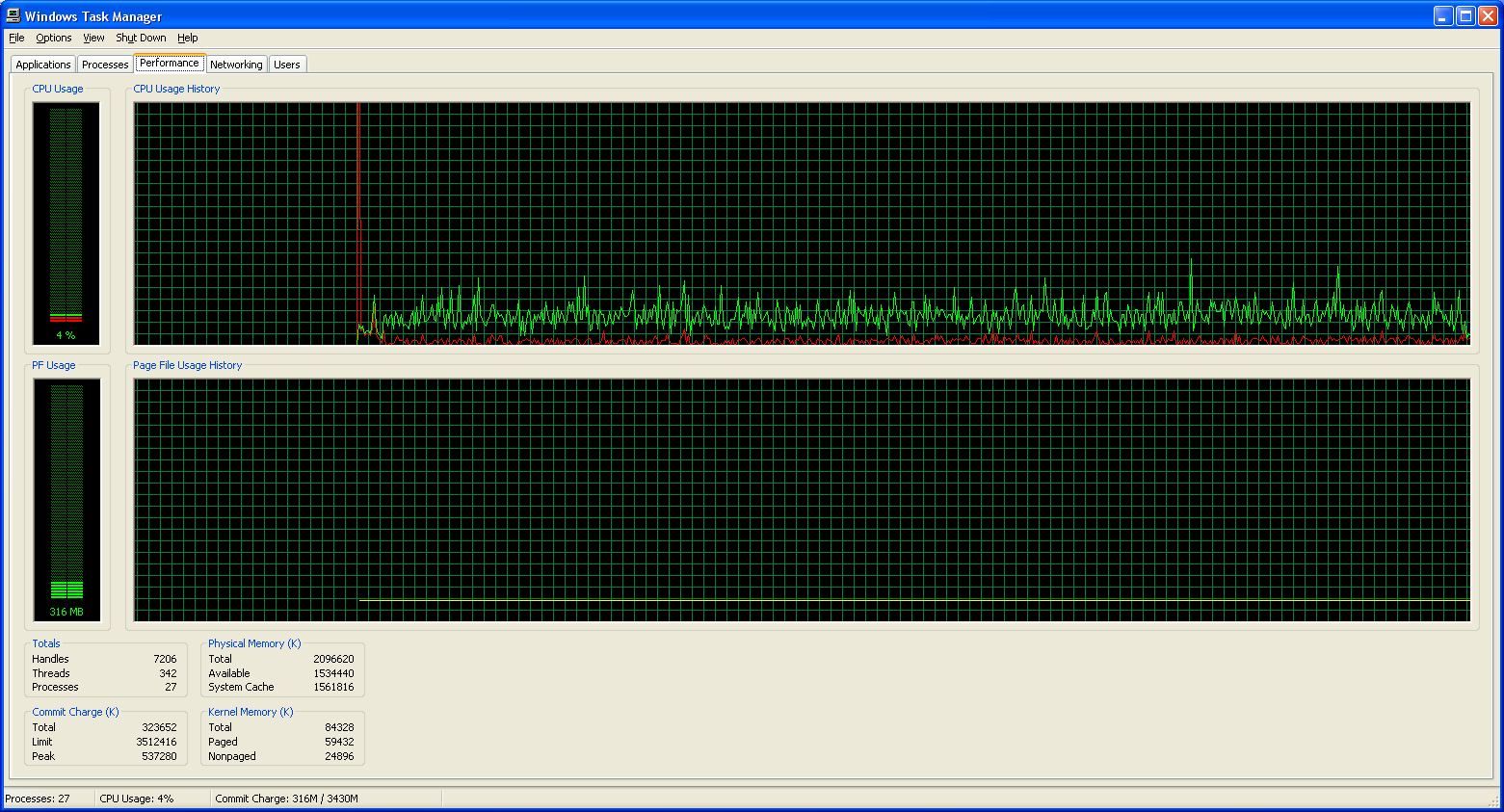
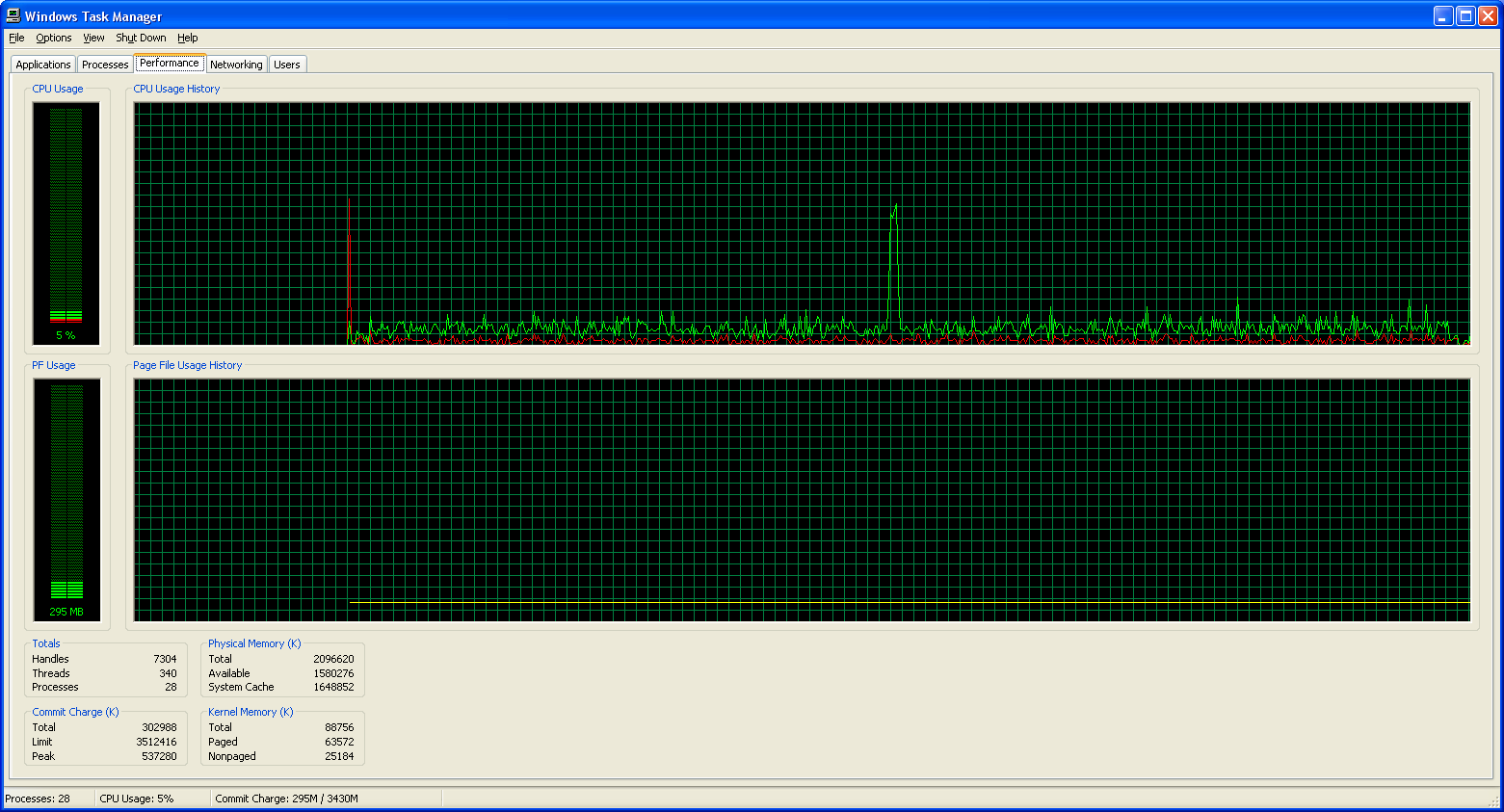
Now that we have some idea of the accuracy these solutions offer in terms of accuracy, what sort of CPU requirements are we looking at? As with our accuracy charts, we've got a separate section looking at the processor utilization of Dragon NaturallySpeaking when transcribing a WAV file. Below are screenshots of Windows Task Manager showing CPU usage during dictation. In retrospect, finding a utility to track average CPU utilization over time would have been more useful, but these screenshots should suffice for our purposes.
Dictation Processor Utilization
One thing is immediately clear: Dragon NaturallySpeaking requires far more CPU processing time than Microsoft Office. Even at the lowest accuracy setting, Dragon essentially matches the CPU usage of Microsoft's tool at its maximum accuracy setting. However, CPU usage and accuracy are only two of the aspects of this software package, and that much more difficult to describe "user experience" continues to be far preferable to me with Dragon NaturallySpeaking.
The second major point of interest is that having a second processor core does absolutely nothing for these speech recognition packages. (MS might even be able to run without difficulty on a Pentium 3, judging by the CPU usage.) Sure, if you're running multiple applications that are all trying to use the CPU, the second core can be useful. On the other hand, if the only thing you're doing is dictating speech, the current algorithms are clearly single threaded in nature. Given that accurate speech recognition depends in large part on recognizing the context of sounds -- this is especially true for homonyms like their, they're, and there -- there may be some difficulty associated with breaking the task into meaningful, discrete parts. However, difficult does not mean impossible, and with AMD, Intel, and all the other major CPU players moving towards multiple cores, further improvements in accuracy are likely going to require multithreaded algorithms.
Transcription Processor Utilization
As with dictating, transcribing an audio file also fails to benefit from multiple CPU cores. The good news is that processing times are much faster, because a single CPU core can chew through the waveforms as fast as possible. While the maximum accuracy mode didn't seem to do all that well with dictating, it did seem to handle a few phrases better when transcribing. It also takes longer, but if you're in a situation where you can start the transcription process and walk away for awhile, that shouldn't matter too much.
Now that we have some idea of the accuracy these solutions offer in terms of accuracy, what sort of CPU requirements are we looking at? As with our accuracy charts, we've got a separate section looking at the processor utilization of Dragon NaturallySpeaking when transcribing a WAV file. Below are screenshots of Windows Task Manager showing CPU usage during dictation. In retrospect, finding a utility to track average CPU utilization over time would have been more useful, but these screenshots should suffice for our purposes.
Dictation Processor Utilization
 |
| DNS8 Maximum Accuracy |
 |
| DNS8 Medium Accuracy |
 |
| DNS8 Minimum Accuracy |
 |
| MSWord Maximum Accuracy |
 |
| MSWord Medium Accuracy |
 |
| MSWord Minimum Accuracy |
One thing is immediately clear: Dragon NaturallySpeaking requires far more CPU processing time than Microsoft Office. Even at the lowest accuracy setting, Dragon essentially matches the CPU usage of Microsoft's tool at its maximum accuracy setting. However, CPU usage and accuracy are only two of the aspects of this software package, and that much more difficult to describe "user experience" continues to be far preferable to me with Dragon NaturallySpeaking.
The second major point of interest is that having a second processor core does absolutely nothing for these speech recognition packages. (MS might even be able to run without difficulty on a Pentium 3, judging by the CPU usage.) Sure, if you're running multiple applications that are all trying to use the CPU, the second core can be useful. On the other hand, if the only thing you're doing is dictating speech, the current algorithms are clearly single threaded in nature. Given that accurate speech recognition depends in large part on recognizing the context of sounds -- this is especially true for homonyms like their, they're, and there -- there may be some difficulty associated with breaking the task into meaningful, discrete parts. However, difficult does not mean impossible, and with AMD, Intel, and all the other major CPU players moving towards multiple cores, further improvements in accuracy are likely going to require multithreaded algorithms.
Transcription Processor Utilization
 |
| DNS8 Maximum Accuracy |
 |
| DNS8 Medium Accuracy |
 |
| DNS8 Minimum Accuracy |
As with dictating, transcribing an audio file also fails to benefit from multiple CPU cores. The good news is that processing times are much faster, because a single CPU core can chew through the waveforms as fast as possible. While the maximum accuracy mode didn't seem to do all that well with dictating, it did seem to handle a few phrases better when transcribing. It also takes longer, but if you're in a situation where you can start the transcription process and walk away for awhile, that shouldn't matter too much.
Originally published at https://www.anandtech.com/show/1994 (Wayback Machine).