
ECS: RD480 in the Extreme
- Posted in
- Motherboards
Audio Performance
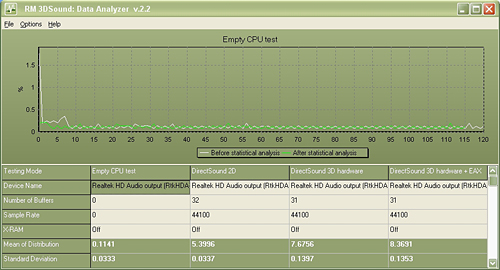
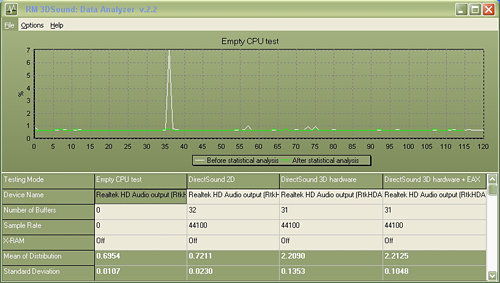
We limited audio testing to the Rightmark 3D Sound version 2.2 CPU utilization test and tested with sound enabled to show the performance effects on several games. The Rightmark 3D Sound benchmark measures the overhead or CPU utilization required by a codec or hardware audio chip.
The Realtek ALC-882D HD audio codec was tested with the recently released 1.34 driver set. The Realtek DirectSound audio drivers do not support more than 32 hardware buffers and the OpenAL 1.1 drivers do not support more than 30 hardware buffers at this time, so the scores cannot be directly compared to the Creative Labs Sound Blaster X-FI cards in the benchmarks.
We ran this benchmark with the standard test platform AMD Athlon64 4000+ CPU and also our AMD Opteron 170 dual-core CPU. It is interesting to note the reduced CPU utilization with the Opteron 170 as the load is balanced between each processor with the Realtek 1.34 drivers. We will be investigating if the reduction in CPU utilization rates with the dual-core setup has any bearing on actual game benchmarks in the near future.
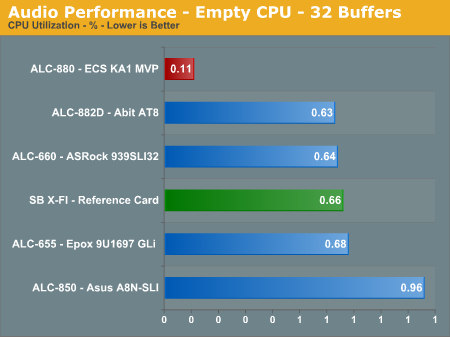
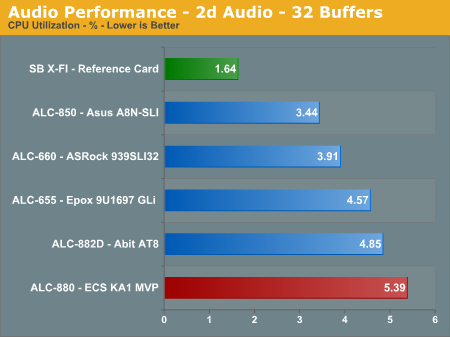
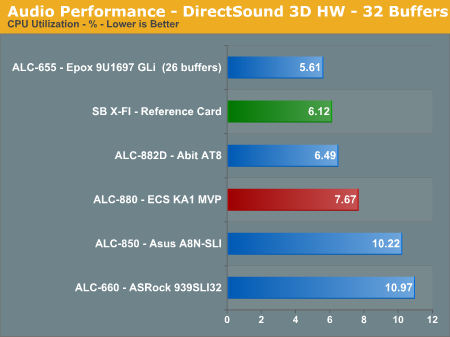
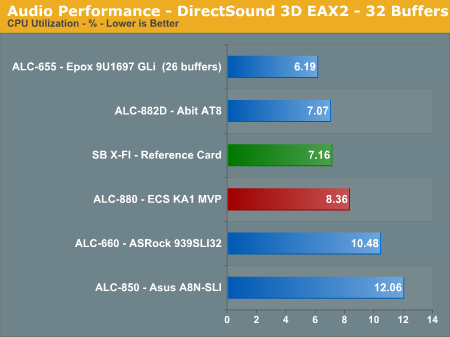
The Realtek ALC-880 codec offers competitive CPU utilization rates when compared to the Realtek ALC-882, ALC-660, and ALC-850 codecs. The ALC-880 generates significantly better audio quality than the ALC-850 based systems and very similar audio quality to the ALC-882 solutions. The ALC-880 was released before the ALC-882 but has nearly the same audio quality and performance. In our subjective headphone testing we noticed a slight difference between the two codecs, with the output from the ALC-882 sounding clearer in the treble and mid-range tones. However, the difference was negligible when utilizing our 4, 5.1, or 7.1 speaker setup in a typical room environment. The Sound Blaster X-FI has the lowest overall CPU usage with the ALC-882 and the ALC-880 following closely. Let's find out how these results translate into real world numbers.
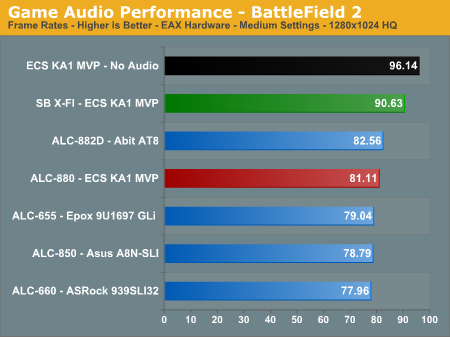
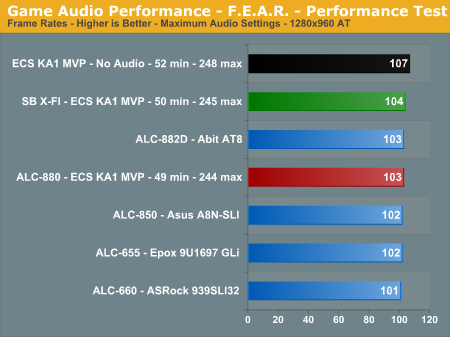
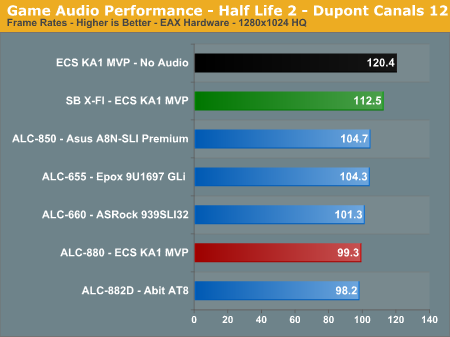
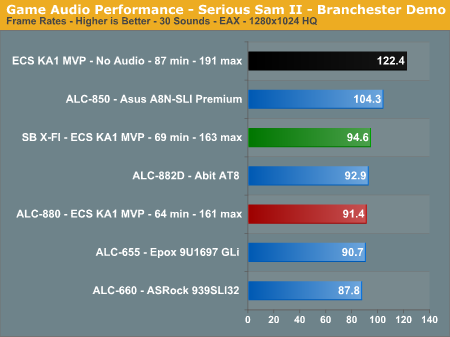
The audio performance numbers remain consistent as the Realtek ALC-880 finishes near the SoundBlaster X-FI benchmarks. Serious Sam II has an average loss of 39%, Battlefield 2 at 18%, Half Life 2 at 21%, and F.E.A.R. at 4%.
The output quality of audio with the Realtek ALC-880 ranks with the ALC-882/883 series as the best of the on-board HD audio solutions we have heard, and performance continues to improve with each driver release. The vast majority of users should have no issues utilizing the ALC-880 as their primary audio solution considering quality of audio and performance at this time in most applications.
Obviously, if you are a serious gamer, then a dedicated sound card is still useful to ensure consistent frame rate averages across a wide variety of games, and in the case of the Sound Blaster X-FI you also get improved audio quality and EAX3/4/5 support. If you'd like more details on the Realtek solution, you can refer to the ALC-880 audio specifications.
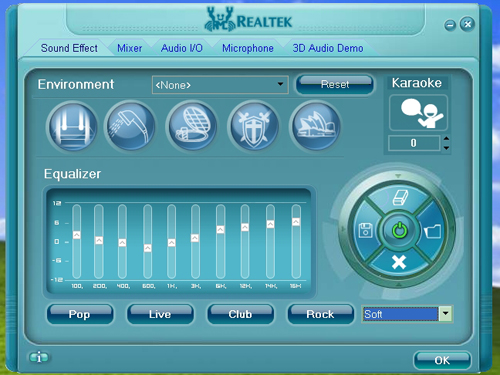
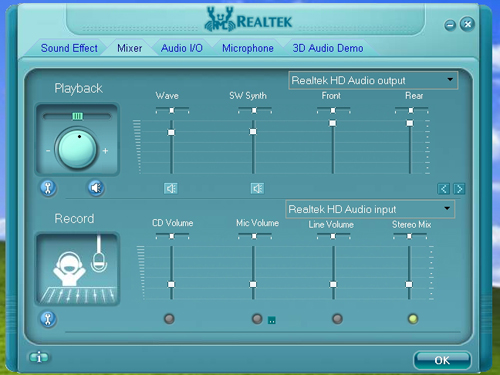
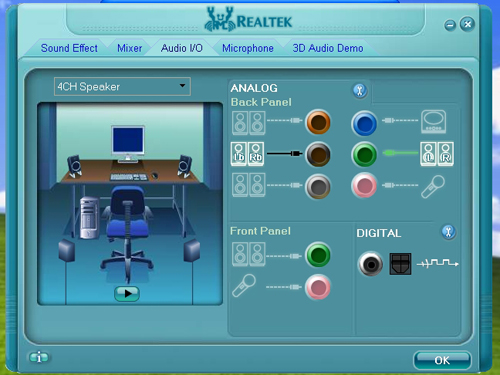
The Realtek 1.34 HD driver installation installs a basic control panel that features a built in 10-band equalizer along with the standard mixer and speaker controls. We found the control panel to be user friendly and a definite improvement over the standard windows audio properties application.
We limited audio testing to the Rightmark 3D Sound version 2.2 CPU utilization test and tested with sound enabled to show the performance effects on several games. The Rightmark 3D Sound benchmark measures the overhead or CPU utilization required by a codec or hardware audio chip.
The Realtek ALC-882D HD audio codec was tested with the recently released 1.34 driver set. The Realtek DirectSound audio drivers do not support more than 32 hardware buffers and the OpenAL 1.1 drivers do not support more than 30 hardware buffers at this time, so the scores cannot be directly compared to the Creative Labs Sound Blaster X-FI cards in the benchmarks.
We ran this benchmark with the standard test platform AMD Athlon64 4000+ CPU and also our AMD Opteron 170 dual-core CPU. It is interesting to note the reduced CPU utilization with the Opteron 170 as the load is balanced between each processor with the Realtek 1.34 drivers. We will be investigating if the reduction in CPU utilization rates with the dual-core setup has any bearing on actual game benchmarks in the near future.
The Realtek ALC-880 codec offers competitive CPU utilization rates when compared to the Realtek ALC-882, ALC-660, and ALC-850 codecs. The ALC-880 generates significantly better audio quality than the ALC-850 based systems and very similar audio quality to the ALC-882 solutions. The ALC-880 was released before the ALC-882 but has nearly the same audio quality and performance. In our subjective headphone testing we noticed a slight difference between the two codecs, with the output from the ALC-882 sounding clearer in the treble and mid-range tones. However, the difference was negligible when utilizing our 4, 5.1, or 7.1 speaker setup in a typical room environment. The Sound Blaster X-FI has the lowest overall CPU usage with the ALC-882 and the ALC-880 following closely. Let's find out how these results translate into real world numbers.
The audio performance numbers remain consistent as the Realtek ALC-880 finishes near the SoundBlaster X-FI benchmarks. Serious Sam II has an average loss of 39%, Battlefield 2 at 18%, Half Life 2 at 21%, and F.E.A.R. at 4%.
The output quality of audio with the Realtek ALC-880 ranks with the ALC-882/883 series as the best of the on-board HD audio solutions we have heard, and performance continues to improve with each driver release. The vast majority of users should have no issues utilizing the ALC-880 as their primary audio solution considering quality of audio and performance at this time in most applications.
Obviously, if you are a serious gamer, then a dedicated sound card is still useful to ensure consistent frame rate averages across a wide variety of games, and in the case of the Sound Blaster X-FI you also get improved audio quality and EAX3/4/5 support. If you'd like more details on the Realtek solution, you can refer to the ALC-880 audio specifications.
The Realtek 1.34 HD driver installation installs a basic control panel that features a built in 10-band equalizer along with the standard mixer and speaker controls. We found the control panel to be user friendly and a definite improvement over the standard windows audio properties application.
Originally published at https://www.anandtech.com/show/1983 (Wayback Machine).