Zalman HD-160 and Accompanying Products
- Posted in
- Cases/Cooling/PSUs
HD-160 Case - Exterior and Interior
The HD-160 overall has a generous size. It's a little larger than most other HTPCs that we've looked at in the past, but it's still a manageble size that should work fine; whether or not additional components are included in a stack shouldn't be problematic for most users.
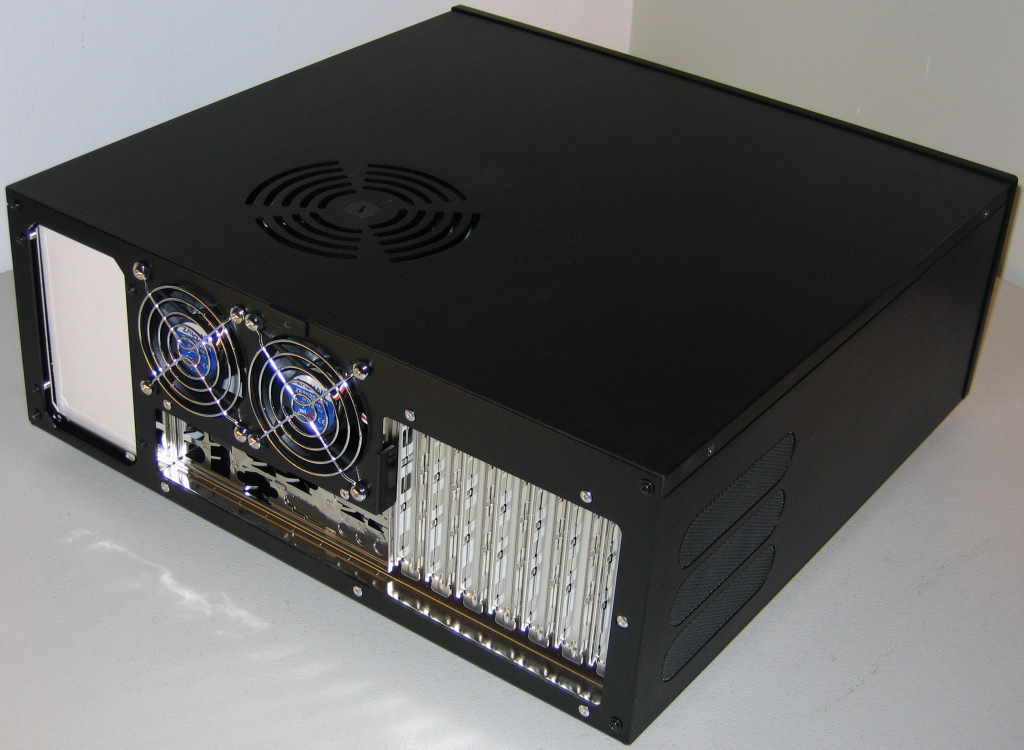
In addition to the vent on the top, this picture shows off one of the two sets of side vents, as well as the removable lid and two of the five screws that hold it in place.
The rear of the case is a bit more interesting, and shows a relatively strong resemblance to Thermaltake's Tenor chassis, reviewed in our last HTPC roundup. Dual 80mm system exhaust fans work in conjunction with the power supply to provide the entirity of the case's active cooling.
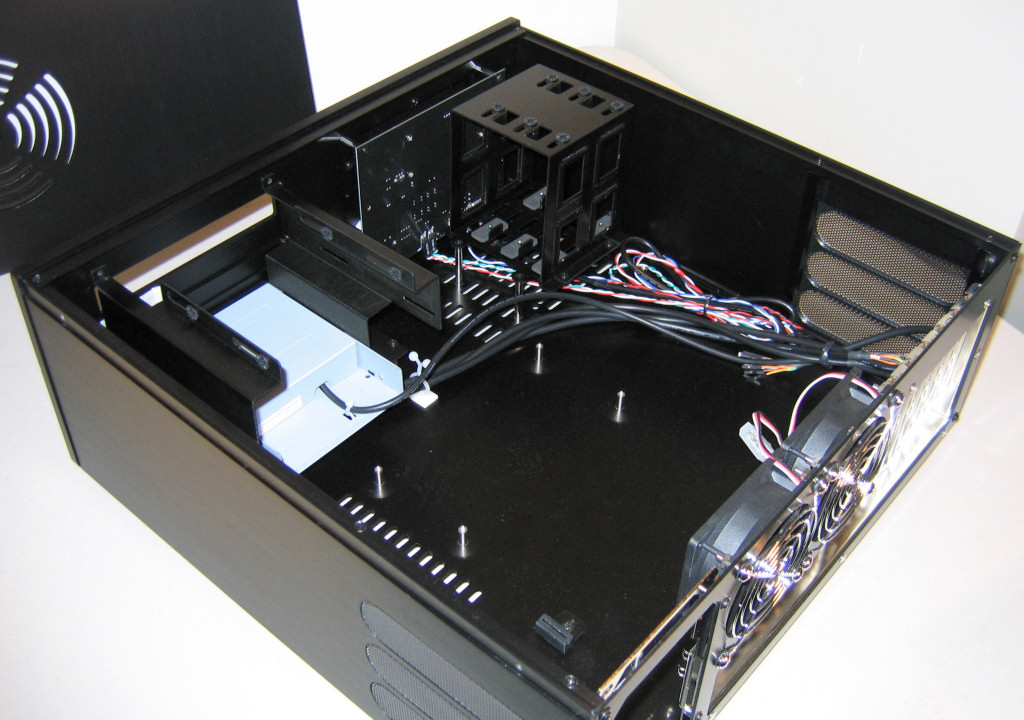
While external looks are certainly important, what really matters in an HTPC is the layout of the internal components. Without careful consideration, the components can overheat due to the demands for such a quiet environment, or worse yet, have problems physically fitting with other pieces of hardware. The good news is that the HD-160 has a thoughtful design and shouldn't suffer from any problems with most setups.
Perhaps the most prominent design mark is the vertical hard drive cage situated towards the front, which is a good idea for getting more available hard drives without having to make the case any larger. In addition to a single spot above the 5¼" drive, this leaves the HD-160 with a total of four internal hard-drive slots.
From a slightly different perspective, it's easier to see how the cage is positioned well, for instance cabling shouldn't be too difficult with the decent amount of space between the two removable cages.
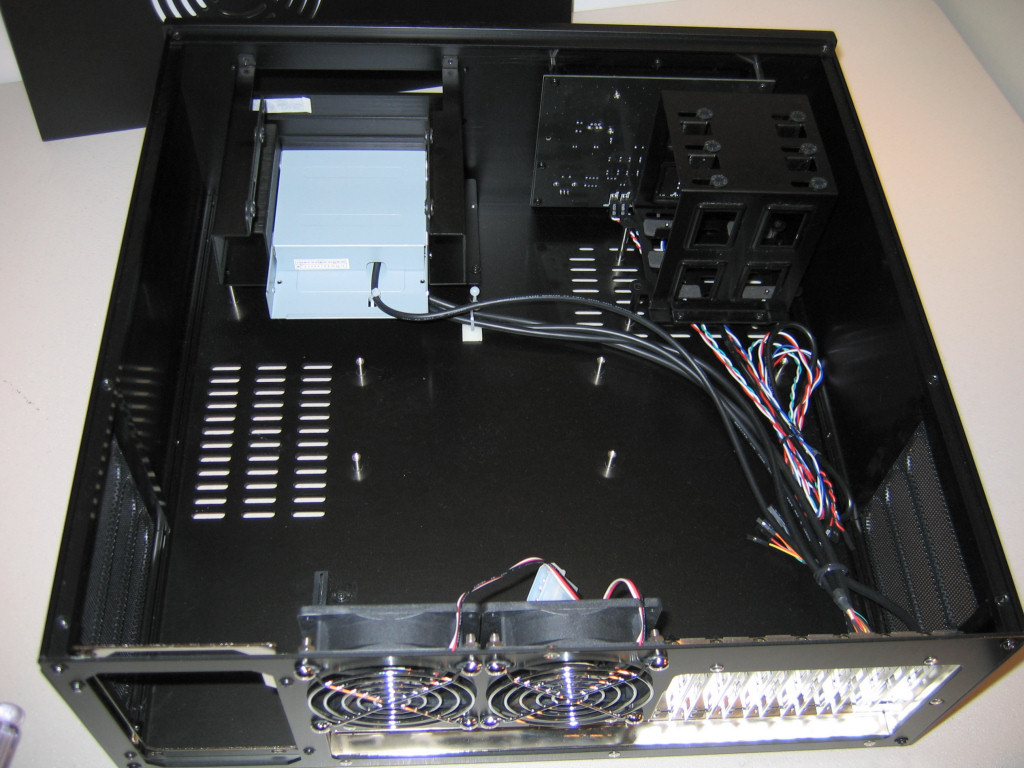
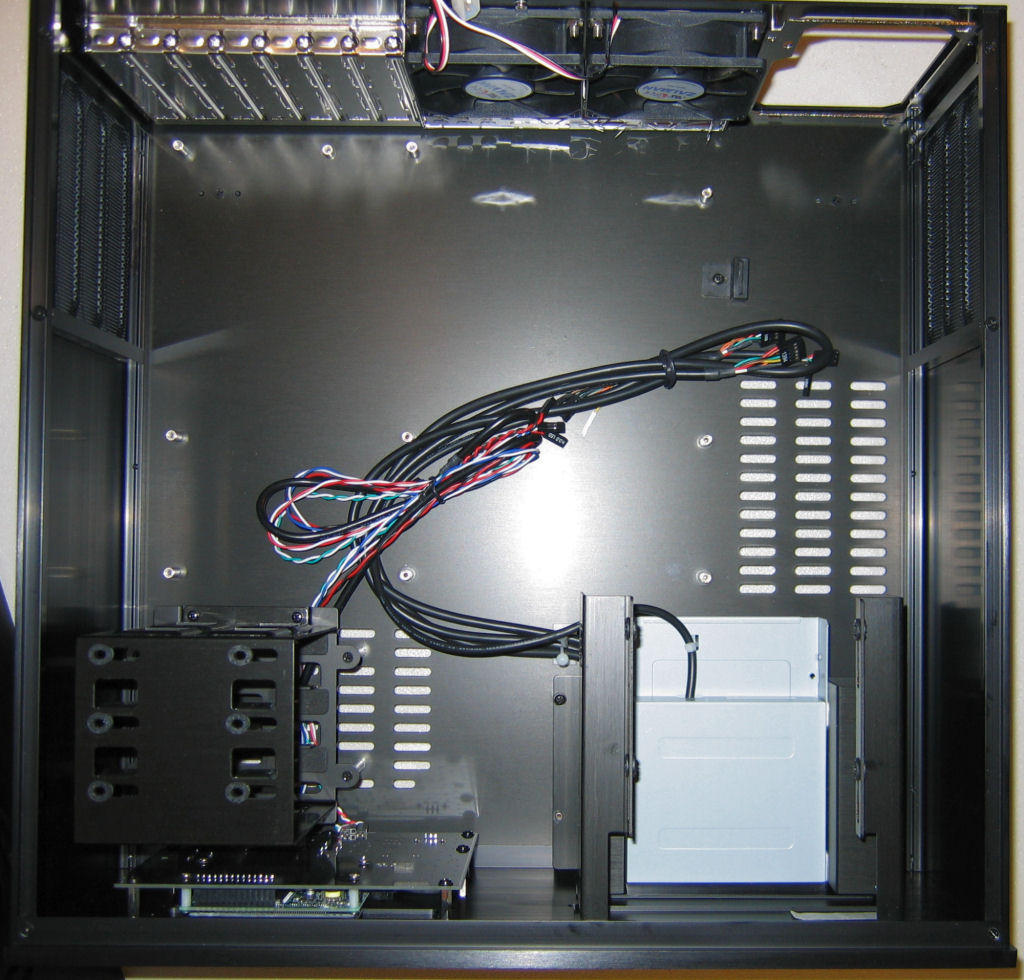
Next, we'll examine the back of the case from inside, and upon doing so, we notice that many similarities can be drawn between this layout and a rather typical tower chassis that's simply been laid on its side.
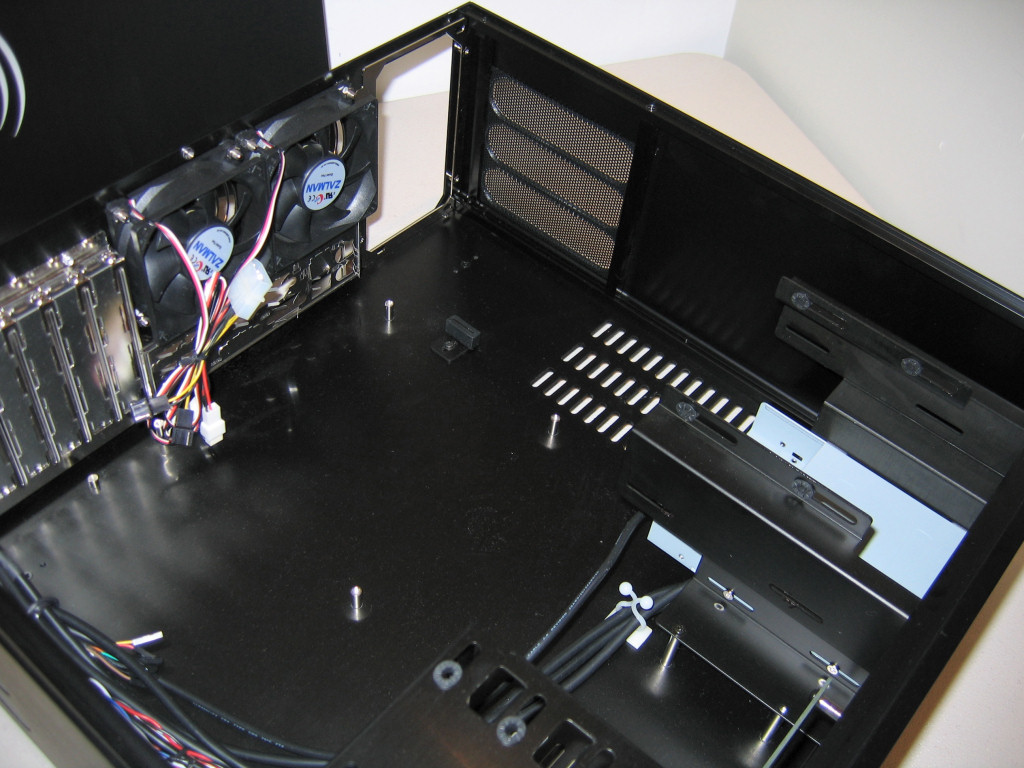
With this observation, it's pretty safe to assume already that the cooling performance of the HD-160 is bound to be on par with other tower designs or, at the very least, among the best of HTPC cases. From a direct top-down view, this claim is even better substantiated, as the case has well-placed intake venting under the hard drives and under the area that wouldn't be blocked by any components.
The HD-160 overall has a generous size. It's a little larger than most other HTPCs that we've looked at in the past, but it's still a manageble size that should work fine; whether or not additional components are included in a stack shouldn't be problematic for most users.
In addition to the vent on the top, this picture shows off one of the two sets of side vents, as well as the removable lid and two of the five screws that hold it in place.
The rear of the case is a bit more interesting, and shows a relatively strong resemblance to Thermaltake's Tenor chassis, reviewed in our last HTPC roundup. Dual 80mm system exhaust fans work in conjunction with the power supply to provide the entirity of the case's active cooling.
While external looks are certainly important, what really matters in an HTPC is the layout of the internal components. Without careful consideration, the components can overheat due to the demands for such a quiet environment, or worse yet, have problems physically fitting with other pieces of hardware. The good news is that the HD-160 has a thoughtful design and shouldn't suffer from any problems with most setups.
Perhaps the most prominent design mark is the vertical hard drive cage situated towards the front, which is a good idea for getting more available hard drives without having to make the case any larger. In addition to a single spot above the 5¼" drive, this leaves the HD-160 with a total of four internal hard-drive slots.
From a slightly different perspective, it's easier to see how the cage is positioned well, for instance cabling shouldn't be too difficult with the decent amount of space between the two removable cages.
Next, we'll examine the back of the case from inside, and upon doing so, we notice that many similarities can be drawn between this layout and a rather typical tower chassis that's simply been laid on its side.
With this observation, it's pretty safe to assume already that the cooling performance of the HD-160 is bound to be on par with other tower designs or, at the very least, among the best of HTPC cases. From a direct top-down view, this claim is even better substantiated, as the case has well-placed intake venting under the hard drives and under the area that wouldn't be blocked by any components.
Originally published at https://www.anandtech.com/show/1981 (Wayback Machine).