
The AMD Ryzen 7 7800X3D Review: A Simpler Slice of V-Cache For Gaming
CPU Benchmark Performance: Legacy Tests
In order to gather data to compare with older benchmarks, we are still keeping a number of tests under our ‘legacy’ section. This includes all the former major versions of CineBench (R15, R11.5, R10) as well as Geekbench 4 and 5. We won’t be transferring the data over from the old testing into Bench, otherwise, it would be populated with 200 CPUs with only one data point, so it will fill up as we test more CPUs like the others.
We are using DDR5 memory on the Ryzen 7 78000X3D and the other Ryzen 7000 series we've tested. This also includes Intel's 13th and 12th Gen processors. We tested the aforementioned platforms with the following settings:
- DDR5-5600B CL46 - Intel 13th Gen
- DDR5-5200 CL44 - Ryzen 7000
- DDR5-4800 (B) CL40 - Intel 12th Gen
All other CPUs such as Ryzen 5000 and 3000 were tested at the relevant JEDEC settings as per the processor's individual memory support with DDR4.
Legacy
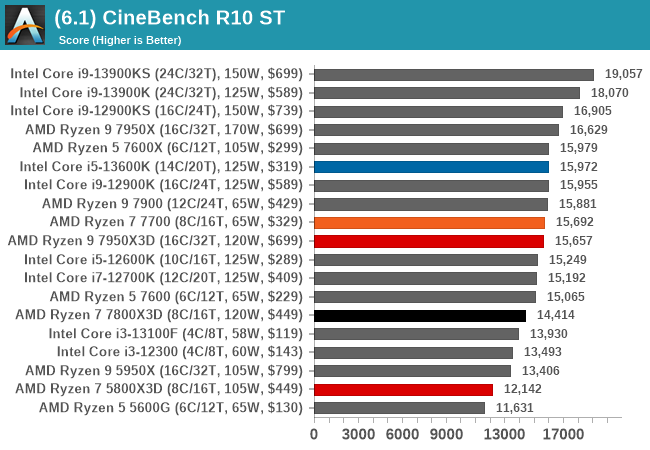
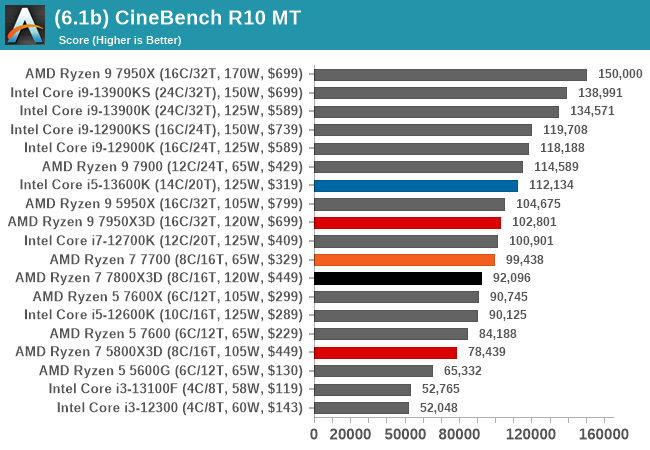
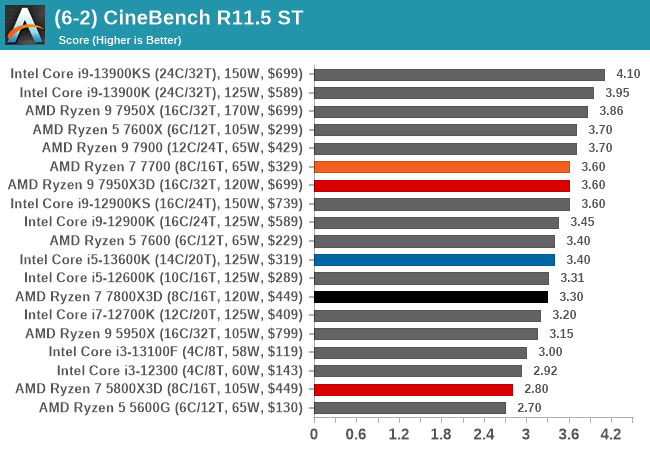
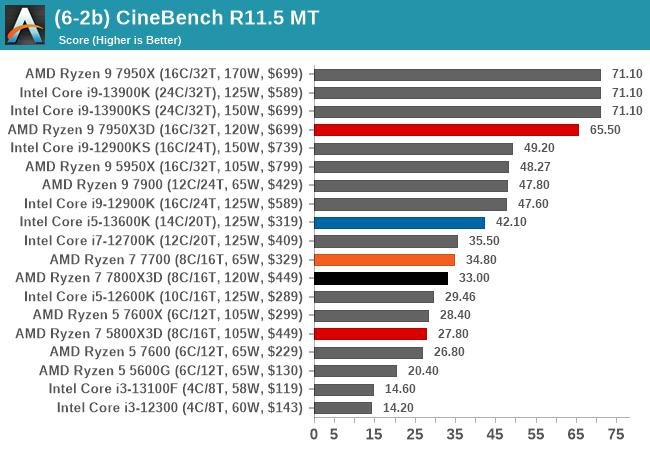
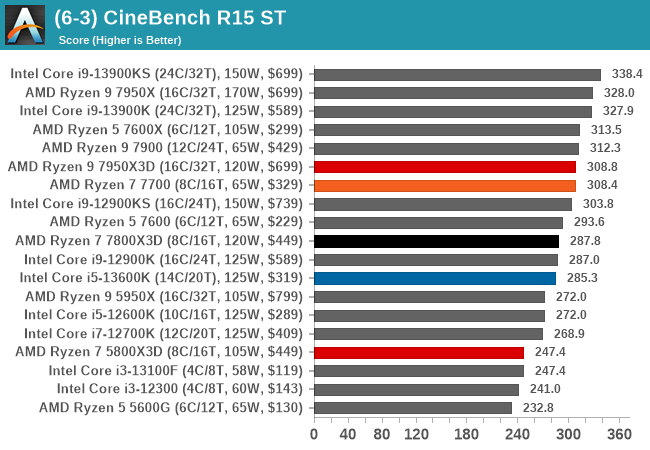
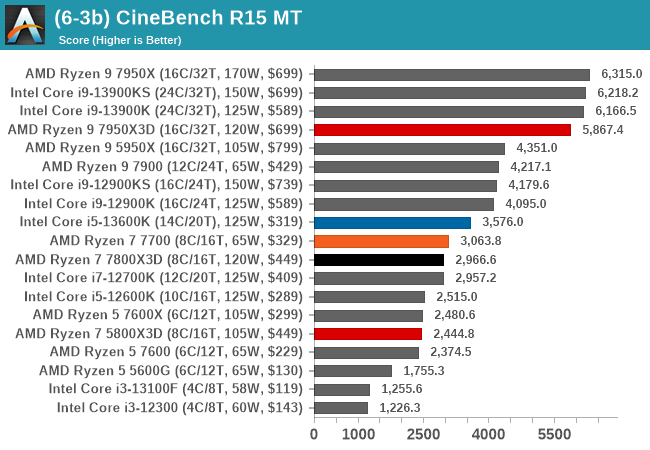
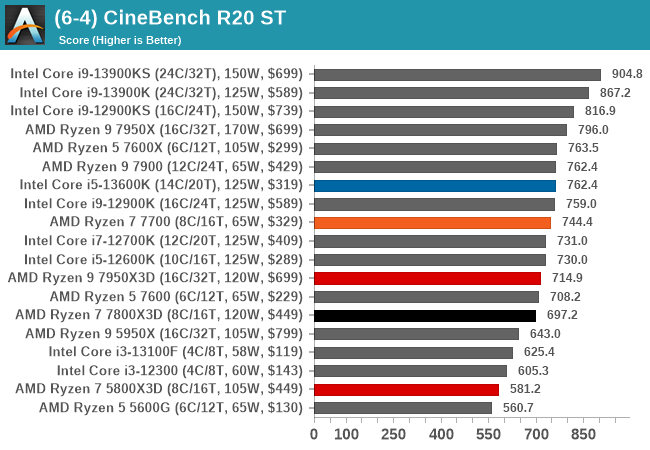
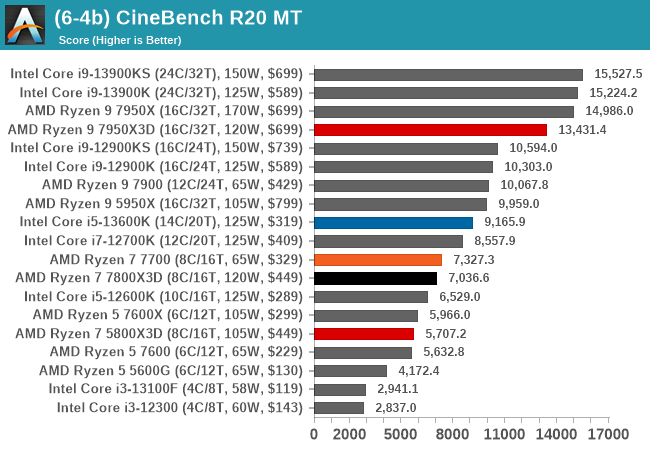
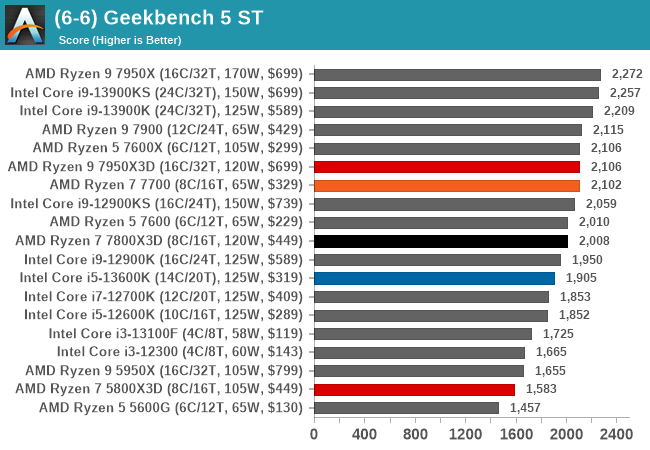
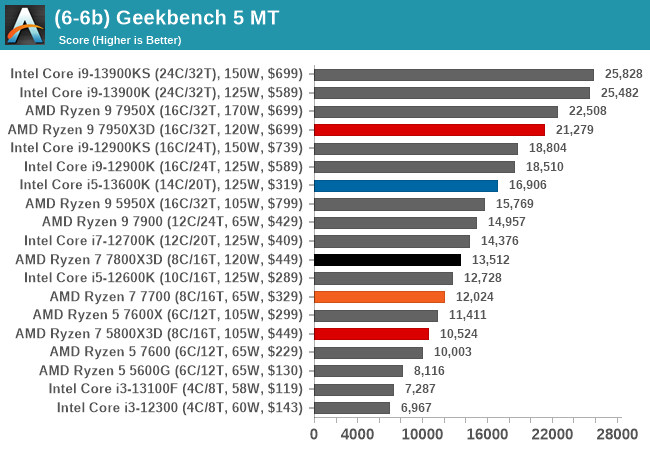
Our legacy testing focuses on older benchmarks with outdated workloads, but the performance is still relevant. The Ryzen 7 7800X3D performs similarly to the Ryzen 7 7700 processor and lands somewhere in the middle of our performance charts. The 7800X3D has enough processing power to handle tasks, but it doesn't quite surpass many of the non-X3D-based chips with +0/+2/-2 core counts.
Originally published at https://www.anandtech.com/show/18795/the-amd-ryzen-7-7800x3d-review-a-simpler-slice-of-v-cache-for-gaming (Wayback Machine).