
The AMD Ryzen 7 7800X3D Review: A Simpler Slice of V-Cache For Gaming
CPU Benchmark Performance: Rendering And Encoding
Rendering tests, compared to others, are often a little more simple to digest and automate. All the tests put out some sort of score or time, usually in an obtainable way that makes it fairly easy to extract. These tests are some of the most strenuous in our list, due to the highly threaded nature of rendering and ray-tracing, and can draw a lot of power.
If a system is not properly configured to deal with the thermal requirements of the processor, the rendering benchmarks are where it would show most easily as the frequency drops over a sustained period of time. Most benchmarks in this case are re-run several times, and the key to this is having an appropriate idle/wait time between benchmarks to allow for temperatures to normalize from the last test.
One of the interesting elements of modern processors is encoding performance. This covers two main areas: encryption/decryption for secure data transfer, and video transcoding from one video format to another.
In the encrypt/decrypt scenario, how data is transferred and by what mechanism is pertinent to on-the-fly encryption of sensitive data - a process by which more modern devices are leaning to for software security.
We are using DDR5 memory on the Ryzen 7 78000X3D and the other Ryzen 7000 series we've tested. This also includes Intel's 13th and 12th Gen processors. We tested the aforementioned platforms with the following settings:
- DDR5-5600B CL46 - Intel 13th Gen
- DDR5-5200 CL44 - Ryzen 7000
- DDR5-4800 (B) CL40 - Intel 12th Gen
All other CPUs such as Ryzen 5000 and 3000 were tested at the relevant JEDEC settings as per the processor's individual memory support with DDR4.
Rendering
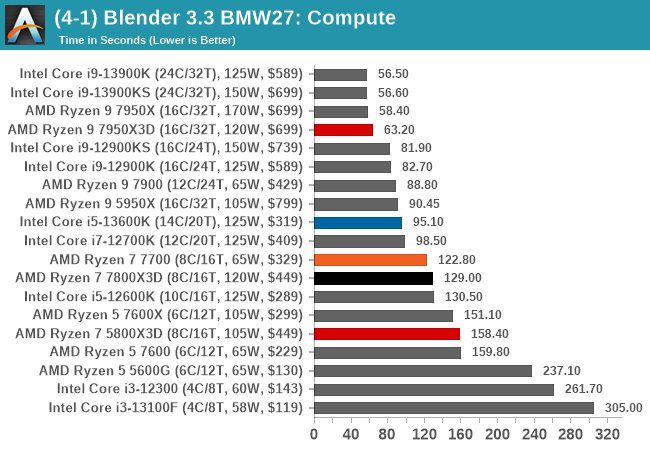
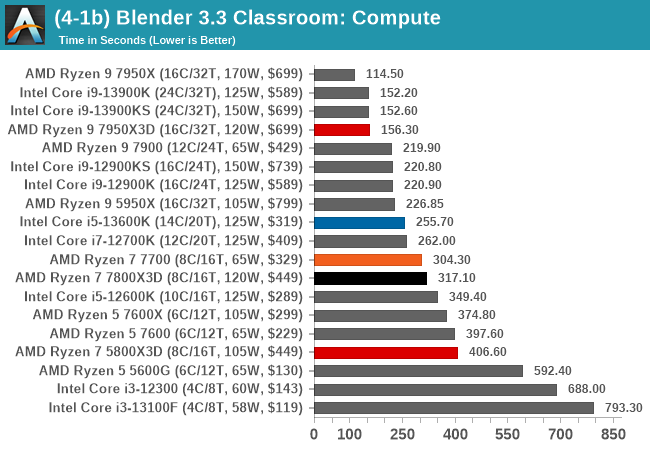
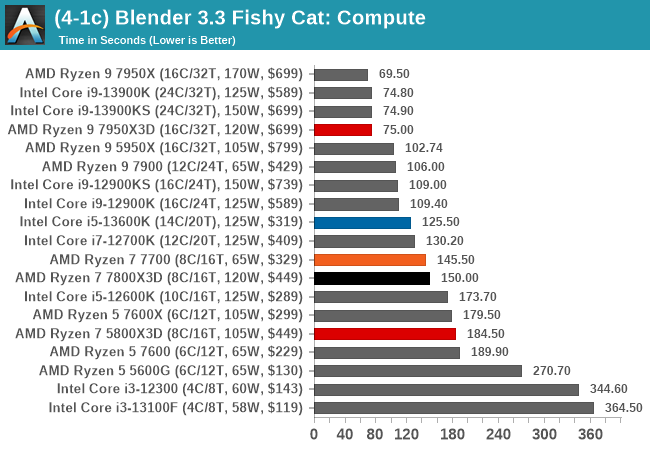
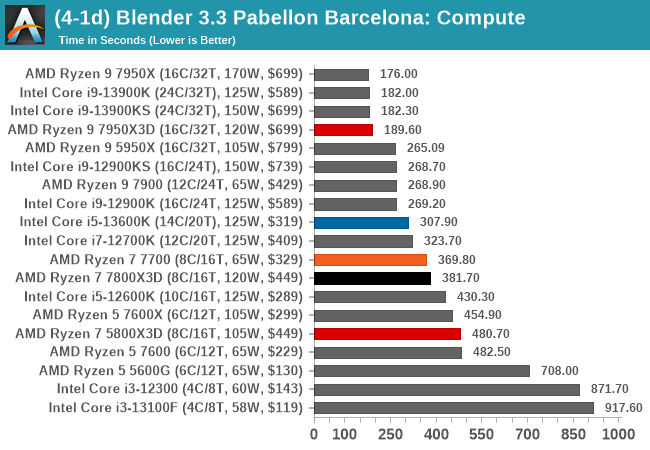
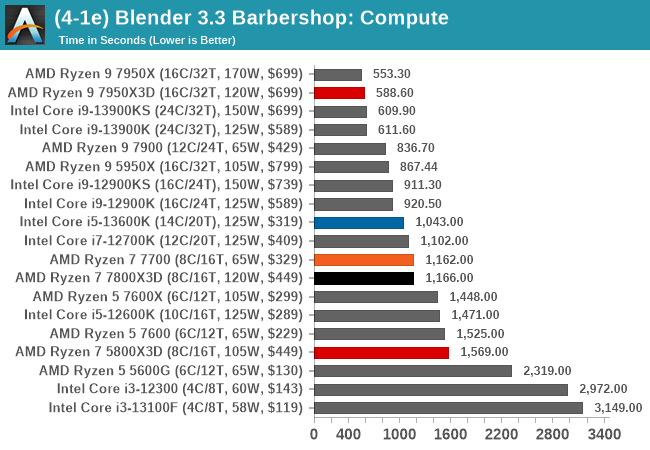
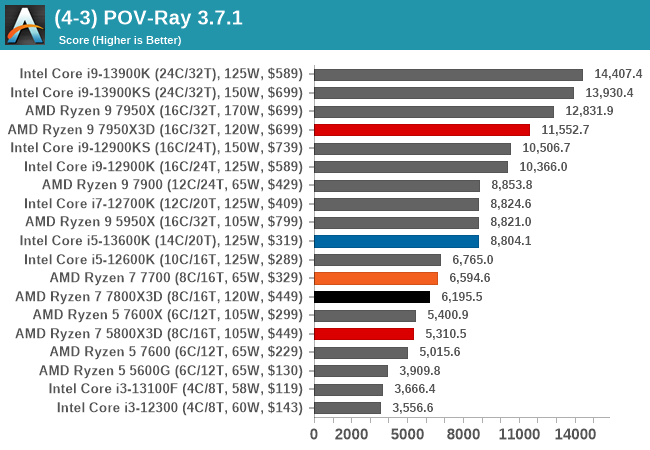
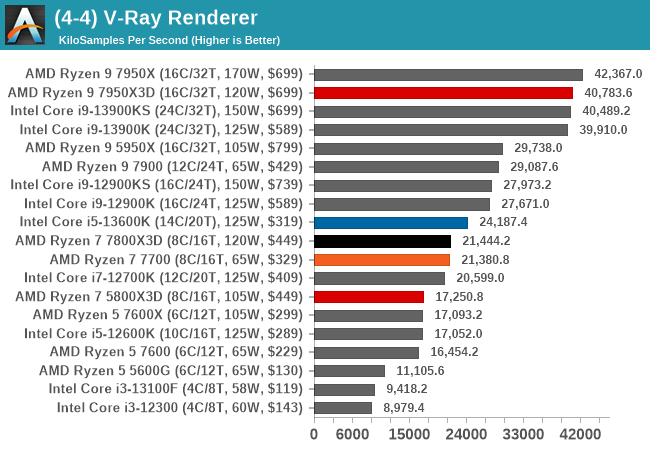
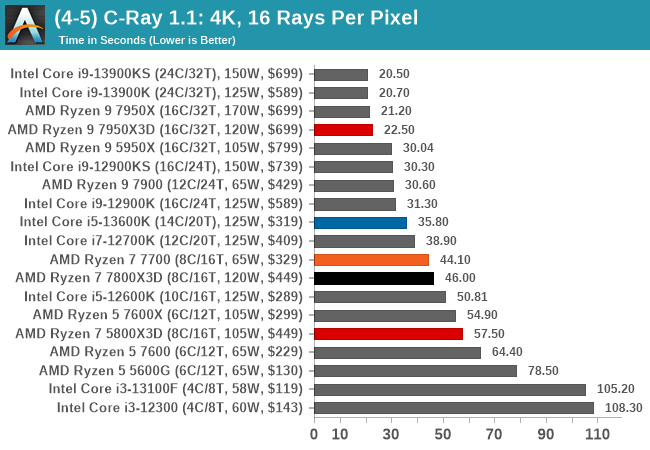
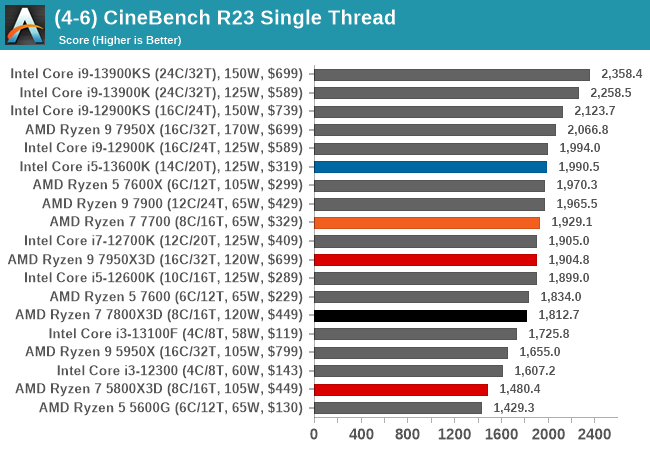
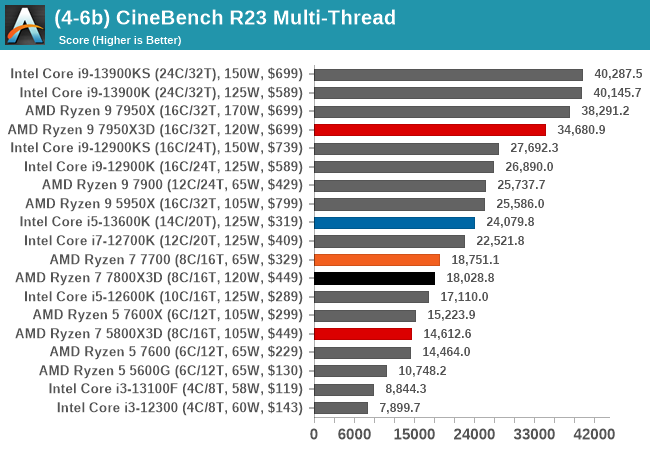
As expected, the Ryzen 7 7800X3D delivered the performance we anticipated in our rendering tests. While we did observe instances where the performance was similar to that of the Ryzen 7 7700, the most significant takeaway was that the Ryzen 7 7800X3D outperformed the Ryzen 7 5800X3D, as it is the direct successor to that CPU.
Encoding
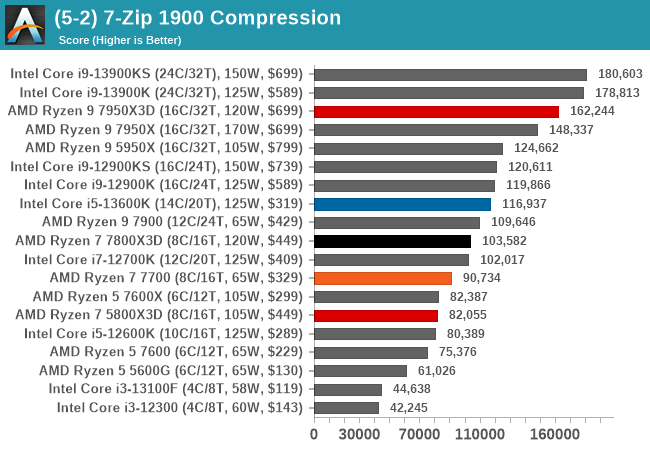
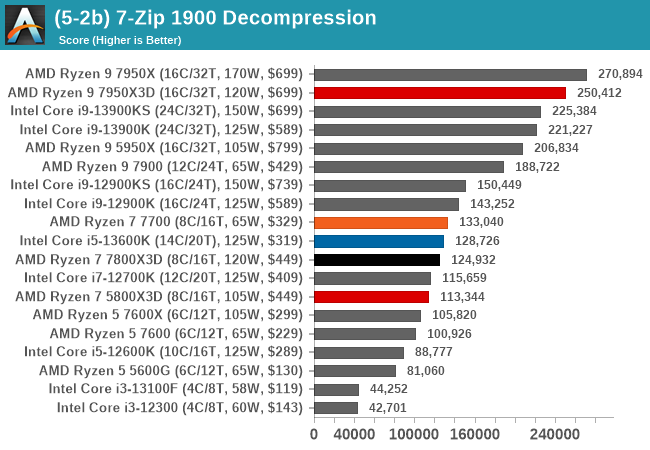
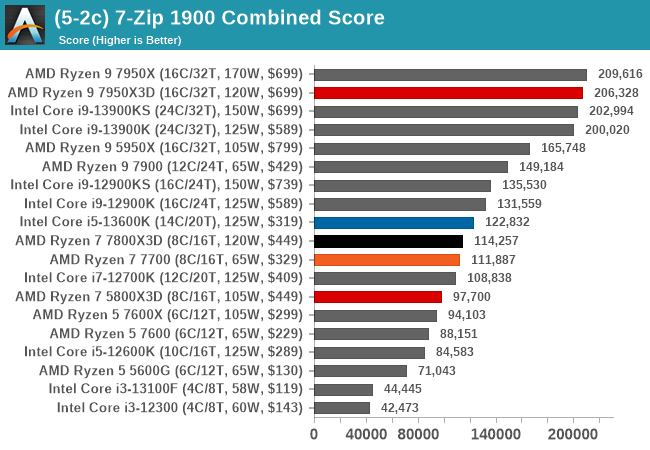
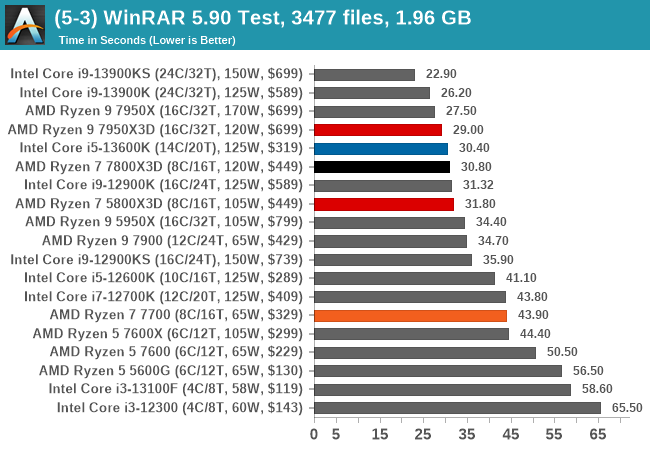
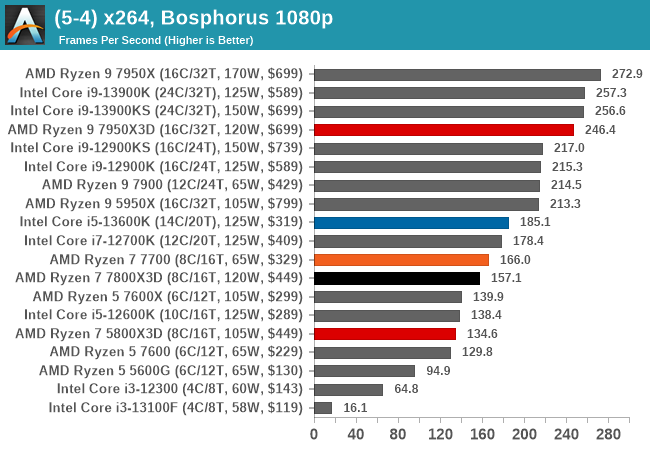
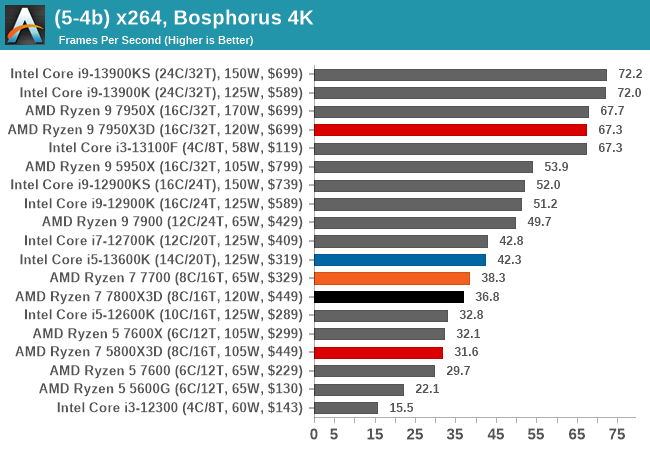
When we examine the encoding performance of the Ryzen 7 7800X3D, we see that it performs on par with the Ryzen 7 7700. Additionally, the Ryzen 7 7800X3D is competing with Intel's Core i5-13600K, which is still less expensive but is a more versatile chip with 14C/20T.
Originally published at https://www.anandtech.com/show/18795/the-amd-ryzen-7-7800x3d-review-a-simpler-slice-of-v-cache-for-gaming (Wayback Machine).