
NVIDIA GeForce 7800 GTX 512: More Than Just More Memory
- Posted in
- GPUs
Memory Size Scaling
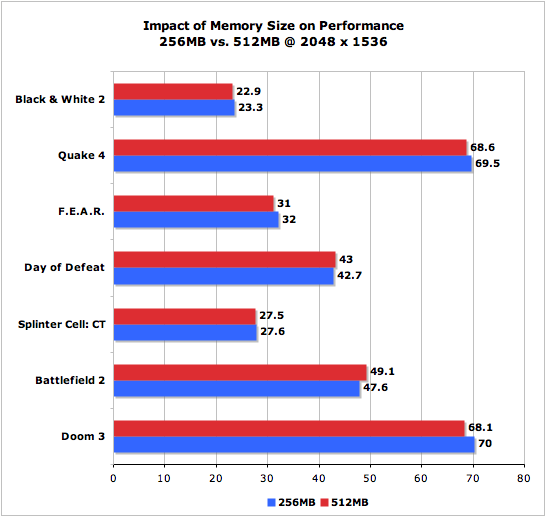
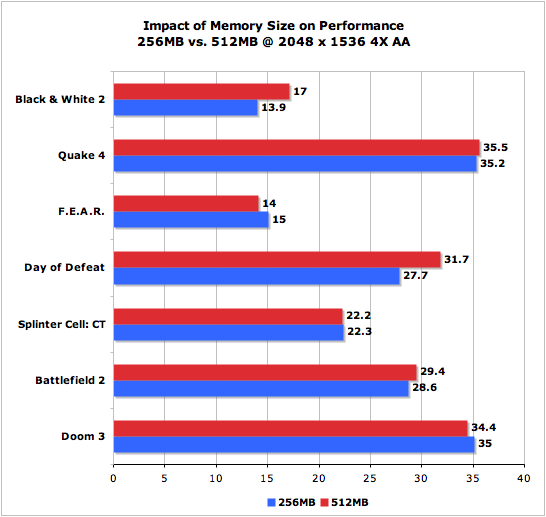
We were very interested in how the additional RAM affected game performance, so we underclocked our 7800 GTX 512 to 430/1.2 (core/mem) in order to see what (if any) difference we would find between the original 7800 GTX and the new model from framebuffer size alone. We will look at 2048x1536 both with and without AA as this is the resolution where any difference was most pronounced.
As we can see from the tests, the added RAM had no real impact on performance in any game (and a slightly negative impact in D3 and Q4).
Originally published at https://www.anandtech.com/show/1861 (Wayback Machine).