Archive 1997–2024

DFI LANParty UT RDX200: ATI’s Crossfire AMD for the Bleeding Edge

DFI LANParty UT RDX200: Board Layout

DFI has made sure that you still recognize the LANParty UT box - using the same theme that worked well on their nForce4 series.
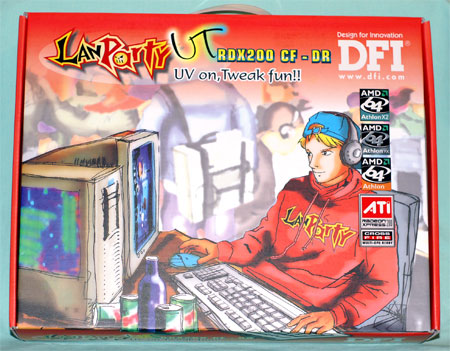
Instead of the blue color used for NVIDIA, the ATI chipset RDX200 is done in ATI reds. UT is used for the full LANParty boards without the full LANParty package. Everything board-related is here with this 6-layer board, but you will not find a FrontX box or nylon carrier. You will, however, find all the matching UV reactive cables that distinguish a LAN P arty motherboard.

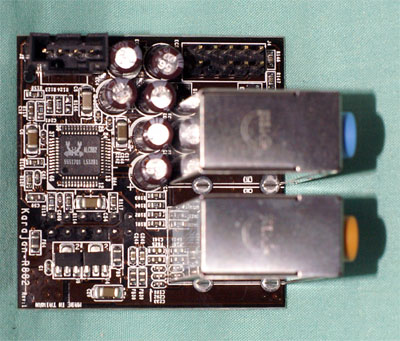
In addition to all the necessary cables with yellow UV sleeves, you will find an updated Karajan audio module. The significant update here is the Azalia High Definition audio chip that is isolated on the module for improved signal-to-noise performance. This is the first retail AMD motherboard to feature Azalia HD, which is a prominent and unique feature of the ATI Rx480/482 chipset.

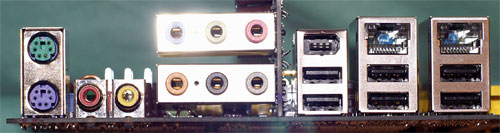
The Karajan module integrates into the rear IO ports, providing 6 mini jacks for the audio system.


Click to enlarge.

Those familiar with DFI LANParty boards will immediately recognize the black color scheme with Dayglo yellow and orange slots and connectors. Some buyers love the color scheme and look for side-window cases and UV lights to show it off. Others wish that DFI used something a bit more sedate. Whatever you think of the color scheme, our past experience has been that underneath the color is an incredibly full-featured motherboard with adjustments not available on any other motherboard. DFI tells us that all capacitors are 100% Japanese to assure the highest quality.

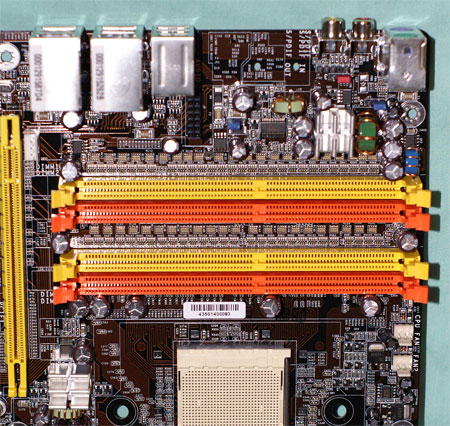
Layout is unusual compared to other recent motherboards, with the 4 DIMM slots located between the CPU and IO ports. While we have not seen this location used on other boards, in practice, it works very well to keep air flowing and components cool.

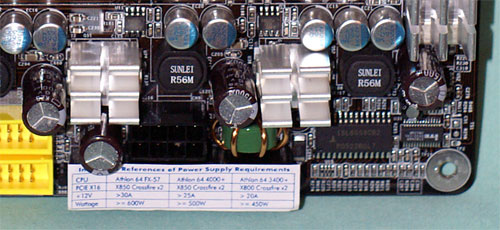
The 24-pin and 8-pin/4-pin power connector are together at the right board edge. You can use either standard 4-pin or the more robust 8-pin connector on the DFI. This location keeps bulky power cords out of the way of other components.

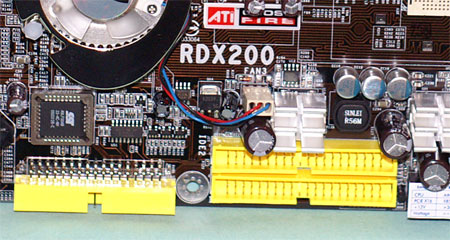
IDE and floppy connectors are ideally located on the right edge of the board - where they belong. We are grateful that DFI did not follow recent practice and place the floppy port at the bottom of the board. The floppy is a side edge connector, so you may need to install the floppy cable before mounting the board in smaller cases.

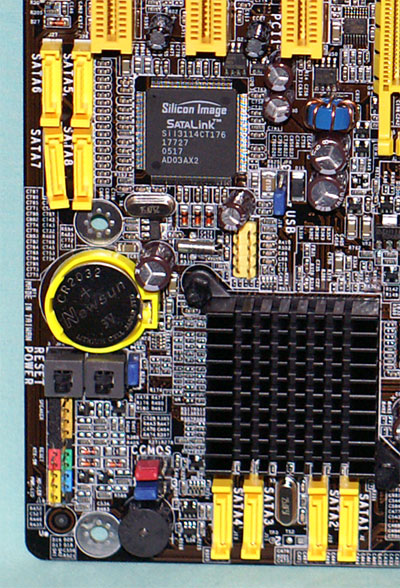
In addition to the 4 SATA connectors provided by the ATI SB450 south bridge, DFI has added 4 more SATA ports powered by a Silicon Image 3114 controller. The puzzle here is that all 8 ports are SATA1. We have to wonder why DFI bothered to add more SATA ports when they all end up being SATA 1 - no SATA2 ports.

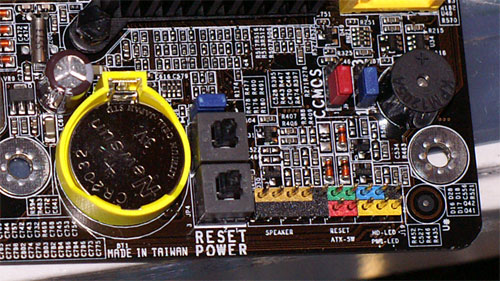
Momentary switches for power and reset have almost become a trademark with DFI LANParty motherboards and the RDX200 is no exception. The battery, switches and "Clear CMOS" jumper are all clustered in the same area at the bottom right corner of the board.

DFI also included Firewire powered by the well-regarded VIA VT6307 chipset. Dual Gigabit LAN is also a feature, but only one LAN port is the faster PCI Express.
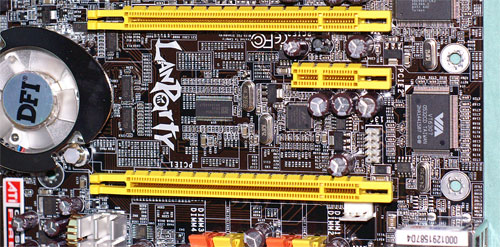
You should also consider what is not on the DFI RDX200. There is no paddle card to fumble with in changing from one to two video cards. The switching is automatic, and unlike other auto-switch video solutions, it doesn't appear to hamper the board's overclocking abilities.

Originally published at https://www.anandtech.com/show/1828 (Wayback Machine).