Performance
Given that the XFX 7800 GTX Overclocked and the EVGA 7800 GTX KO are clocked the same out of the box, we rightly guessed that we would see almost identical benchmark results between the two. As you can see by the graph, the framerates only differ by a few tenths of an fps, which isn't nearly enough to be significant.
For reference, here is our test system:
MSI K8N Neo4 Platinum/SLI motherboard
AMD Athlon 64 FX-55 Processor
1 GB OCZ 2:2:2:6 DDR400 RAM
Seagate 7200.7 120 GB Hard Drive
OCZ 600 W PowerStream Power Supply
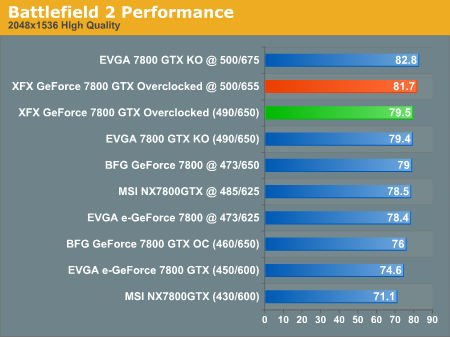
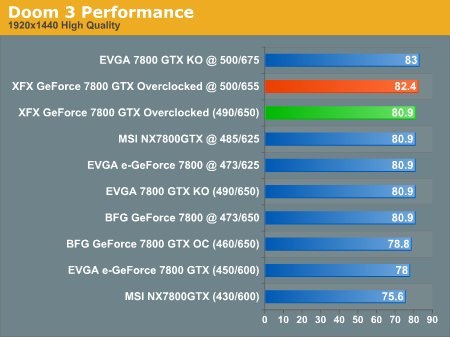
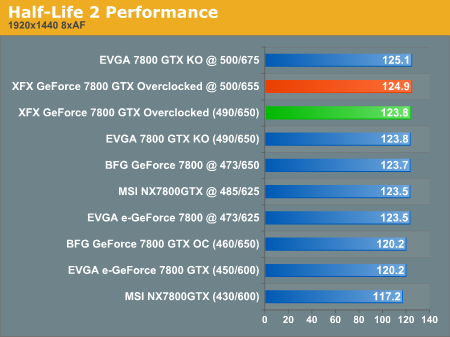
When we overclocked this card, we found that we couldn't quite get the memory clock as high as we were able to with the EVGA KO. This is understandable however, given the fact that there were no RAM sinks on the back of the XFX 7800 like there were on EVGA's. However, it hardly matters at all that the memory clock was slightly lower because as you can see below, the framerates were just a
tiny bit lower than EVGA's; again, not enough to be significant. If you'd like more information about overclocking, as well as some information about NVIDIA's frequency scaling issue, take a look at the last article in this series on
the EVGA 7800 GTX KO.
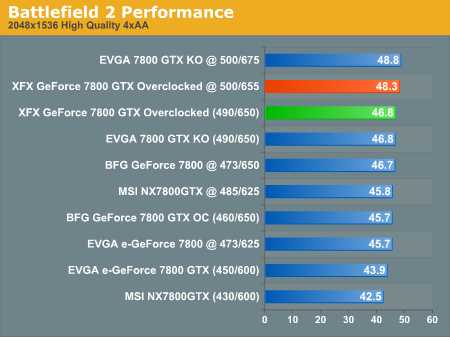
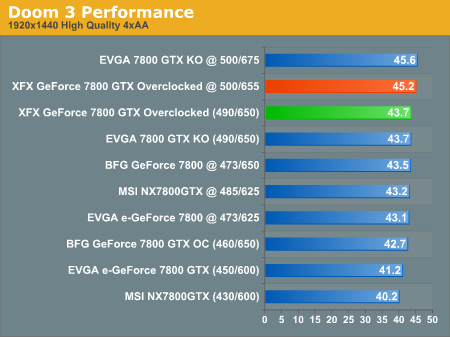
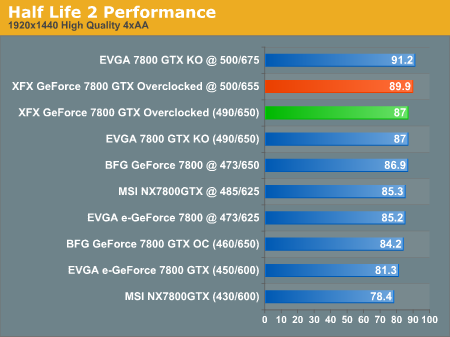
All of the 7800 GTXs performed very well in these three games, which is no surprise given that these are the best graphics cards out here. As you can see, there aren't any huge differences in performance between cards. So, you can be sure that the 7800GTX that you decide to purchase will easily be able to handle even the most taxing games like
Doom 3 and
The Chronicles of Riddick.
