
The AMD Ryzen 7 5800X3D Review: 96 MB of L3 3D V-Cache Designed For Gamers
CPU Benchmark Performance: Simulation And Rendering
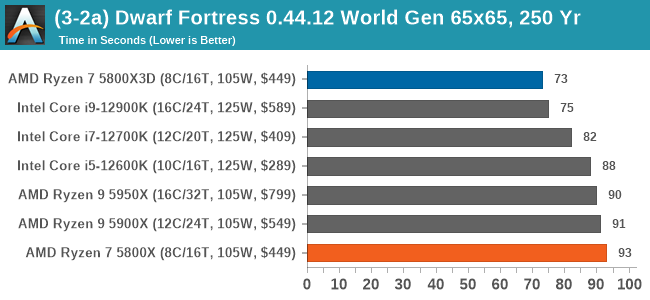
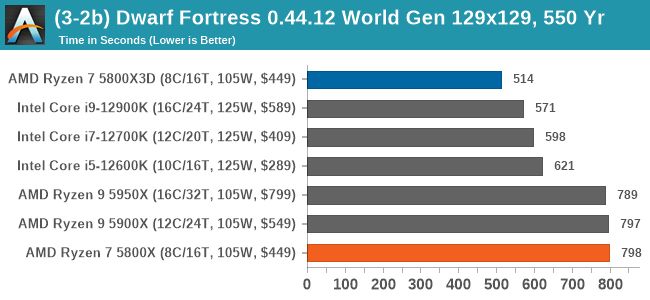
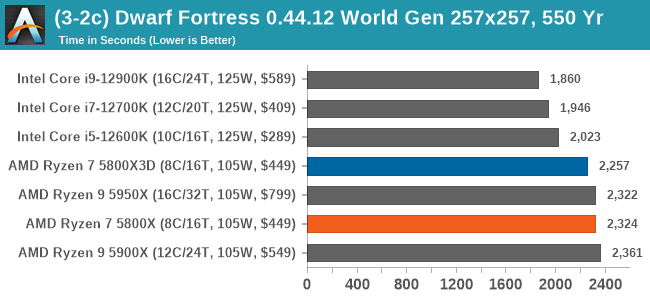
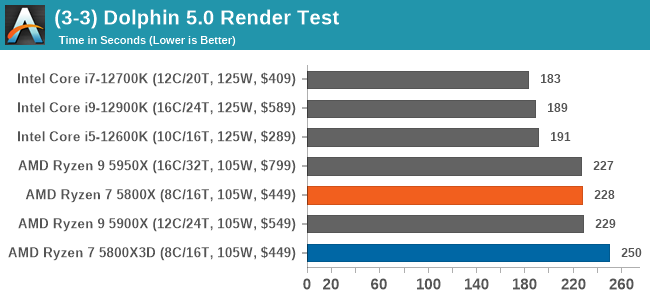
Simulation and Science have a lot of overlap in the benchmarking world, however for this distinction we’re separating into two segments mostly based on the utility of the resulting data. The benchmarks that fall under Science have a distinct use for the data they output – in our Simulation section, these act more like synthetics but at some level are still trying to simulate a given environment.
We are using DDR4 memory at the following settings:
- DDR4-3200
Simulation
Rendering
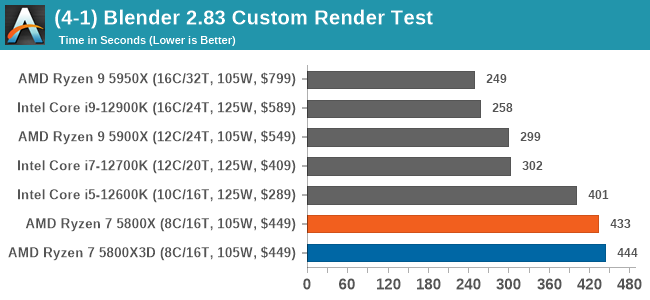
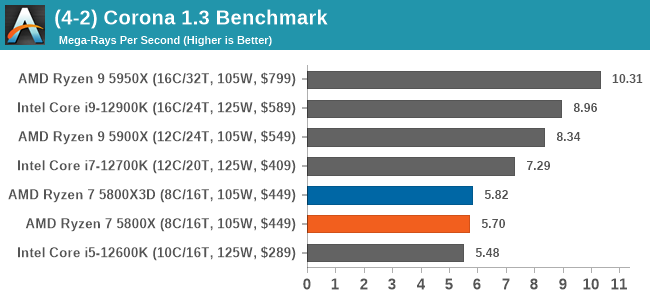
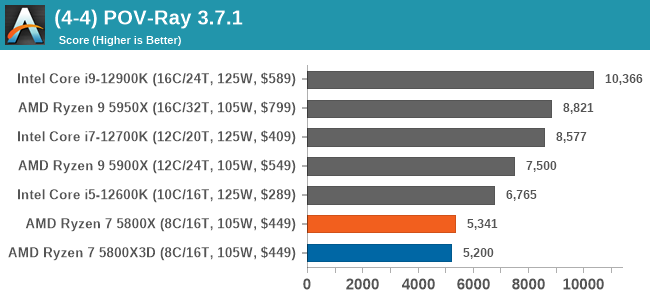
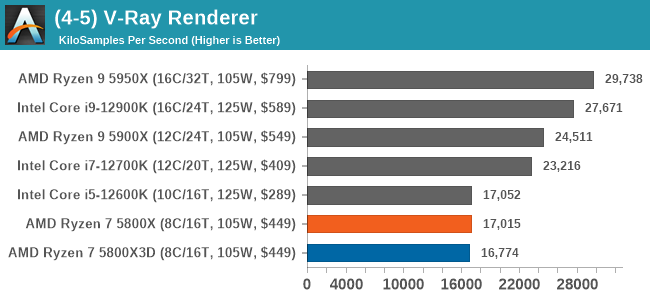
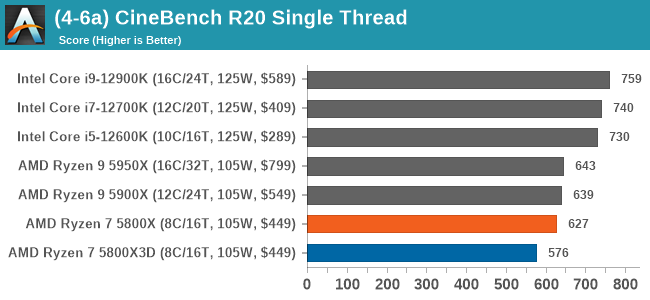
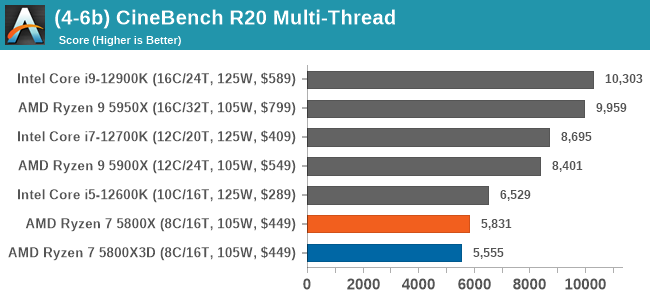
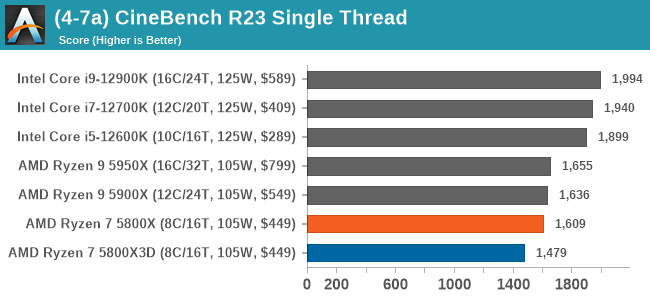
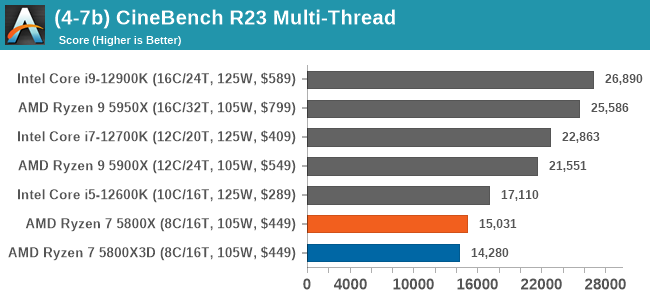
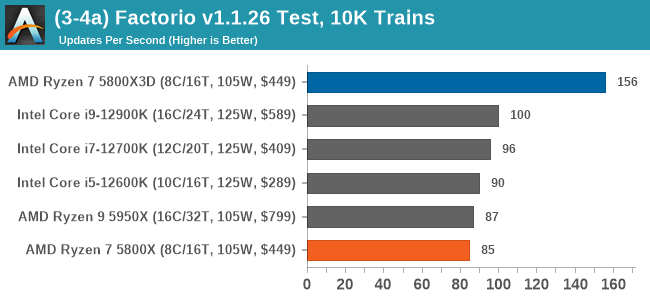
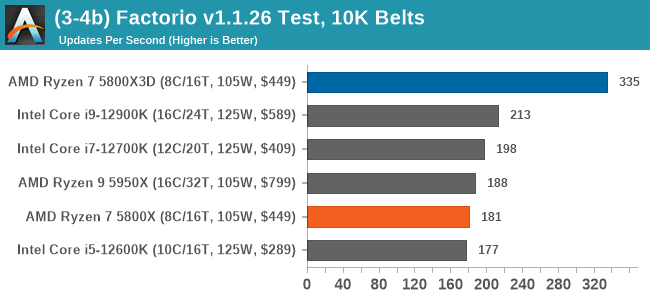
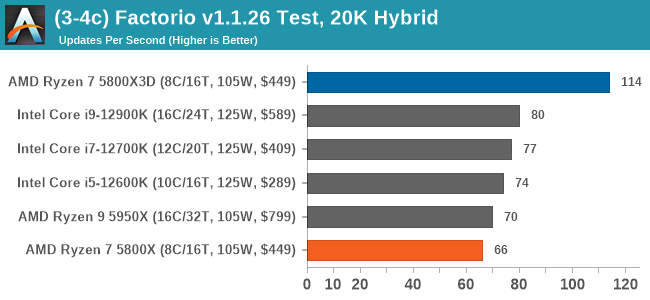
As we mentioned on the last page, where the Ryzen 7 5800X3D can use its 96 MB of L3 V-Cache to improve performance, it does, such as in our Factorio test. For the most part, it doesn't do enough in most situations to improve performance when compared to the Ryzen 7 5800X.
Originally published at https://www.anandtech.com/show/17337/the-amd-ryzen-7-5800x3d-review-96-mb-of-l3-3d-v-cache-designed-for-gamers (Wayback Machine).