
The AMD Ryzen 7 5800X3D Review: 96 MB of L3 3D V-Cache Designed For Gamers
CPU Benchmark Performance: Power, Office, and Science
Our previous set of ‘office’ benchmarks has often been a mix of science and synthetics, so this time we wanted to keep our office section purely on real-world performance.
For the remainder of the testing in this review of the Ryzen 7 5800X3D, we are using DDR4 memory at the following settings:
- DDR4-3200
Power
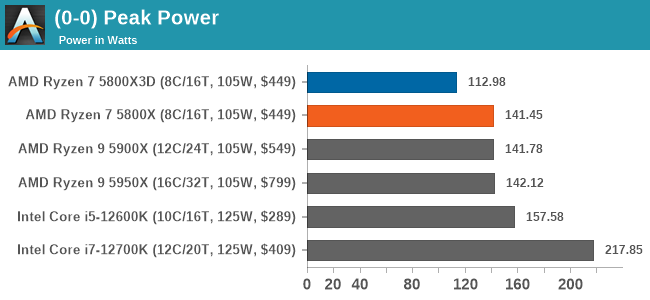
Looking at the power draw between the Ryzen 7 5800X3D and the other chips tested, it is more power-efficient than the original Ryzen 7 5800X. This could be down to a load VID core voltage as the 5800X3D is actually clocked lower by 100 MHz at turbo clock speeds.
Office
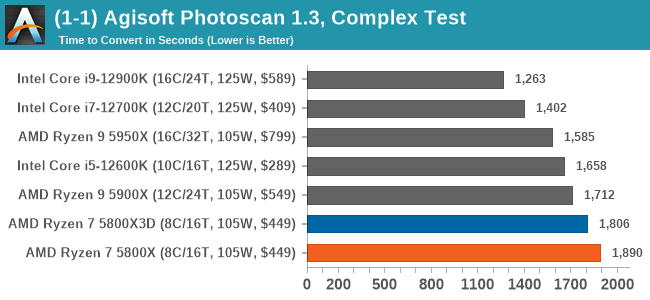
In our office benchmark, the newer Ryzen 7 5800X3D performs similarly to the previous Ryzen 7 5800X processor.
Science
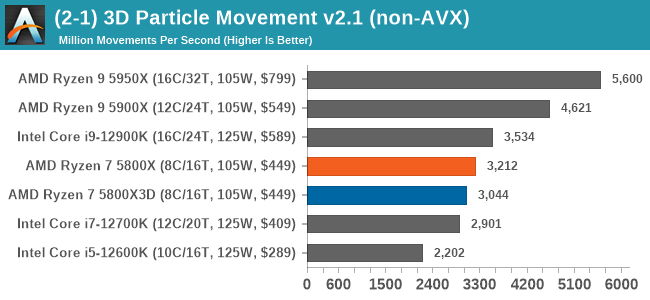
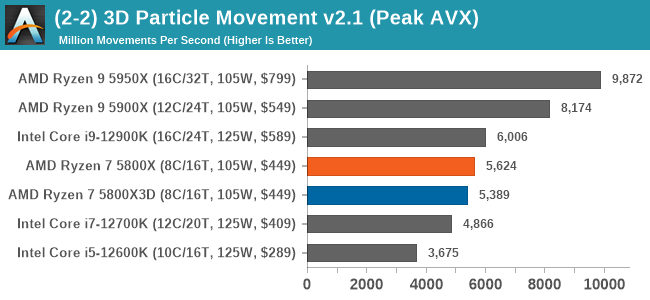
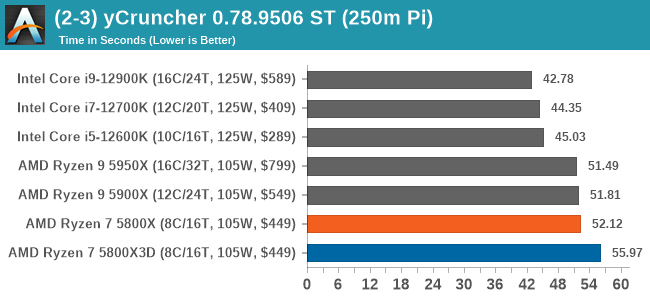
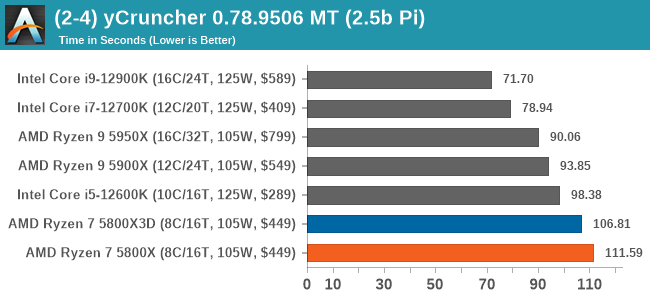
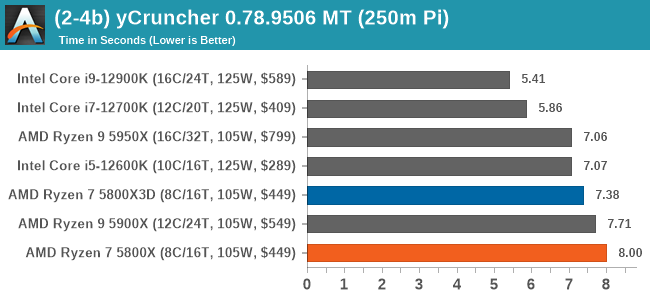
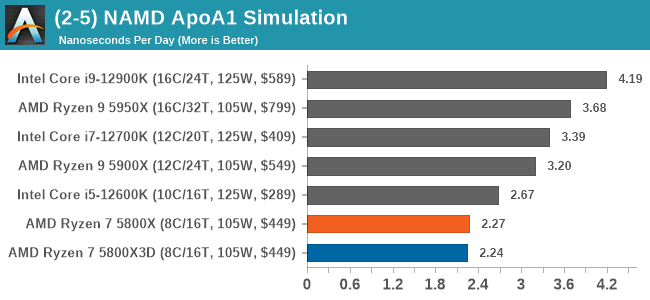
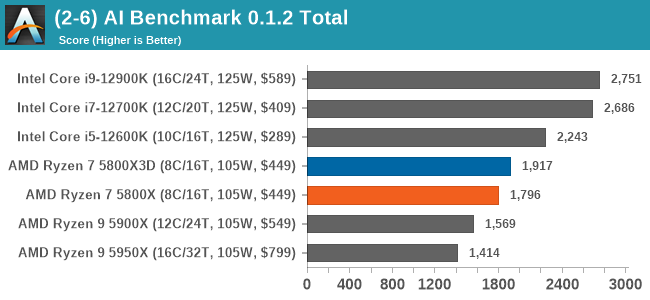
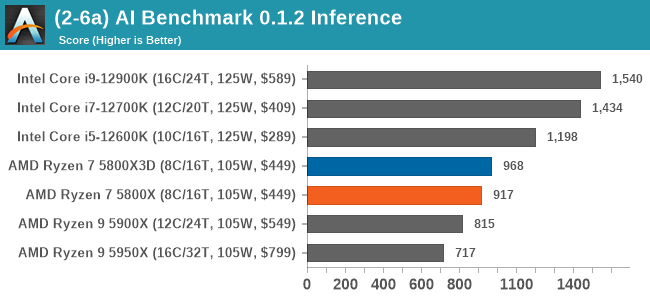
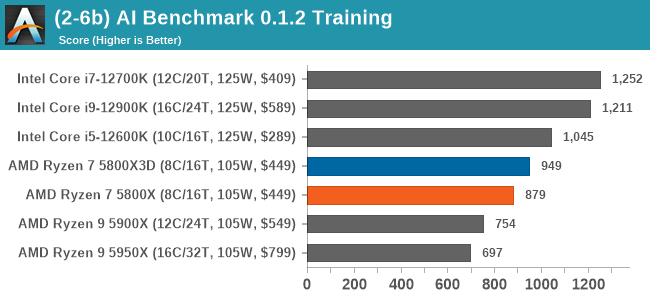
Our science-based benchmarks, for the most part, show that the Ryzen 7 5800X is slightly better computational-wise than the Ryzen 7 5800X3D. This is primarily due to the 5800X being clocked 100 MHz higher than the newer 5800X3D.
Where the extra L3 cache can benefit performance, it does, including in AI Benchmark, but overall the performance is very similar between both chips.
Originally published at https://www.anandtech.com/show/17337/the-amd-ryzen-7-5800x3d-review-96-mb-of-l3-3d-v-cache-designed-for-gamers (Wayback Machine).