
SFF Review - Shuttle XPC SN25P
- Posted in
- Systems
Noise and Heat
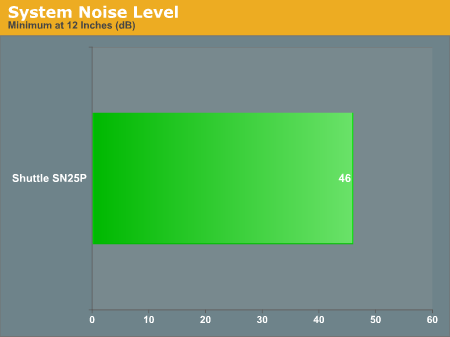
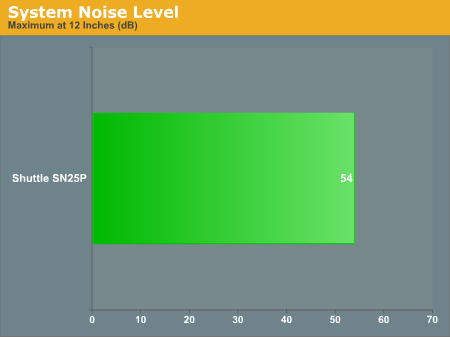
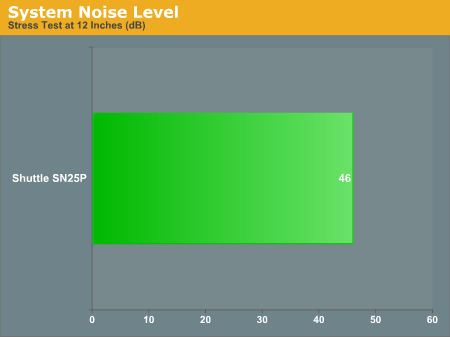
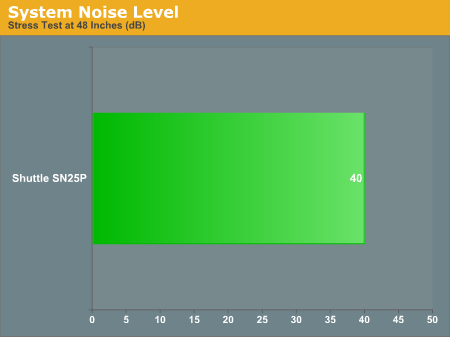
We run two sets of noise tests, in order to provide a more comprehensive picture of how loud each SFF is. Our standard test uses the same setup as our performance benchmarks. For our low-noise test, we install a fanless GPU into the system, or for systems with integrated graphics, we will use those. Mid-range to high-end graphics cards can contribute substantially to the amount of noise that a system emits, and using a lower performing graphics card will frequently reduce noise levels to the point where our SPL meter can no longer produce accurate readings. In such a case, we will simply put 30 dB as the value, and for most people, this will be close enough to silence that the system will not be noticed. Here are the results for the SN25P.
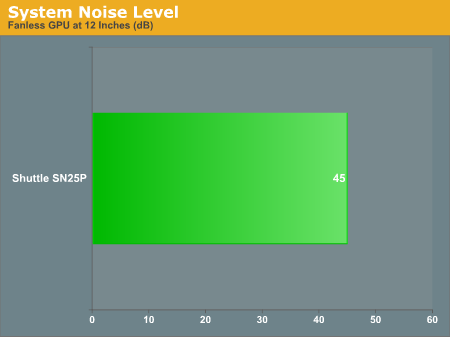
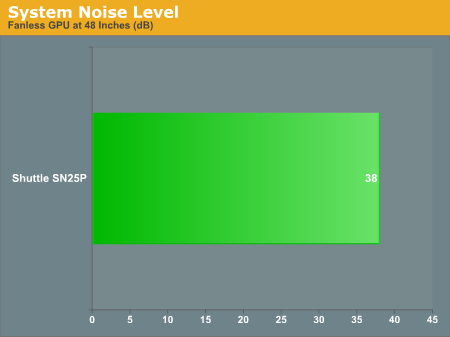
For the heat test, we use a laser thermometer to record the temperatures of various key components. It is important to note that these are surface temperatures only and not a reliable means of determining core temperatures. Most system BIOSes report temperatures for the CPU, but in the past, we have found that differences in BIOS programming can cause a difference of 10° C or more. What is really important with a SFF unit is that the system functions as advertised. Slightly higher system temperatures are often accompanied by lower noise levels, which we feel is a fair compromise.
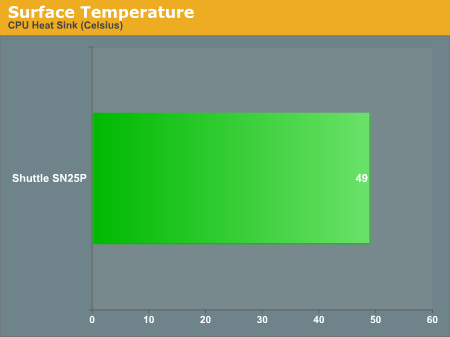
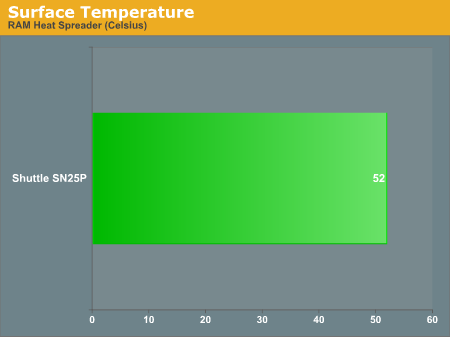
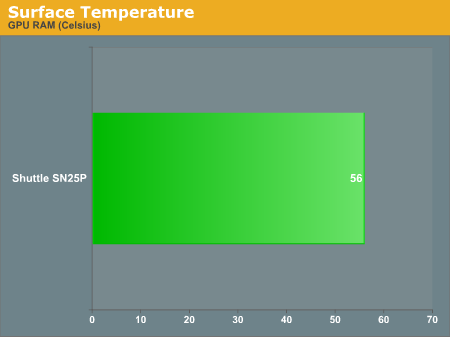
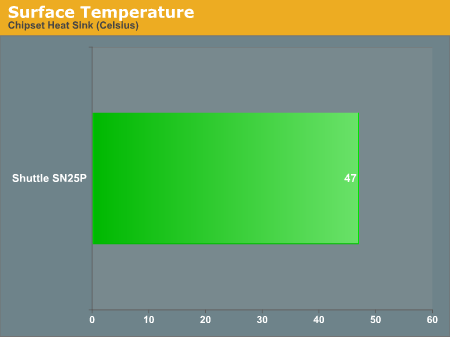
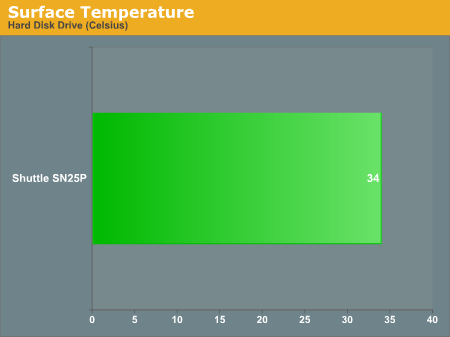
The heat levels of the SN25P were more than acceptable. We did not experience any issues during testing, and even with three HDDs installed, the design appears to provide sufficient cooling. (Loading up the system with three HDDs will typically increase noise levels, however.)
Originally published at https://www.anandtech.com/show/1640 (Wayback Machine).