
IDF Spring 2005 Day 1 - Craig Barrett's Keynote
- Posted in
- Trade Shows
More about Moore's Law
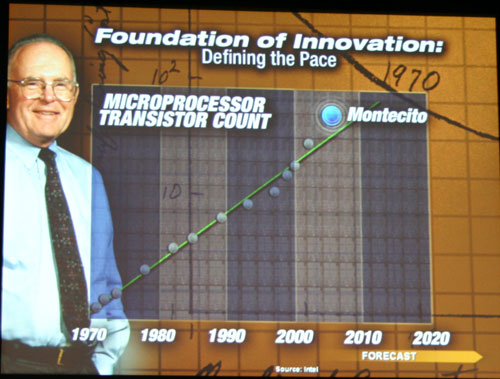
Barrett once again reaffirmed that Moore's Law is not slowing down and showcased their commitment to 65, 45, 32 and 22nm processes for the future.
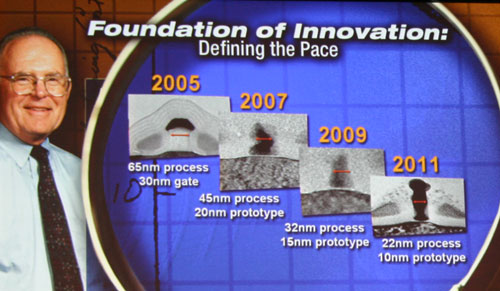
Intel appears to be committed to a new process release every 2 years, with the next one being 65nm at the end of this year (publicly available in Jonah/Yonah in 2006). Intel's 45nm process will be introduced similarly at the end of 2007, with product introduction in the beginning of 2008.
Barrett also reaffirmed Intel's strategy to move away from clock speed increases to improve performance instead focusing on multicore technologies. Intel's stance on multicore is similar to what other microprocessor manufacturers have talked about for future products.
A big focus of this IDF is obviously dual and multicore technologies. In the morning's keynote Intel confirmed that next year, 85% of Intel's products/processors will be multicore next year. Intel views multicore as a solution to the demand for performance at continually strict power envelopes.
As a demo of what high performance multicore CPUs will enable, Intel showcased a more polished version of the interactive UI that was shown off at CES. Using a combination of motion sensors in a display as well as some powerful software, the demo showcased the ability to use hand gestures to navigate through video messages.
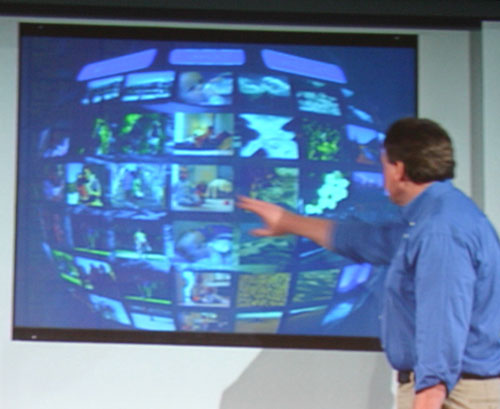
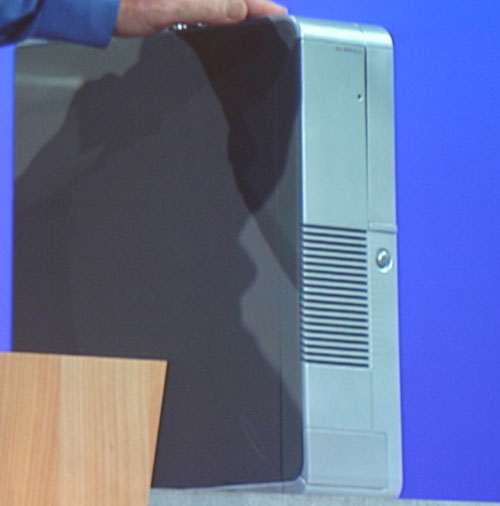
Barrett showed off two examples of "digital home" PCs, both based off of Intel dual core platforms.
First a 2005 model which looks a lot like a Shuttle SFF with more angles:
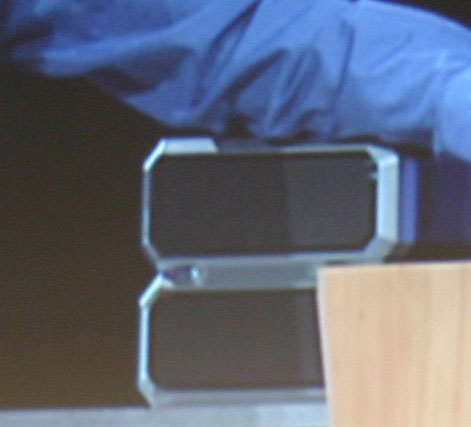
Then a 2006 model which looks more like a home theater component:

Barrett also showcased an office model, which looks quite a bit like many of the BTX design samples we've seen in the past:
Originally published at https://www.anandtech.com/show/1629 (Wayback Machine).