
Workstation Graphics: AGP Cross Section 2004
- Posted in
- GPUs
Image Quality
The first issue that we will address is trilinear and anisotropic filtering quality. All three architectures support at least 8:1 anisotropic sampling, with ATI and NVIDIA including 16:1 support. We used the D3D AF Tester to examine the trilinear and anisotropic quality of each card, and found quite a few interesting facts. NVIDIA does the least amount of pure trilinear filtering, opting for a "brilinear" method, which is bilinear near mip levels and trilinear near transistions. ATI's trilinear filtering seems a bit noisy, especially when anisotropic filtering is enabled. 3Dlabs does excellent trilinear filtering, but their anisotropic filtering algorithm is only really applied to surfaces oriented near horizontally or vertically.Of course, pictures are worth a thousand words:
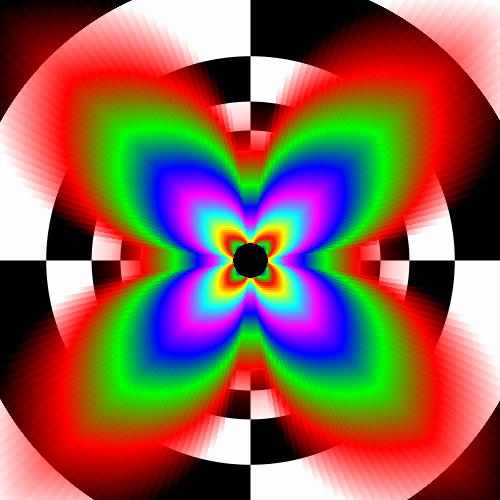
This is the 3Dlabs card with 8xAF applied.
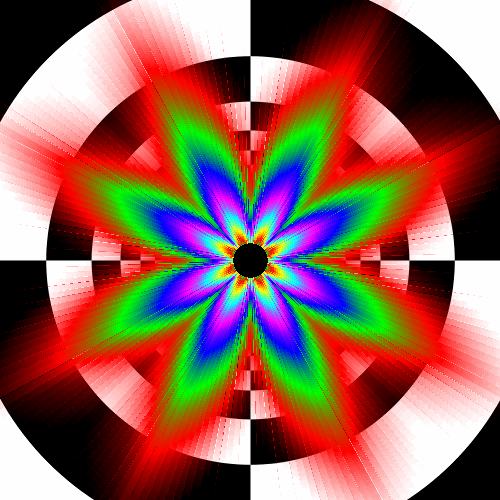
This is the ATI card with 16xAF applied.
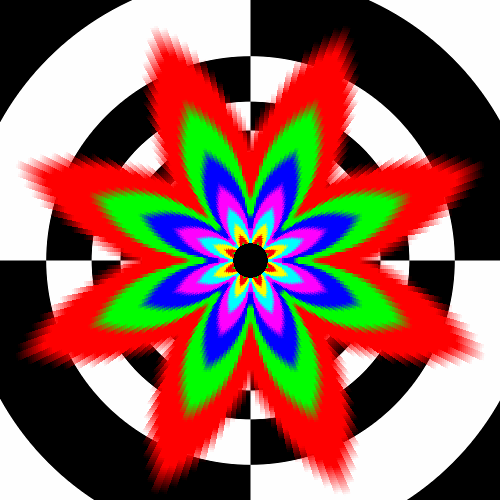
This is the NVIDIA card with 16xAF applied.
Anisotropic filtering is employed less in professional applications than in games, but trilinear filtering is still very important. Since the key factor in trilinear filtering is to hide transitions between mip-map levels, and the NVIDIA card accomplishes this, we don't feel that this is a very large blow against the Quadro line. Of course, we would like to have the option of enabling or disabling this in the Quadro driver as we do in the consumer level driver. In fact, the option seems almost more important here, and we wonder why it is missing.
On the application side, we were able to use the SPECapc benchmarks to compare image quality between the cards, including custom drivers. We will want to take a peek at line AA quality. Looking at one of the images captured from the 3dsmax APC test, we can easily compare the quality of line AA between all three cards. Looking at the diagonal lines framing the camera's view volume, we can see that ATI does a better job of smoothing lines in general than either of the other two GPUs. These same lines look very similar on the NVIDIA and 3Dlabs implimentation. Upon closer examination, however, the Quadro FX 4000 presents an advantage. Horizontal and vertical lines have slightly less weight than on the other two architectures. This helps keep complex wireframe images from getting muddy. Take a look at what we're talking about:
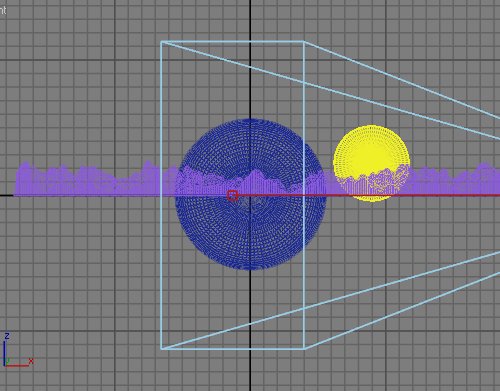
The Wildcat Realizm 200 with line antialising under 3dsmax 6.
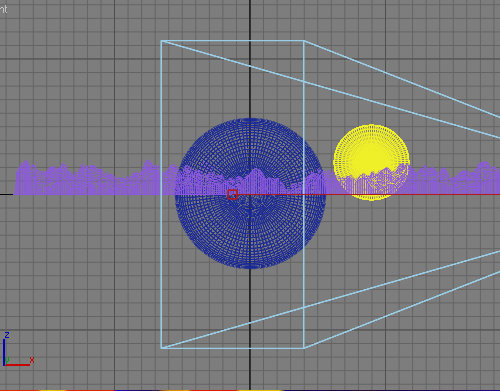
The Quadro FX 4000 with line antialising under 3dsmax 6.
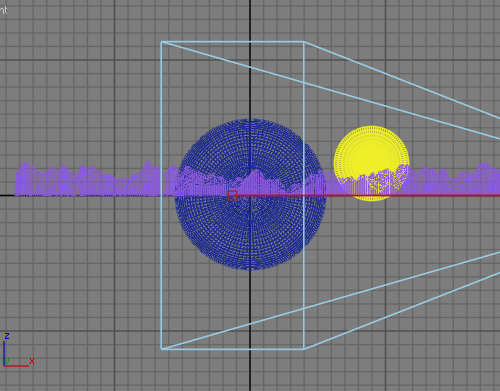
The FireGL X3-256 with line antialising under 3dsmax 6.
We only noticed one difference between the capabilities of the cards when looking at either standard OpenGL or custom drivers. It seems that the 3Dlabs card is unable to support stipple patterns for lines (either that or it ignores the hint for 3dsmax). Here's a screenshot of the resulting image, again from the 3dsmax APC test (the sub-object edges test).
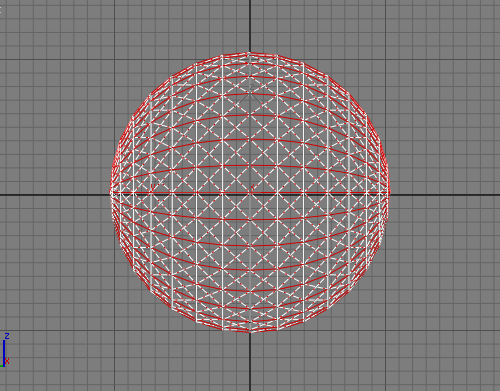
The Quadro FX 4000 line stipple mask under 3dsmax 6.
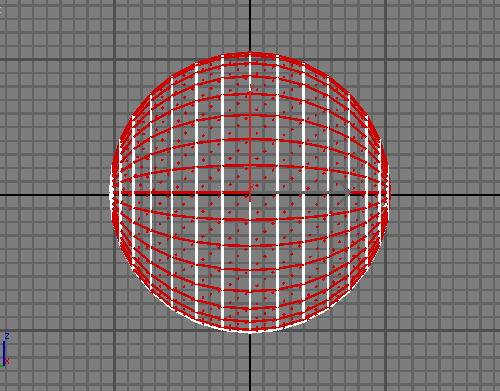
The FireGL X3-256 line stipple mask under 3dsmax 6.
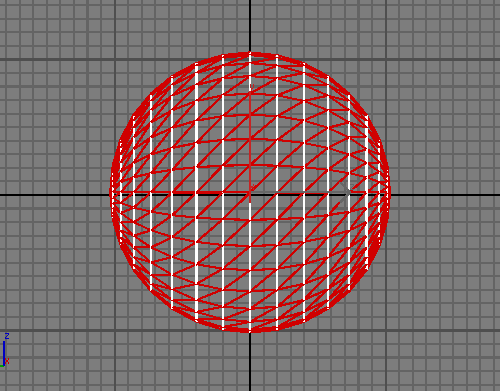
The Wildcat Realizm 200 line stipple mask under 3dsmax 6.
The Quadro FX 4000 gets big quality points for their line stippling quality. It's not a very widely used feature of OpenGL, but the fact that the 3Dlabs card doesn't even make an attempt (the FireGL X3 support is quite pathetic) is not what we want to see at all. This is especially true in light of the fact that both of our consumer level cards were able to put off images with the same quality of the ATI workstation class card under the D3D driver.
Moving on to shader quality, we would like to mention again that GLSL shader quality on the 3Dlabs part is top notch and second to none. Since we don't have an equivalent to Shadermark in the GLSL world, we'll only take a look at HLSL shader support.
For ATI, 3Dlabs, and NVIDIA, we were running in ps2_0b, ps2_0a, and ps3_0 mode respectively. We're taking a look at shader 15 from Shadermark v2.1, and you can notice that ATI and NVIDIA render the image slightly differently, but there is a bit of quantization evident in the 3Dlabs image. This type of error was apparent in multiple shaders (though there were plenty that were clean looking).
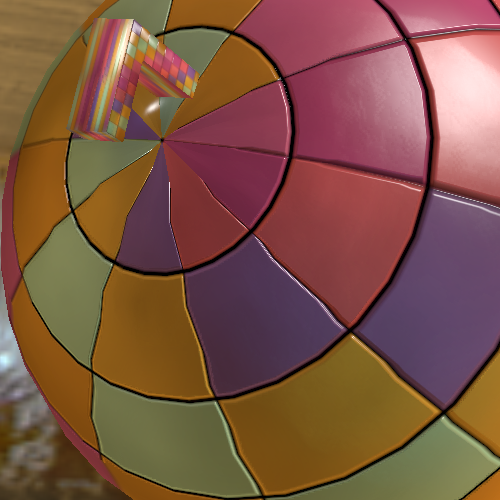
Quadro FX 4000
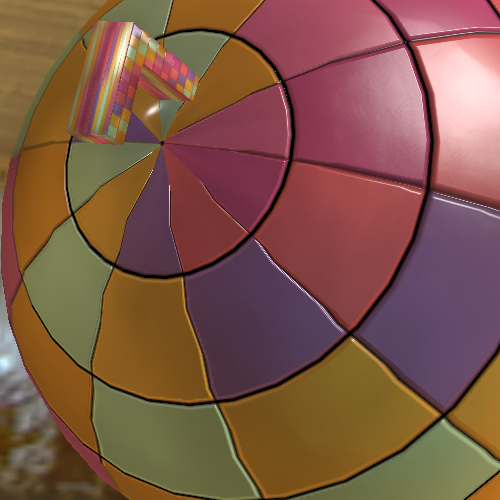
FireGL X3-256
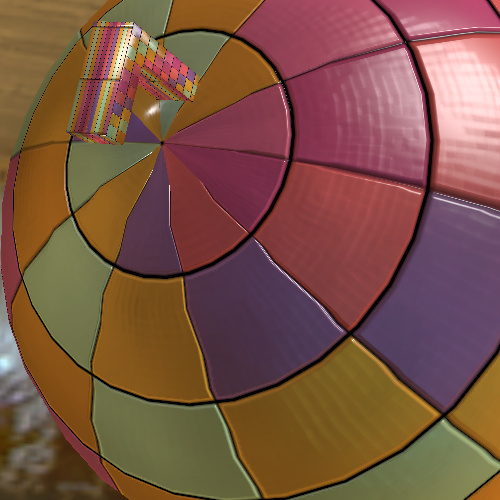
Wildcat Realizm 200
We really do hope that through driver revisions and pushing further into the Microsoft and DirectX arena, 3Dlabs can bring their HLSL support up to the level of their GLSL rendering quality.
Originally published at https://www.anandtech.com/show/1575 (Wayback Machine).