
Price Guides November 2004: Video and Memory
- Posted in
- Guides
Video Cards - NVIDIA
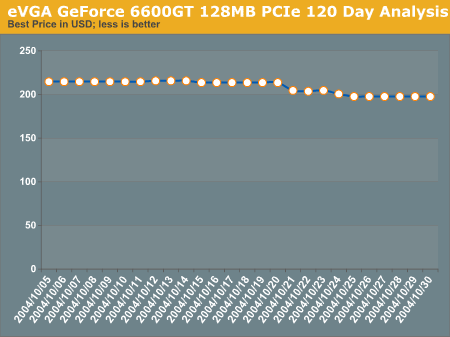
NVIDIA has pretty well been at the front of the pack with getting PCI Express cards to market in any meaningful numbers. This factor has allowed them to do so at relatively competitive prices, which make PCIe video cards much more plausible for anyone building a new system. There's no real reason to choose PCIe over AGP or vice versa, but if all other factors are about equal, PCIe makes more sense for its forward compatibility.This week's pick goes to eVGA for their GeForce 6600GT card. This card, based on the latest NV43 core, brings the latest round of cards from NVIDIA well into the realm of affordability and gaming performance. On top of being a PCIe card, it also boasts a sub-$200 price tag that puts it roughly on par with this week's ATI pick, the Sapphire Radeon 9800 Pro 256.
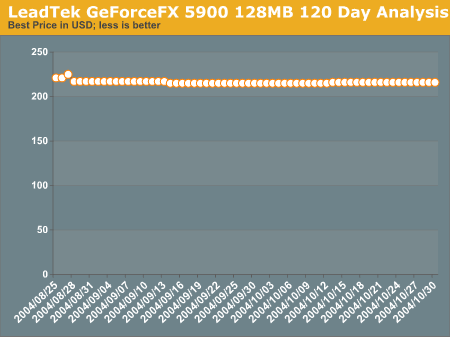
For the AGP steadfast, LeadTek's GeForceFX 5900 128MB makes a great choice if gaming is important, but not so much to warrant several hundred dollars. Also priced near the $200 mark, the 5900 remains NVIDIA's last-gen workhorse capable of good frame rates and quality in today's games.
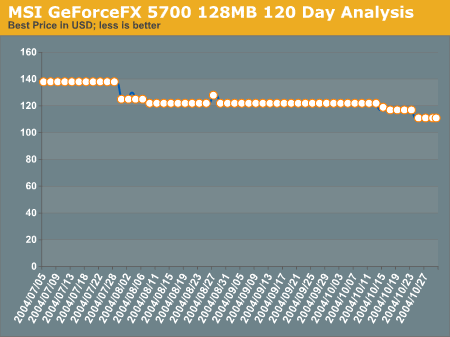
The MSI GeForceFX 5700 128MB looks like a good choice today if you require some gaming, yet don't need, or want, the latest and greatest for your choice of games. With prices slowly, but surely, coming down for some of NVIDIA's PCIe cards, some of which are priced well against even a 5700, it might be worth waiting a little until you can make the switch to PCIe. In this way, you may still not be buying the highest end possible video card, but it will at least be PCIe, which gives you some leeway when it comes to future use of the card. As far as performance goes, changing to PCIe won't make any difference with cards at this level, or any for that matter.
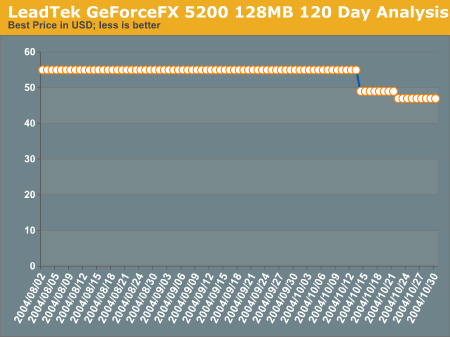
Last, but not least, is the budget or non-gaming category. While some motherboards, such as those with the nForce2 chipset and onboard NVIDIA graphics, come with onboard video, many others do not. This is especially true in the build-it-yourself market where the typical buyer is an enthusiast and doesn't usually want video onboard. There are still cases where it's preferable to have just that, but for the rest of the time, an add-in graphics card tends to work well and gives the user some upgrade options as well. This does not mean that most boards, which sport onboard video, don't also sport an AGP slot. In any case, if your system doesn't need to do anything graphically intensive, virtually any card can do the trick. Even so, it's best to get something that is fairly recent, since even operating systems have started to incorporate eye candy that some lower-end cards can't handle too well. For this situation, a simple GeForceFX 5200, such as the 128MB version from LeadTek, is more than sufficient and should suit the task at hand well for web surfing, document editing and other basic computing needs.
Originally published at https://www.anandtech.com/show/1527 (Wayback Machine).