
The Team Group MP34 512GB SSD Review: Refining Phison's NVMe Workhorse
AnandTech Storage Bench - Heavy
Our Heavy storage benchmark is proportionally more write-heavy than The Destroyer, but much shorter overall. The total writes in the Heavy test aren't enough to fill the drive, so performance never drops down to steady state. This test is far more representative of a power user's day to day usage, and is heavily influenced by the drive's peak performance. The Heavy workload test details can be found here. This test is run twice, once on a freshly erased drive and once after filling the drive with sequential writes.
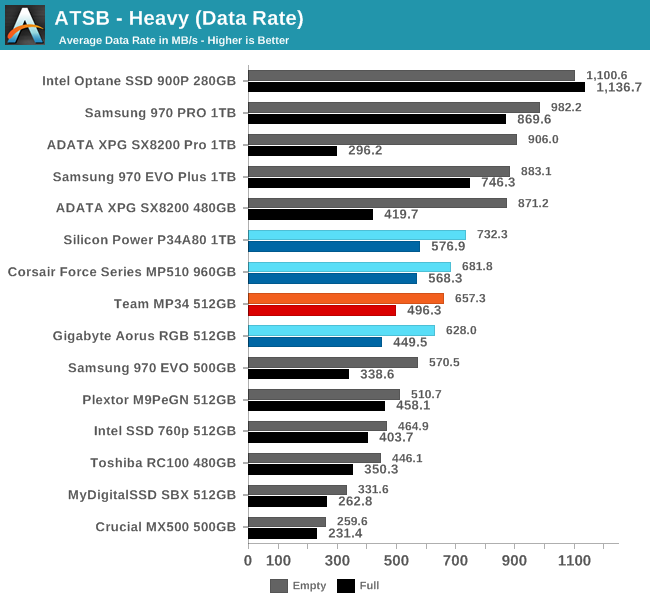
The new firmware that the Team Group MP34 brings leads to small but clear improvements to the average data rate on the Heavy test. This is true for both empty-drive and full-drive test runs, so Phison hasn't made the kind of serious tradeoffs that Silicon Motion did moving from the SM2262 to SM2262EN which has the best peak performance but regressed significantly in worst-case full drive performance.
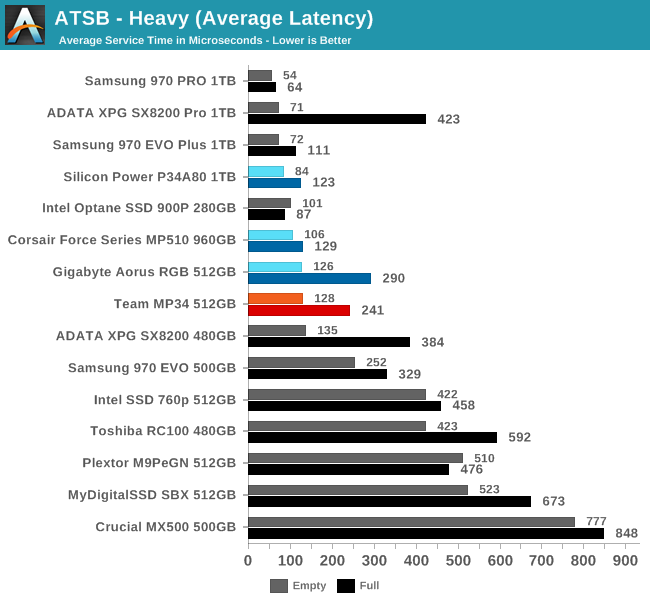
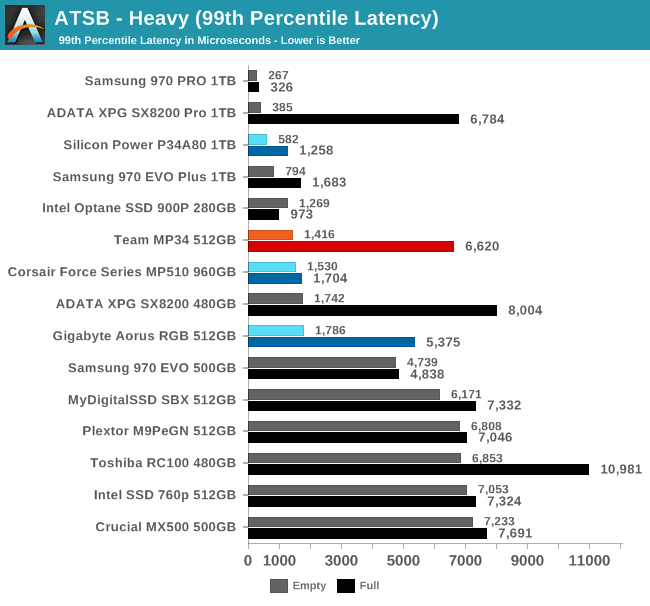
Average latency for the Team MP34 on the Heavy test is basically unchanged when the test is run on an empty drive, but slightly improved for the full-drive test run. The 99th percentile latency scores show the opposite effect: modest improvement for the easier empty-drive test run, but slightly worse for the full-drive test runs. The full-drive QoS is still better than Silicon Motion's drives offer.
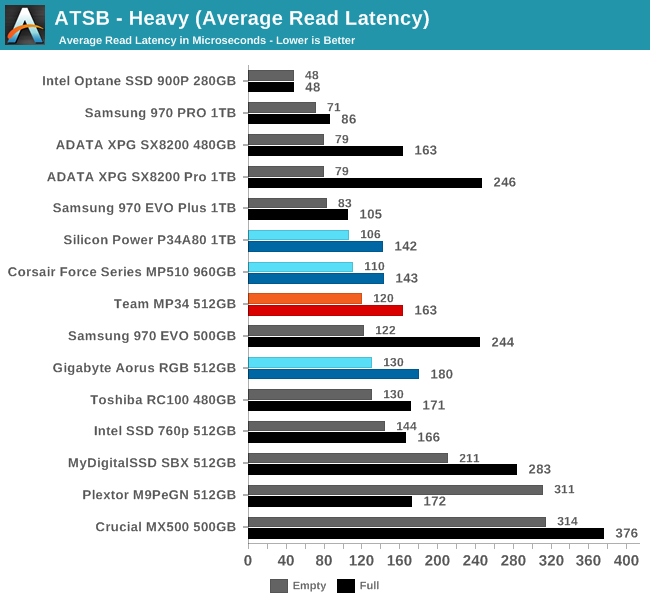
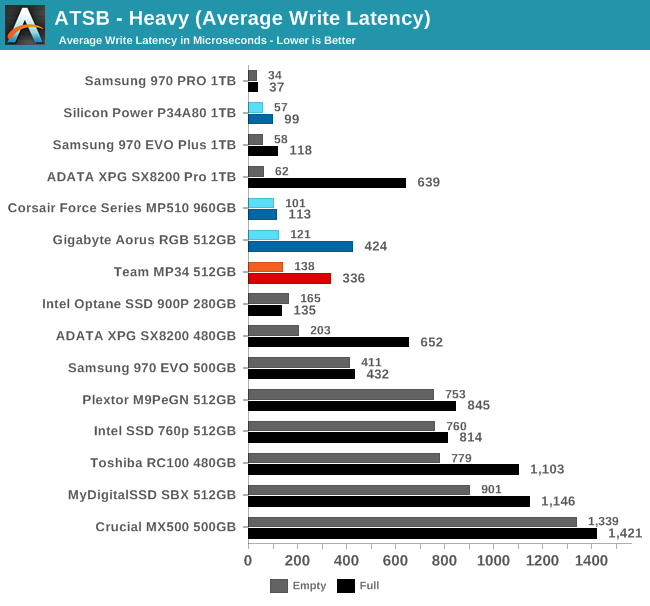
Average read latencies for the MP34 are slightly improved over the old firmware for both empty and full drive test runs, while average write latencies show a slight regression in empty-drive performance in exchange for a larger improvement in full-drive performance.
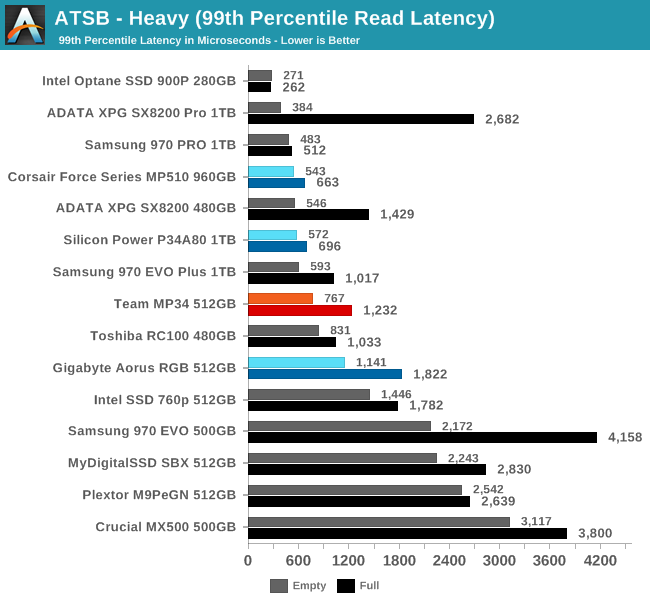
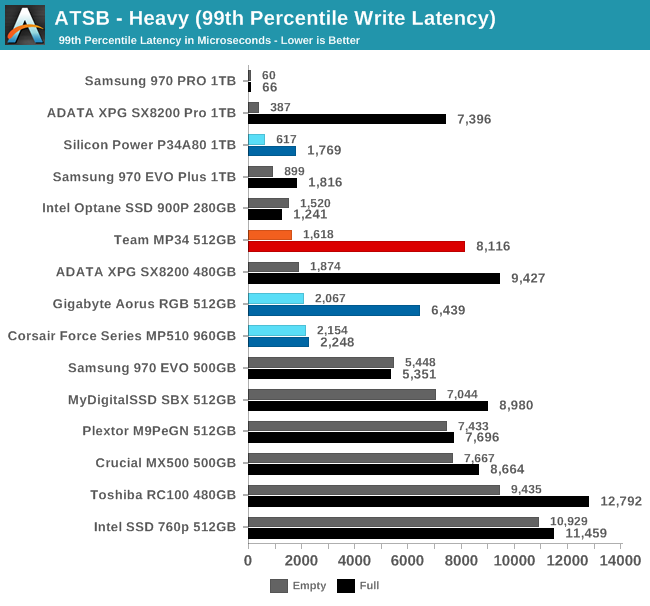
The 99th percentile read latencies for the MP34 on the Heavy test are significantly improved over the older firmware, bringing the 512B MP34's scores closer to most 1TB NVMe drives than to the average 512GB NVMe drive. The changes to 99th percentile write latency are a mixed bag, with empty-drive performance improving slightly but full-drive performance getting worse, and the latter is where the 1TB drives tend to have a big advantage over 512GB drives to begin with.
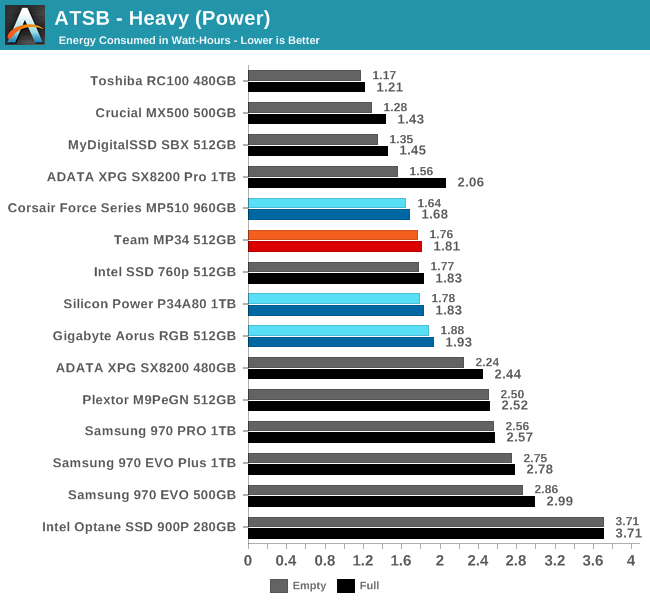
Setting aside the energy usage results for the drive with RGB LEDs, the general power efficiency picture for the Phison E12 hasn't changed much with the new firmware. It's still one of the more efficient high-end NVMe controllers under load, but the entry-level NVMe drives and SATA drives are generally more efficient.
Originally published at https://www.anandtech.com/show/14331/the-team-group-mp34-512gb-ssd-review (Wayback Machine).