
Shuttle SK83G: VIA's Shot at SFF
- Posted in
- Systems
Shuttle SK83G: FX83 Motherboard
| Motherboard Specifications | |
| CPU Interface | Socket 754 Athlon 64 |
| Chipset | VIA K8M800 + VIA VT8237 |
| CPU Ratios | None |
| Bus Speeds | 200MHz to 232MHz (in 1MHz increments) |
| PCI/AGP Speeds | None |
| HyperTransport | 1x-4x (200MHz to 800MHz) |
| Core Voltage | up to 1.70V in 0.0250V and 0.050V increments |
| DRAM Voltage | 2.5V to 2.8V in 0.1V increments |
| AGP Voltage | 1.5V to 1.8V in 0.1V increments |
| Chipset Voltage | 1.3V to 1.5V in 0.1V increments |
| Memory Slots | Two 184-pin DDR DIMM Slots |
| Expansion Slots | 1 AGP 8X Slot 1 PCI Slot |
| Onboard SATA/RAID | 2 X SATA connectors 2 X ATA100 connectors RAID 0, RAID 1 |
| Onboard IDE | Two Standard NVIDIA ATA133/100/66 |
| Onboard USB 2.0/IEEE-1394 | 6 X USB 2.0 ports (2 front, 4 rear) power by VT8237 One rear FireWire port powered by VT6307 |
| Onboard LAN | VIA VT6103 10/100 Ethernet |
| Onboard Audio | Realtek ALC650 codec (6 channel sound) |
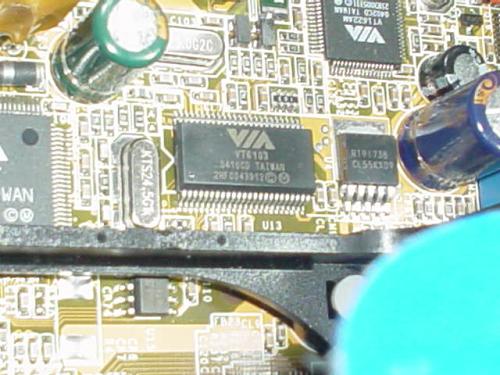
VIA's VT6103 LAN chip is a standard 10/100 Ethernet solution that will meet the needs of the average Internet user and home networking user, provided they don't transfer very large amounts of data very often in their home network. That is, a 10/100 solution is adequate for transferring large amounts of data, but it just isn't nearly as fast as 10/100/1000 (dubbed GbE, or Gigabit Ethernet). We bring GbE up because the Shuttle SK83G is competing with nForce3 250Gb SFFs, which natively support GbE for free.
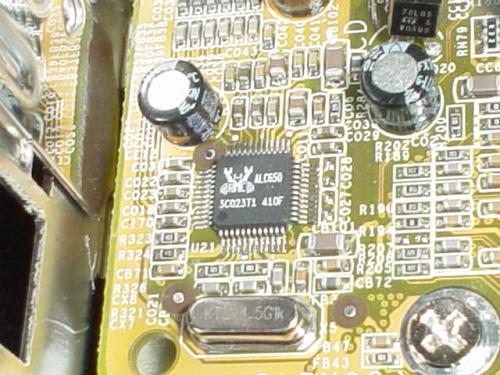
The Shuttle SK83G also comes with a basic 6-channel sound, courtesy of Realtek's ALC650. We're surprised and mildly disappointed that the SK83G didn't come with a more updated version of this codec, specifically the 8-channel ALC680. But still, you will receive quite acceptable sound via this codec. We did our own subjective testing over a period of a week and found no common issues, like crackling or high CPU utilization, during music play.
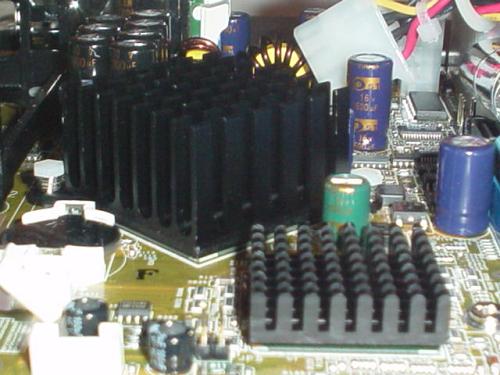
Of course, the most important piece of the SK83G puzzle lies in its chipset. Comprised of the K8M800 North Bridge and VT8237 South Bridge, this chipset's primary advantage over others is its integrated video. VIA's integrated video, dubbed the UniChrome II, is a basic integrated video solution that doesn't offer much more usability or value than as just a backup video processor. In other words, if you can buy a separate video card, we suggest that you do so; as a result, you'll likely experience noticeably better 2D and 3D acceleration. But as backup video, the UniChrome II is more than acceptable.
Originally published at https://www.anandtech.com/show/1390 (Wayback Machine).