
The ASRock X399 Taichi Motherboard Review: Cost-Effective Threadripper
Conclusion
ASRock designed the X399 Taichi to be a product that would appeal to the largest number of users possible, a verity that is also supported by the generic marketing efforts that are not focused on any specific group of users. The motherboard has a wide range of features and competitive pricing, while it retains the capability to support multi-GPU systems. Its design and layout are largely based on the support of multiple graphics cards, with both mechanical and electrical support for powerful cards, as well as the supply of the necessary PCIe bridges for building dual, triple, and quad GPU systems.
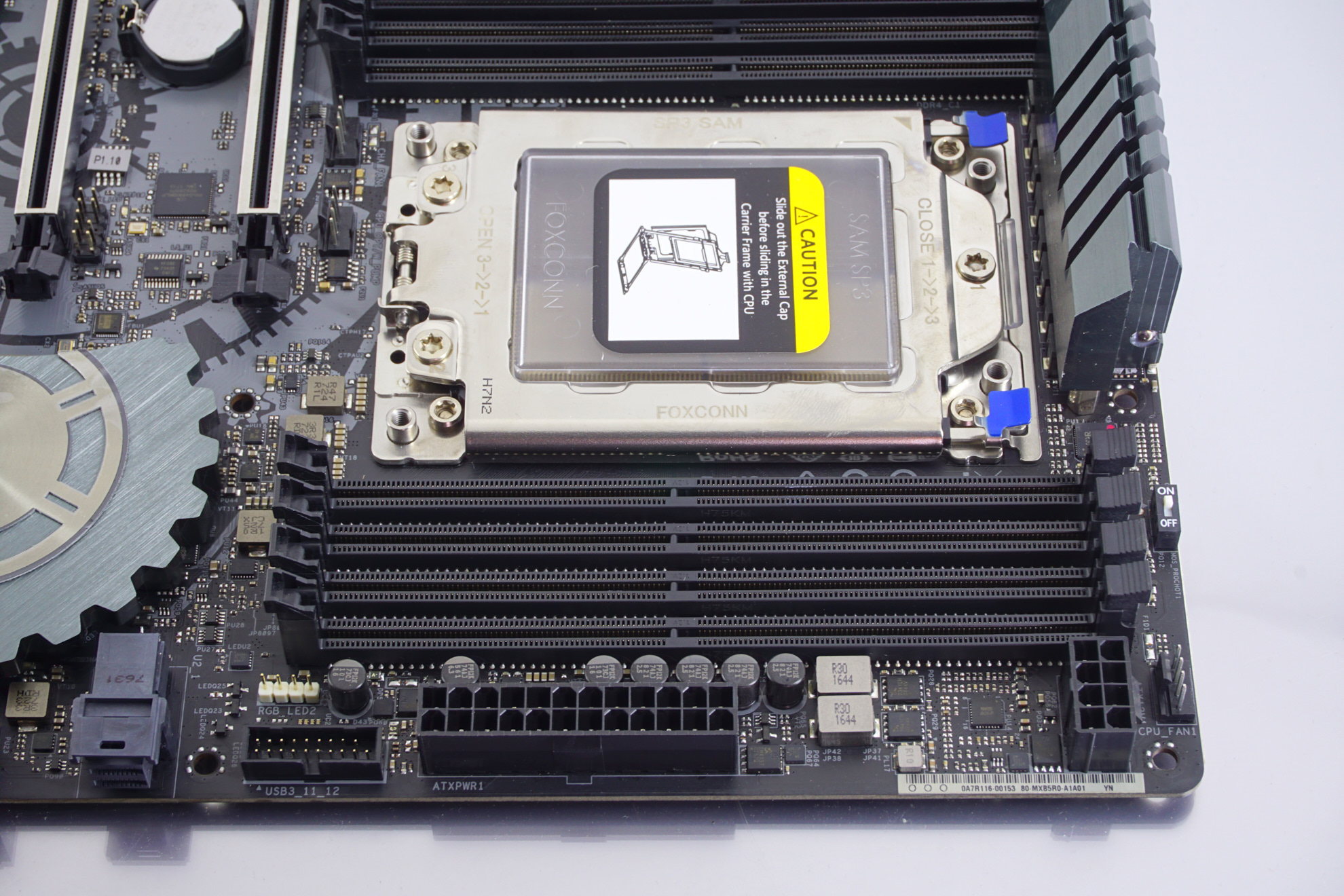
For the most part, the ASRock X399 Taichi shares the same features and subsystems with all AMD X399 motherboards currently available. ASMedia supplies the ASM3142 USB 3.1 Gen 2 controller, the Realtek ALC 1220 codec is the heart of the audio system, and Intel provides the two I211-AT NICs. ASRock did not even remove the wireless connectivity features, with 802.11ac Wi-Fi and Bluetooth 4.2 present onboard. In term of storage device ports, the motherboard still has eight SATA ports and three M.2 slots that are exactly what is currently available on other AMD X399 motherboards (or more), plus an extra U.2 port that shares its lanes with a M.2 slot.
Despite the comparatively low price of the motherboard, the ASRock X399 Taichi is not lacking anything in terms of quality or implementation when compared to its more expensive alternatives. The power circuitry is on par with the most expensive AMD X399 motherboards currently available and technically better than that of significantly more expensive implementations. Furthermore, the designer did not cut corners on the application of the major subsystems either, with a fully isolated audio circuitry that also features audio-specific capacitors and a proper headphones amplifier.
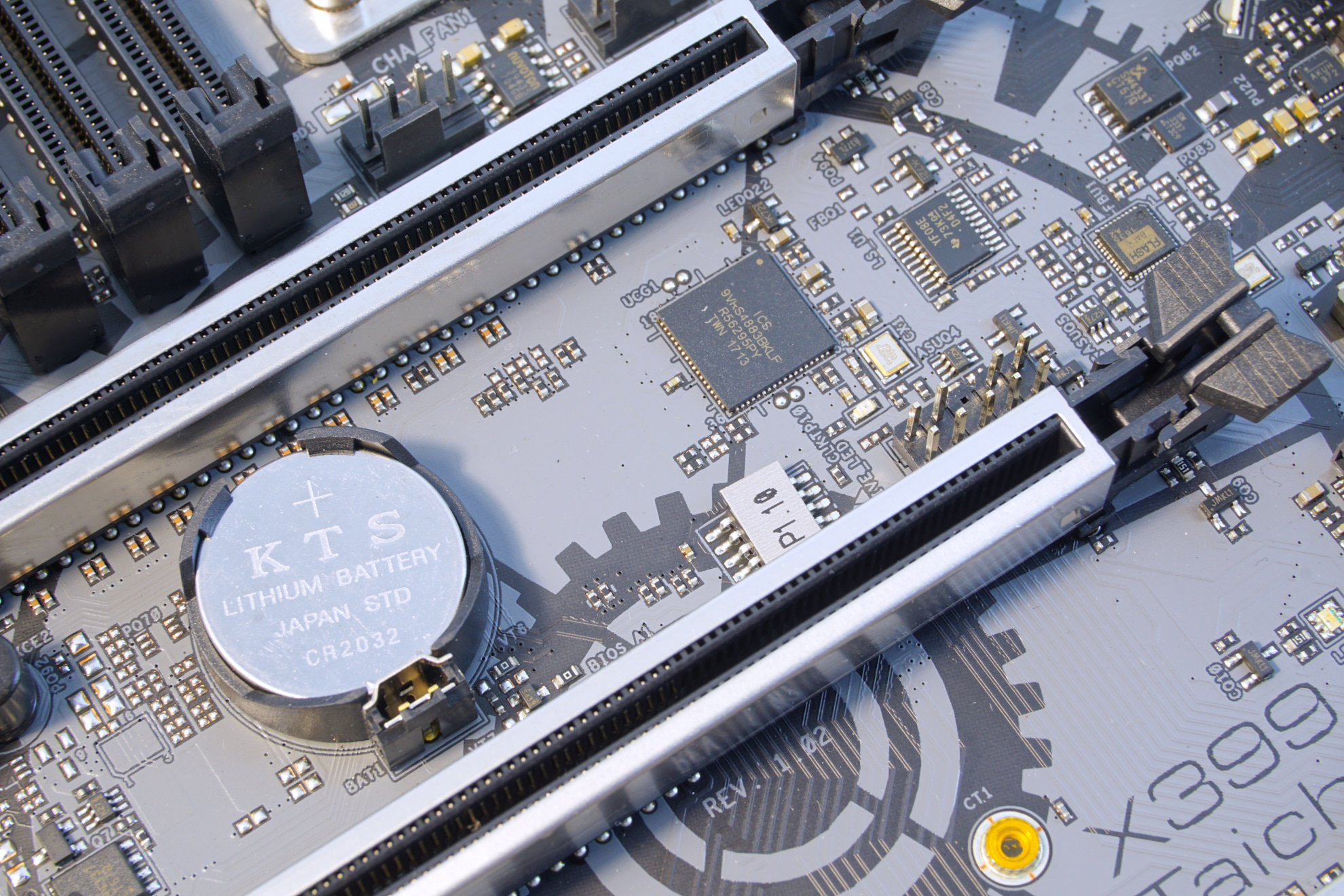
The ASRock X399 Taichi also is an aesthetically pleasing motherboard. We feel that the designer did an excellent job creating an interesting and yet subtle aesthetic design. Everything, from the colors to the geometric shapes, are excellently combined to give the ASRock X399 Taichi its distinct appearance. On the other hand, the gear-shaped chipset heatsink is more than just a cosmetic part, as it has greater size and mass than that of most AMD X399 motherboards currently available, allowing for very low operational temperatures.
On performance, the X399 Taichi did well in our power consumption tests at load, but this is due to it having the least aggressive clocking during benchmarks. Almost all benchmarks, except Blender, despite being within a couple of percent of the top performer, the Taichi was at the bottom of the list. Despite this, our overclocking results showed a very easy 4.0 GHz overclock on air, or a flat 3.4 GHz will knock 86W from a stock system.
Combined with a conservative bundle, the company managed to bring the retail price of the motherboard below $300. For the feature set and performance, the Taichi offers very good value.
AnandTech's AMD Ryzen Threadripper and X399 Motherboard Coverage
- The AMD Ryzen Threadripper 1950X and 1920X Review: CPUs on Steroids
- An AMD Threadripper X399 Motherboard Overview
- Analyzing Threadripper Thermals: Big Base Cooling Wins
- The GIGABYTE X399 DESIGNARE EX Motherboard Review
- The ASRock Fatal1ty X399 Professional Gaming
- The ASUS X399 ROG Zenith Extreme Motherboard Review: Top Tier Threadripper
- AMD Reveals Threadripper 2 : Up to 32 Cores, 250W, X399 Refresh
- GIGABYTE’s X399 Aorus Extreme: The Threadripper 2 Halo Motherboard
- MSI's New Threadripper 2 Motherboard on Steroids: X399 Creation
- New EKWB Threadripper X399 Monoblocks for GIGABYTE and MSI
Originally published at https://www.anandtech.com/show/13137/the-asrock-x399-taichi-motherboard-review (Wayback Machine).