
The ADATA XPG SX8200 & GAMMIX S11 NVMe SSD Review: High Performance At All Sizes
AnandTech Storage Bench - Light
Our Light storage test has relatively more sequential accesses and lower queue depths than The Destroyer or the Heavy test, and it's by far the shortest test overall. It's based largely on applications that aren't highly dependent on storage performance, so this is a test more of application launch times and file load times. This test can be seen as the sum of all the little delays in daily usage, but with the idle times trimmed to 25ms it takes less than half an hour to run. Details of the Light test can be found here. As with the ATSB Heavy test, this test is run with the drive both freshly erased and empty, and after filling the drive with sequential writes.
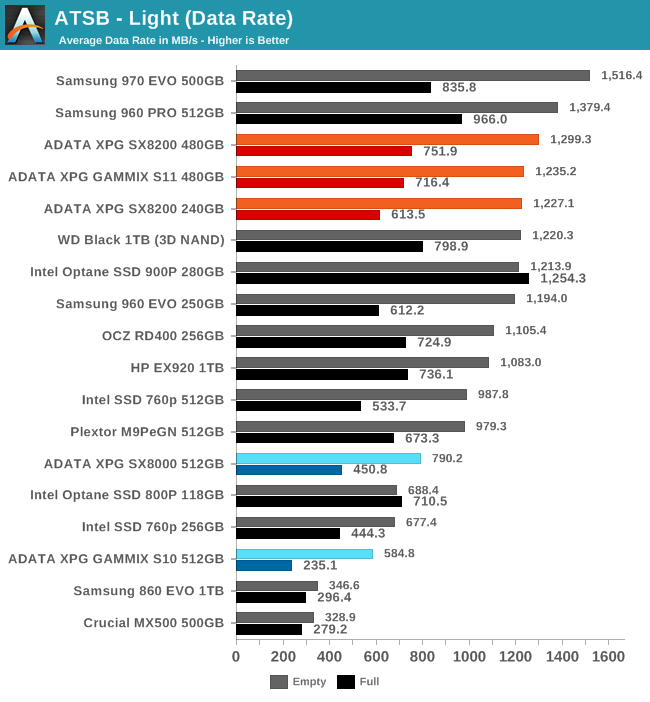
As with the Heavy test, the freshly-erased ADATA SX8200 and GAMMIX S11 deliver great average data rates on the Light test. It isn't quite class-leading performance, but it comes reasonably close, even for the smallest 240GB SX8200. Full-drive performance continues to be much lower, but on this test the performance loss isn't much larger than what other top TLC-based SSDs suffer from.
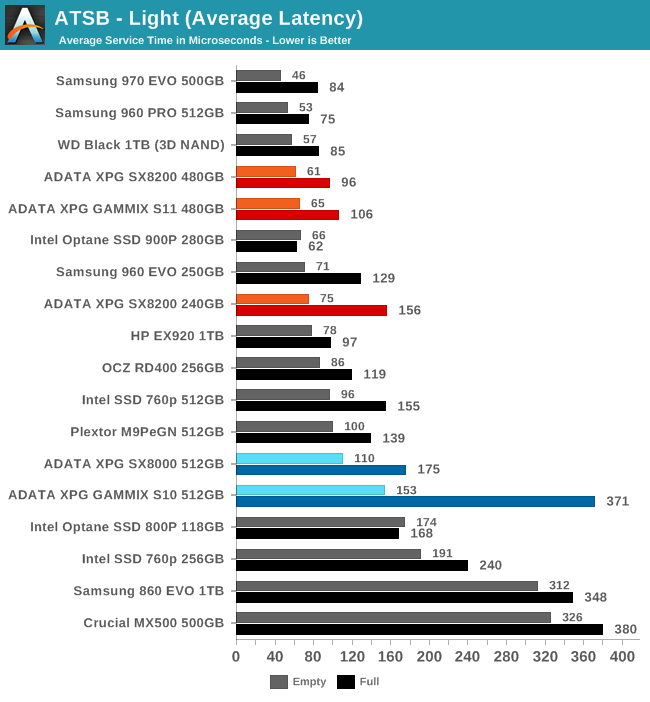
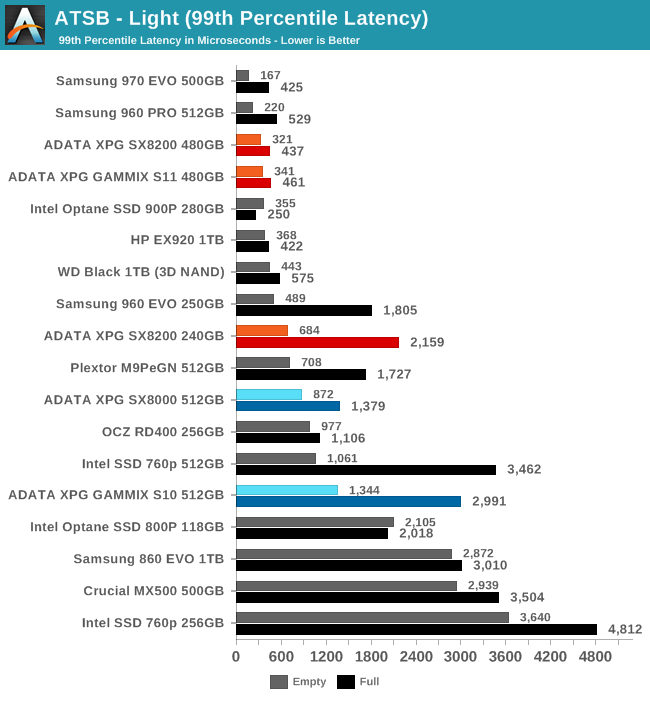
The 99th percentile latency of the 240GB SX8200 is a bit high when the Light test is run on a full drive, but otherwise the latency scores are pretty good. The 480GB SX8200 and GAMMIX S11 have far lower latency on the Light test than either the MLC-based SX8000 or TLC-based GAMMIX S10.
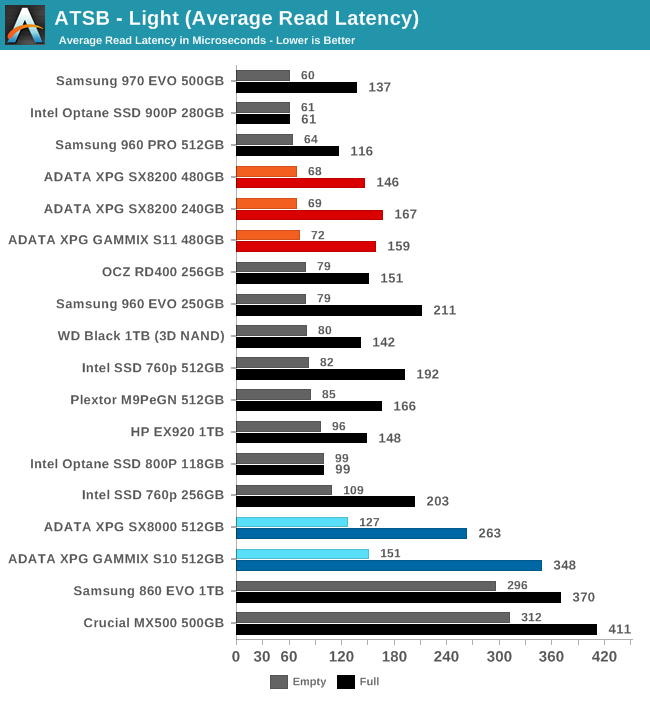
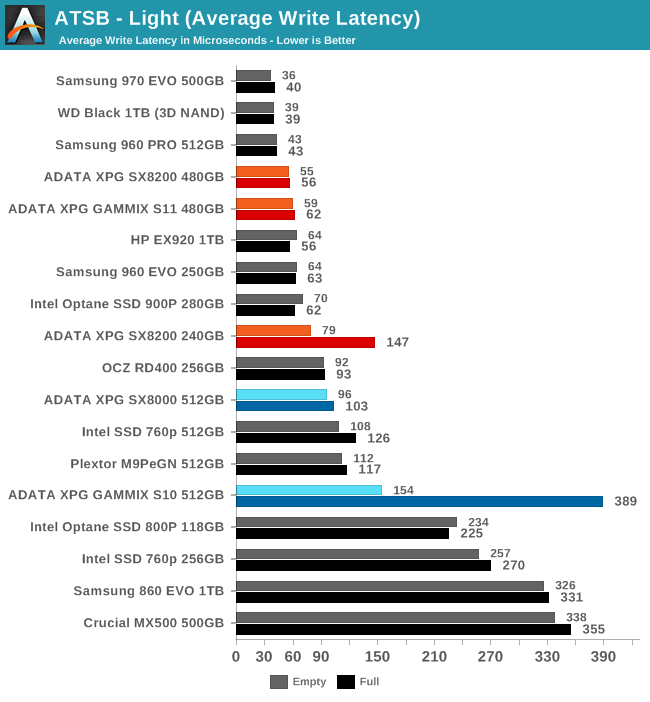
The average read latency scores from the older generation of ADATA NVMe drives weren't bad, but the new generation's scores are excellent. The average write latency scores are also very good, and even the significantly higher latency of the 240GB SX8200's full-drive test run is much better than SATA performance.
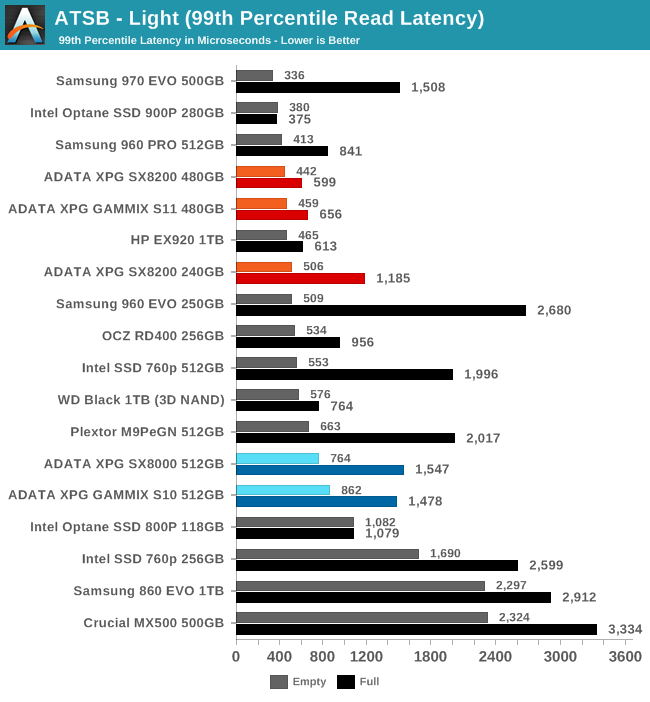
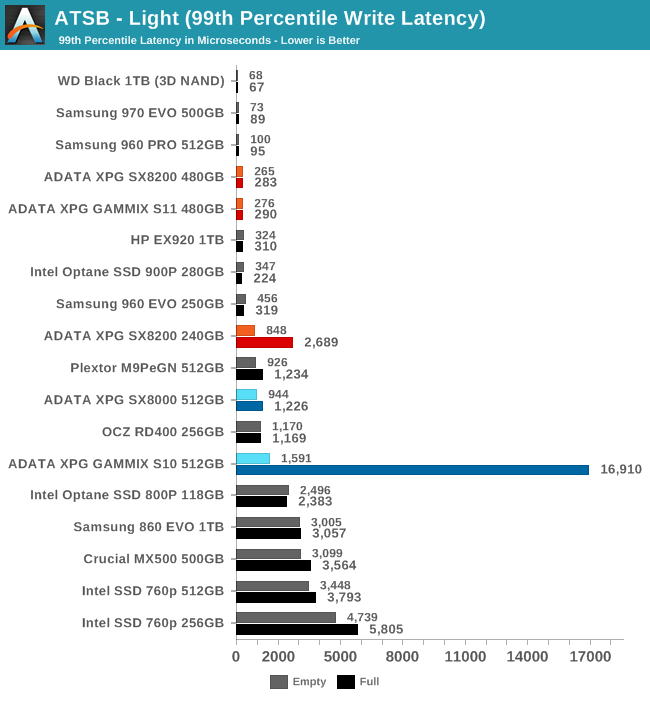
The 99th percentile read and write latency scores from the newer ADATA drives are very good, and the 99th percentile write latency in particular is far better for the 480GB drives than for their predecessors.
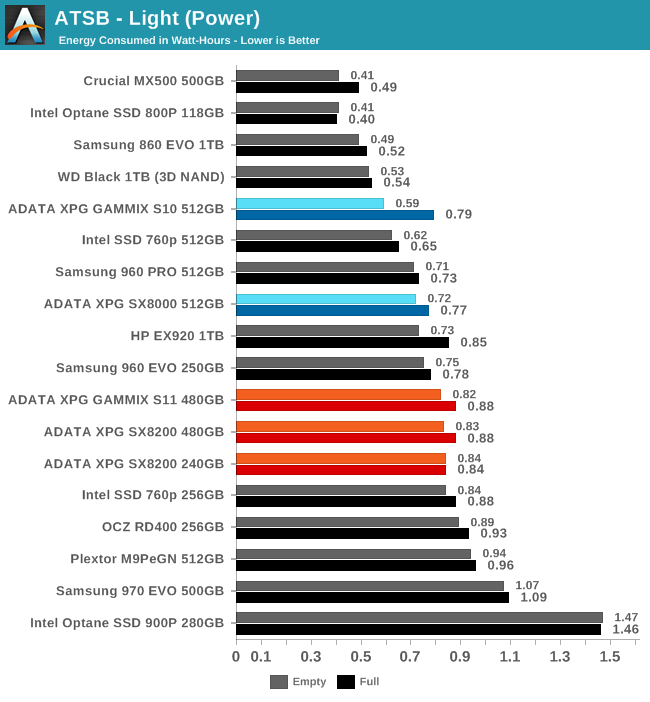
Power efficiency isn't a strong point for the ADATA SX8200 and GAMMIX S11, but their energy usage numbers aren't embarrassing: they're still well below the Samsung 970 EVO, though the older (slower) ADATA drives used a bit less energy and the best current NVMe drives are able to compete with SATA drives for efficiency.
Originally published at https://www.anandtech.com/show/13112/the-adata-sx8200-gammix-s11-nvme-ssd-review (Wayback Machine).