
Marrying Vega and Zen: The AMD Ryzen 5 2400G Review
Conclusion: Raising the Bar for Integrated Graphics
The march on integrated graphics has come and gone in rapid spurts: the initial goal of providing a solution that provides enough performance for general office work has bifurcated into something that also aims gives a good gaming experience. Despite AMD and NVIDIA being the traditional gaming graphics companies, in this low-end space, it has required companies with x86 CPUs and compatible graphics IP to complete, meaning AMD and Intel. While going toe-to-toe for a number of years, with Intel dedicating over half of its silicon area to graphics at various points, the battle has become one-sided - Intel in the end only produced its higher performance solutions for specific customers willing to pay for it, while AMD marched up the performance by offering a lower cost solution as an alternative to discrete graphics cards that served little purpose beyond monitor output devices. This has come to a head, signifying a clear winner: AMD's graphics is the choice for an integrated solution, so much so that Intel is buying AMD's Vega silicon, a custom version, for its own mid-range integrated graphics. For AMD, that's a win. Now with the new Ryzen APUs, AMD has risen that low-end bar again.
If there was any doubt that AMD holds the integrated graphics crown, when we compare the new Ryzen APUs against Intel's latest graphics solutions, there is a clear winner. For almost all the 1080p benchmarks, the Ryzen APUs are 2-3x better in every metric. We can conclude that Intel has effectively given over this integrated graphics space to AMD at this point, deciding to focus on its encode/decode engines rather than raw gaming and 3D performance. With AMD having DDR4-2933 as the supported memory frequency on the APUs, assuming memory can be found for a reasonable price, it gaming performance at this price is nicely impressive.
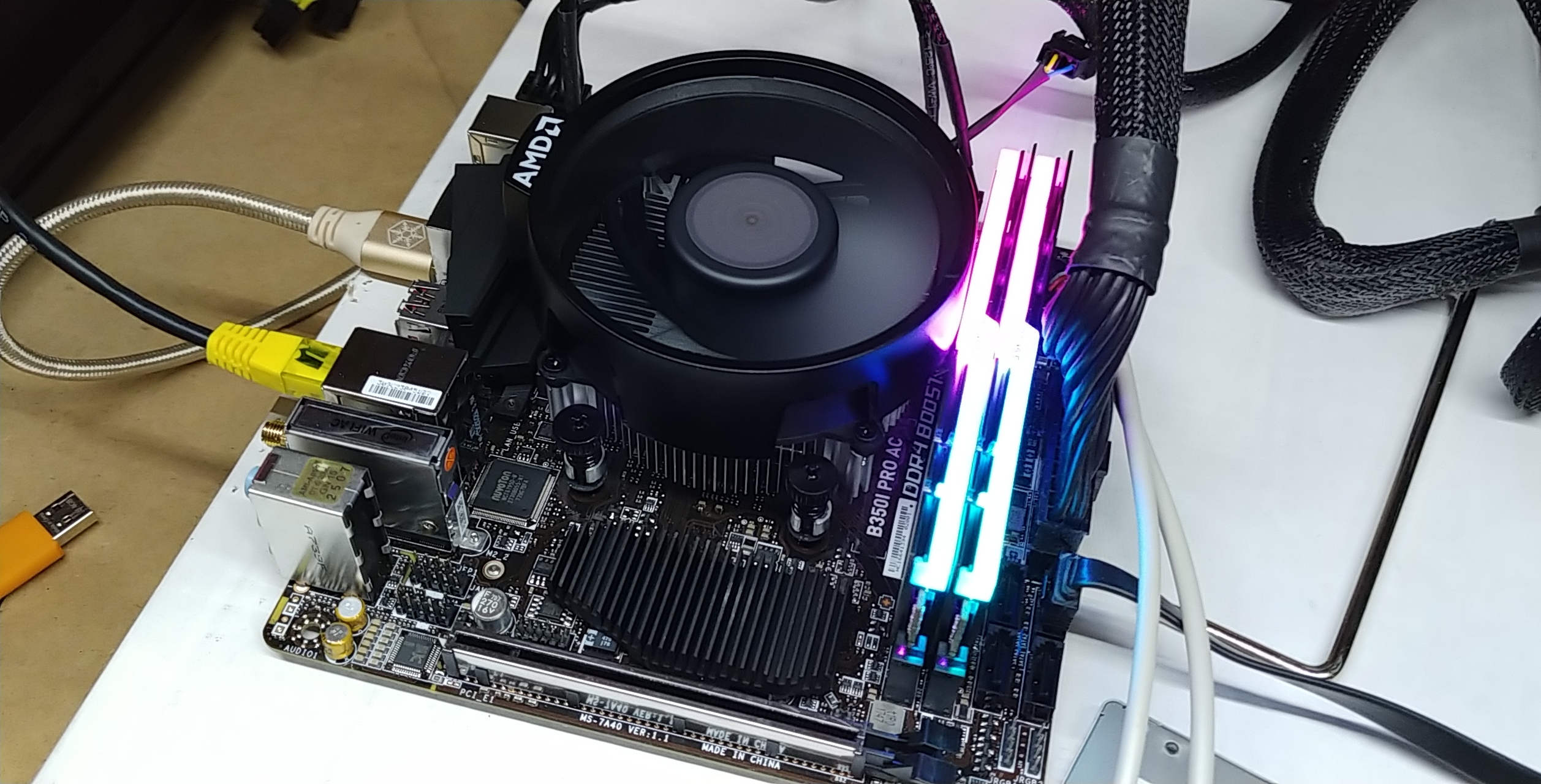
When we compare the Ryzen 5 2400G with any CPU paired with the NVIDIA GT 1030, both solutions are within a few percent of each other in all of our 1080p benchmarks. The NVIDIA GT 1030 is a $90 graphics card, which when paired with a CPU, gets you two options: either match the combined price with the Ryzen 5 2400G, which leaves $80 for a CPU, giving a Pentium that loses in anything multi-threaded to AMD; or just increases the cost fo the system to get a CPU that is equivalent in performance. Except for chipset IO, the Intel + GT 1030 route offers no benefits over the AMD solution: it costs more, for a budget-constrained market, and draws more power overall. There's also the fact that the AMD APUs come with a Wraith Stealth 65W cooler, which adds additional value to the package that Intel doesn't seem to want to match.
For the compute benchmarks, Intel is still a clear winner with single threaded tests, with a higher IPC and higher turbo frequency. That is something that AMD might be able to catch up with on 12nm Zen+ coming later this year, which should offer a higher frequency, but Zen 2 is going to be the next chance to bridge this gap. If we compare the multi-threaded tests, AMD with 4C/8T and Intel 6C/6T seem to battle it out depending if a test can use multi-threading appropriately, but compared to Kaby Lake 4C/4T or 2C/4T offerings, AMD comes out ahead.
With the Ryzen 5 2400G, AMD has completely shut down the sub-$100 graphics card market. As a choice for gamers on a budget, those building systems in the region of $500, it becomes the processor to pick.
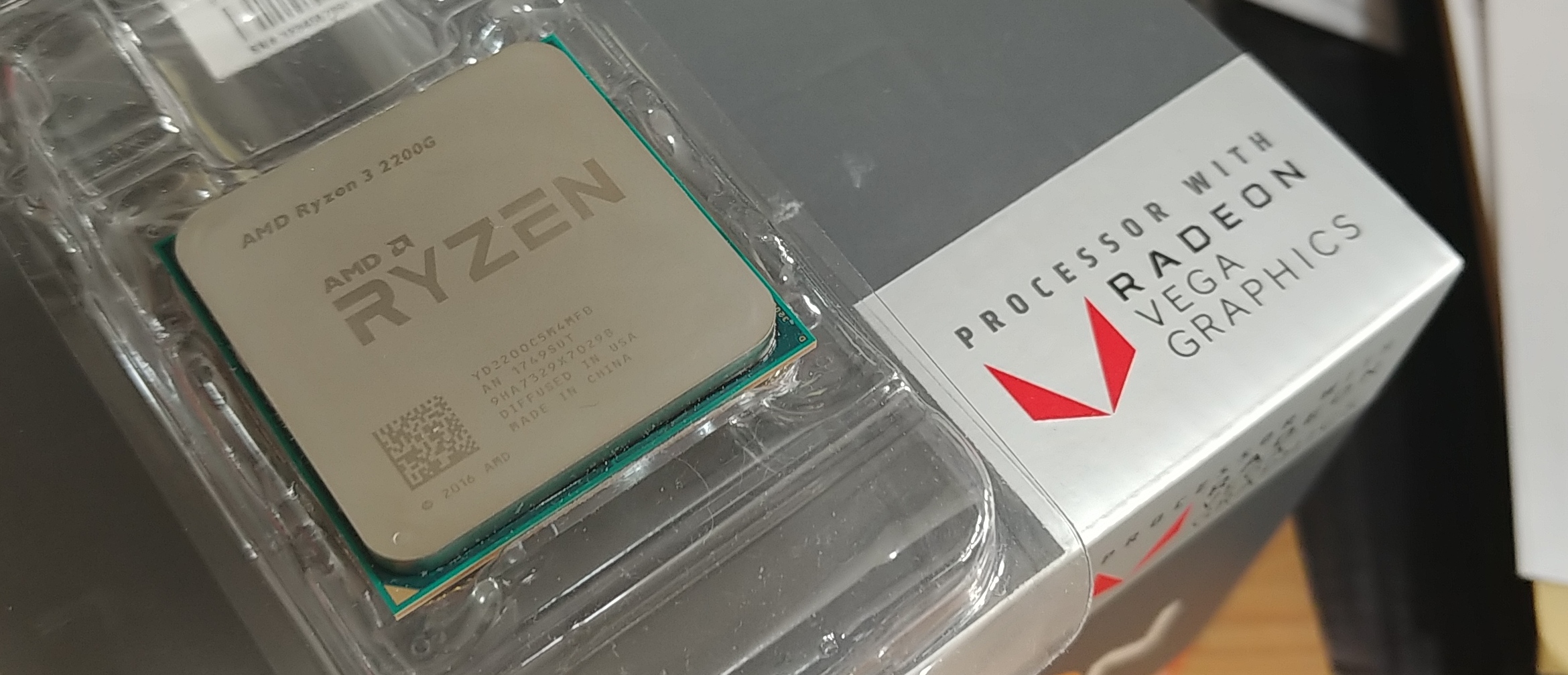
For the Ryzen 3 2200G, we want to spend more time analyzing the effect of a $99 quad-core APU the market, as well as looking how memory speed affects performance, especially with integrated graphics. There's also the angle of overclocking - with AMD showing a 20-25% frequency increase on the integrated graphics, we want to delve into how to unlock potential bottlenecks in a future article.
Originally published at https://www.anandtech.com/show/12425/marrying-vega-and-zen-the-amd-ryzen-5-2400g-review (Wayback Machine).