
The MSI X299 Gaming M7 ACK Motherboard Review: Light up the Night
Conclusion
Going in at the high-end of the motherboard offerings, on the high-end platform, suggests that a user wants and needs power - having a motherboard that can perform its duties becomes a vital asset. Most motherboards in the ecosystem now offer a good base level of design and performance, separated by the additions that each vendor applies for features, controllers, and styling. MSI has a few tricks up its sleeve, such as the design aspect of the board and its dual M.2 heatsink hinge arrangement, or the dual Realtek ALC1220 codecs, or its Live Update 6 software. Users looking for that super special hardware point, such as 10G ethernet, or Thunderbolt, will have to look at a price segment a bit higher, but for all else, MSI can satisfy the majority of its intended audience. In the end, the Gaming M7 ACK was intended to be a 'gaming' centric motherboard and, for all intents and purposes, it has accomplished that goal. It is a well-rounded board that can be attractive to almost any buyer.
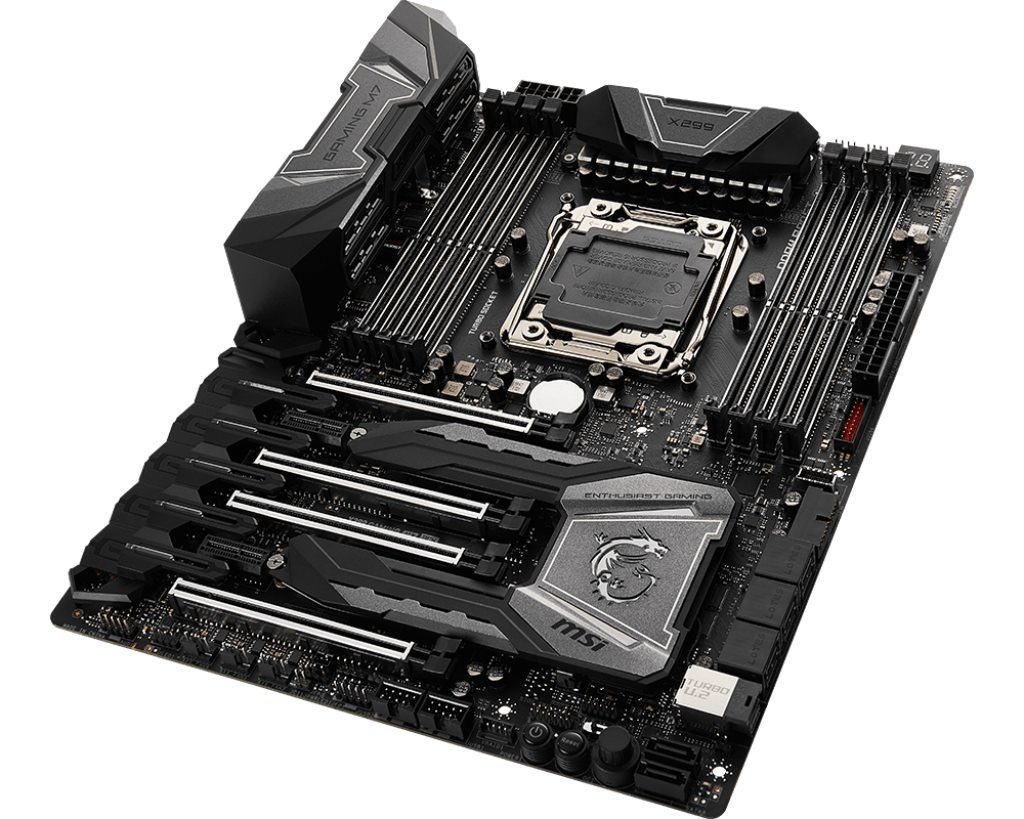
MSI's RGB LED implementation on the M7 ACK is tastefully implemented, using a total of four zones to bring some light into the build. The RGB LEDs are all hidden under a translucent fitting, which gives the board the potential for a nice ambient glow when in use. MSI iterates that if LEDs are not in the user plan, then they can be disabled. But MSI's Mystic Light software allows for several different lighting effects as well as independent control in order to tweak the lighting.

There are a few bits that we'd like to see MSI address in the future, such as support for high-amperage fans, or a more gradual implementation of the auto-overclocking feature, and fixing the longer POST times of MSI motherboards to be in line with others.
Our performance testing has the M7 ACK sitting at the big table with the other boards showing that the MCE implementation is similar to the X299 boards we tested. Our overclocking adventures left us hitting the same 4.6 GHz speeds as we have seen most boards able to support. We expect this as we are of course limited by the choice of cooler. Also a positive is MSI's Click BIOS 5, which is one of the more ergonomic BIOSes around with most everything in one section or one level below.
Buy MSI X299 Gaming M7 ACK on Amazon.com
Overall, the MSI X299 Gaming M7 ACK is a very capable board. Its feature set is comparable to other boards in its price class. There are two other boards with U.2 ports in this price range: U.2 typically isn't a make or break feature considering its adoption, but it is always good to have. Choosing any board is going to come down to needed/wanted features, aesthetics, and price. The MSI Gaming M7 ACK, with its hinged M.2 heatsink cooling solution, is one of a kind at this price point and should help keep those hot running modules cool. Between the boards listed below, there really isn't a clear leader considering how close the pricing is, unless U.2 is a requirement for your build.
That said, the MSI X299 Gaming M7 ACK should be on the short list when looking for a motherboard in the $350-$400 price range as it presents users with a good base to build an X299 based machine.
Other AnandTech X299 Motherboard Reviews:
- The Intel Skylake-X Review: Core i9-7980XE and Core i9-7960X Tested
- The Intel Skylake-X Review: Core i9-7900X, i7-7820X and i7-7800X Tested
- The Intel Kaby Lake-X Review: Core i7-7740X and i5-7640X Tested
- Intel Announces Basin Falls: The New High-End Desktop Platform and X299 Chipset
- ($480) The ASUS Prime X299-Deluxe Review [link]
- ($400) The GIGABYTE X299 Gaming 7 Pro Review [link]
- ($390) The ASRock X299E-ITX/ac Review [link]
- ($390) The ASRock X299 Professional Gaming i9 Review [link]
- ($370) The ASUS Strix X299-XE Gaming Review [link]
- ($366) The MSI X299 Gaming M7 ACK Review (this review)
- ($308) The MSI X299 Gaming Pro Carbon Review [link]
- ($340) The ASUS X299 TUF Mark 1 Review [link]
- ($330) The EVGA X299 FTW-K Review [link]
- ($290) The EVGA X299 Micro Review [link]
- ($290) The ASRock X299 Taichi Review [link]
- ($260) The MSI X299 Tomahawk Arctic Review [link]
- ($232) The MSI X299 SLI Plus Review [link]
The MSI X299 Gaming M7 ACK is $366 at Amazon, but has a regular listed price of around $400-$420. At that price point, it will compete with boards in the $350-$400 range including the ASRock Fatal1ty X299 Professional Gaming i9 currently listed at $390, the ASUS ROG Strix X299-XE Gaming at $370, and the GIGABYTE X299 AORUS Ultra Gaming Pro priced at $350.
Originally published at https://www.anandtech.com/show/12374/the-msi-x299-gaming-m7-ack-motherboard-review-light-up-the-night (Wayback Machine).