
SiS755 Reference Board: Athlon64 from SiS
- Posted in
- CPUs
SiS755 Reference Board: BIOS and Overclocking
AGP/PCI Lock and 800 HyperTransport
One of the biggest complaints with the VIA K8T800 is the absence of a PCI/AGP frequency lock. With the PCI/AGP frequency forced to float, overclocking becomes limited by the AGP card or PCI peripherals instead of the processor. System stability while overclocking is also compromised with synchronous AGP/PCI. SiS has implemented PCI/AGP lock on their recent chipsets, and it is also used on the SiS755. In addition, SiS runs the HyperTransport at a full 800MHz, instead of the lower speeds used on the nForce3-150 chipset. This combination of features makes the 755 the best Athlon64 chipset currently available, at least on paper.BIOS
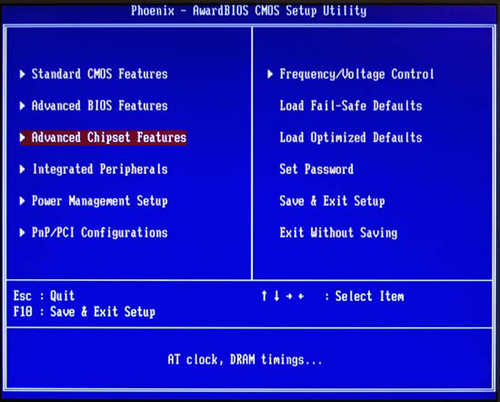
Manufacturers will determine the BIOS used in production boards, but the BIOS used with the Reference Board influences the decision, since it is already a working BIOS. SiS uses the familiar Award BIOS in the 755 Reference board.
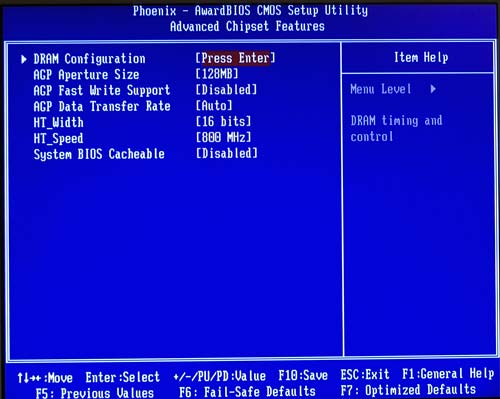
HyperTransport options, AGP, and Memory Timings are available in Advanced Chipset features. HT is running at 800MHz at default.
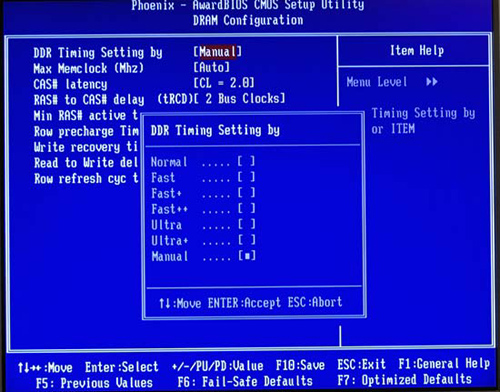
SiS has provided “word” options for DDR timings on recent chipsets. This is an option some end-users like, but it is generally criticized by enthusiasts, who prefer actual settings. SiS provides both options in their Reference 755 BIOS. As you can see, you can choose 6 levels of memory timings: Normal, Fast, Fast+, Fast++, Ultra, and Ultra+.
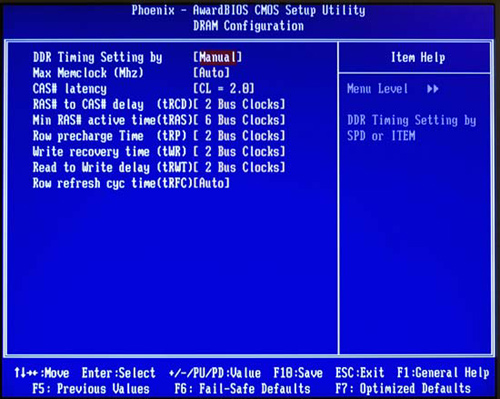
Or you can select “Manual” from the timing settings and set your own timings from a very large selection of memory timing options. Low-end versions of SiS755 boards will likely offer only the “Word” timings, but with full settings, mid- to high-end SiS boards will likely offer a full range of memory timing adjustments.
FSB Overclocking Results
Reference Boards are not really designed for overclocking, and there are no voltage adjustments available that we would see on boards with this option. However, with PCI/AGP lock available, we were anxious to see if the SiS755 did indeed perform better.| Front Side Bus Overclocking Testbed Default Voltage |
|
| Processor: | Athlon64 3200+ 2.0GHz |
| CPU Voltage: | 1.5V (default) |
| Cooling: | AMD Stock Athlon64 Heatsink/Fan |
| Power Supply: | Powmax 350W |
| Maximum OC: | 2150MHz (+8%) 215FSB |
The above overclocking setup at default voltage allowed us to reach a stable Frequency of 215 at 800 HyperTransport with AGP/PCI fixed at 33/66. We really expected higher overclocks with the available PCI/AGP lock, but the potential for outstanding overclocking is at least there with the SiS755 chipset. By lowering the HT to 600 and slowing memory timings, overclocks in the low 220 range were reached, but nothing higher. At this point, we really need to see working boards from major manufacturers that specialize in overclocking to determine better the true overclocking capabilities of the 755 chipset. In overclocking, the 755 Reference Board with PCI/AGP fixed exhibited “either/or” performance. Either it booted (and if it did, it was stable no matter what was thrown at the board), or it did not boot, and it required a BIOS reset.
Reference Boards are rarely a good indication of the true overclocking abilities of a chipset because they are designed to qualify and demonstrate a chipset at design parameters. The features are here for the best overclocking in Athlon64 chipsets, but that has not yet been seen on the SiS755. Production boards should provide better answers to the overclocking questions.
Originally published at https://www.anandtech.com/show/1197 (Wayback Machine).