
The ADATA XPG GAMMIX S10 (512GB) SSD Review: Entry-Level NVMe With Style
Mixed Random Performance
Our test of mixed random reads and writes covers mixes varying from pure reads to pure writes at 10% increments. Each mix is tested for up to 1 minute or 32GB of data transferred. The test is conducted with a queue depth of 4, and is limited to a 64GB span of the drive. In between each mix, the drive is given idle time of up to one minute so that the overall duty cycle is 50%.
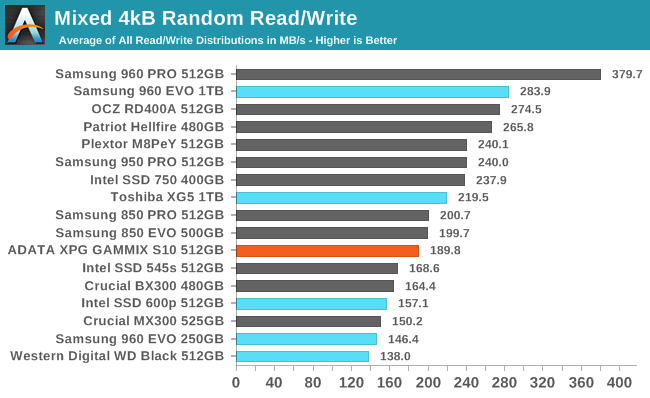
The ADATA XPG GAMMIX S10 doesn't quite outperform every SATA SSD on the mixed random I/O test, but it comes close. The performance is respectable for a TLC-based SSD and is a substantial improvement over the Intel 600p.
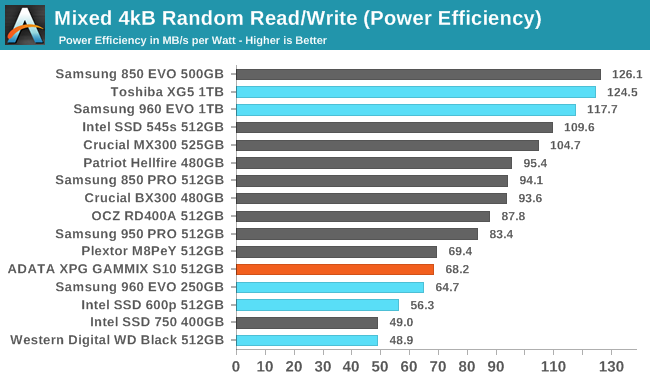
The power efficiency of the GAMMIX S10 beats most of the TLC-based NVMe SSDs, but that is the least efficient product segment in general.
 |
|||||||||
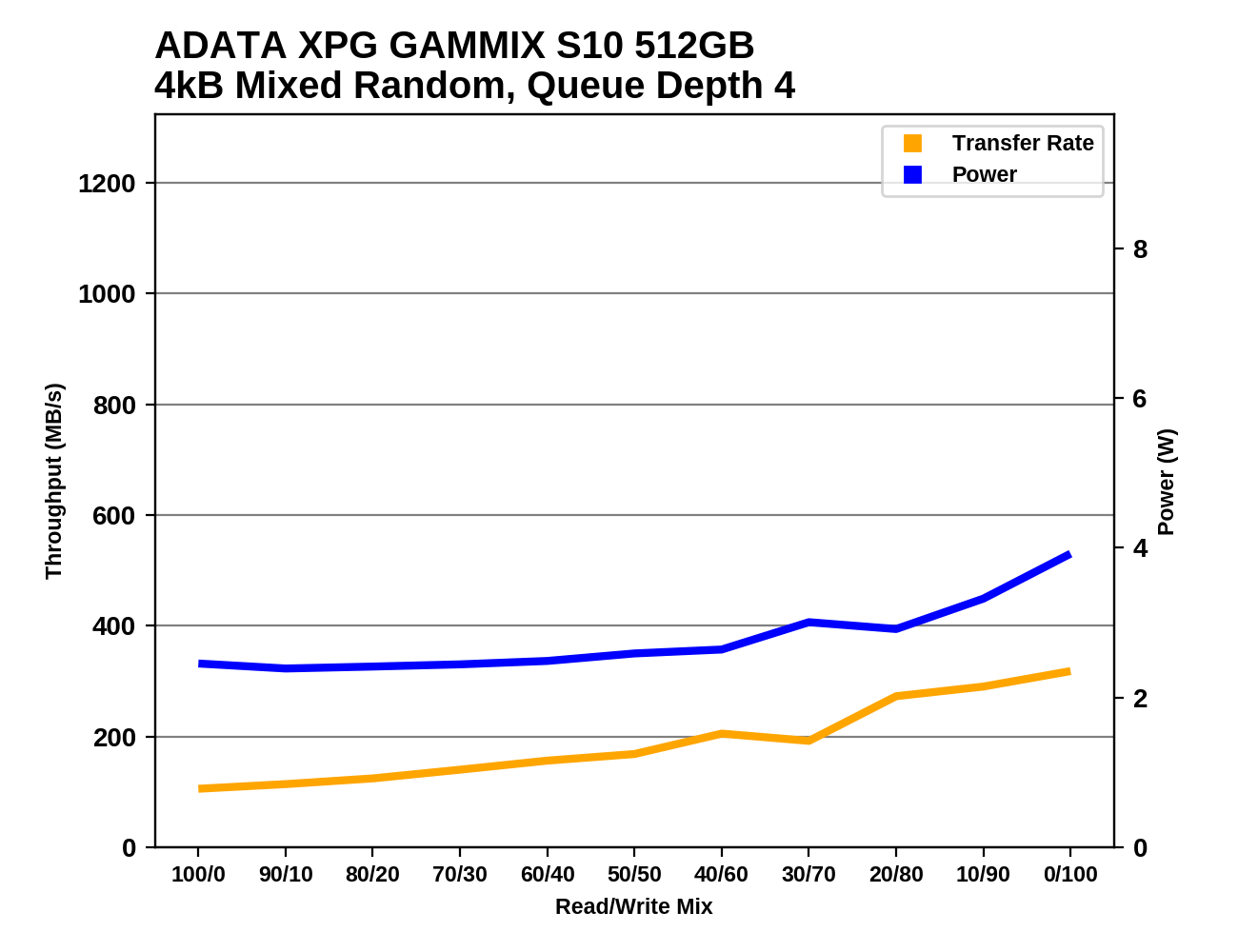
The performance of the ADATA XPG GAMMIX S10 generally increases as the portion of writes in the random I/O workload grows, but the SLC cache does fill up and cause some trouble. The GAMMIX S10 is also unable to use its caching to deliver a much higher level of performance in the final phase of the test when the workload consists purely of random writes.
Mixed Sequential Performance
Our test of mixed sequential reads and writes differs from the mixed random I/O test by performing 128kB sequential accesses rather than 4kB accesses at random locations, and the sequential test is conducted at queue depth 1. The range of mixes tested is the same, and the timing and limits on data transfers are also the same as above.
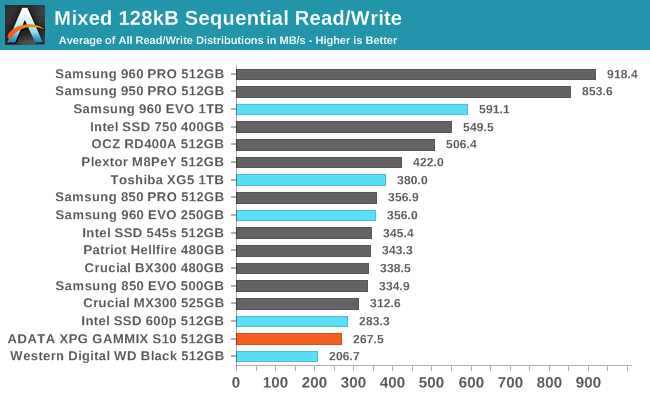
The ADATA XPG GAMMIX S10 was near last place on both the sequential read and write tests, so it is no surprise to see it once again near the bottom of the chart on this mixed sequential I/O test. On average, a typical mainstream SATA SSD will offer better sequential I/O performance.
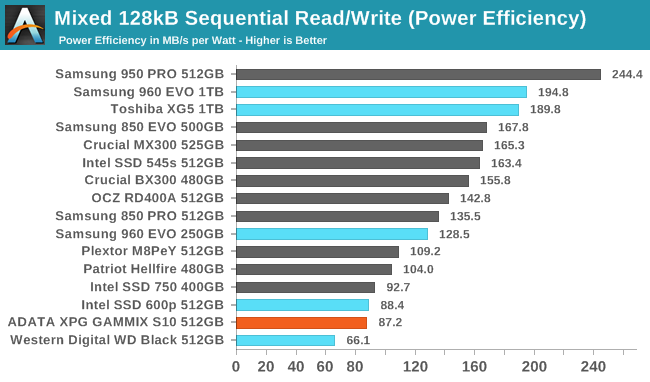
As with performance, the power efficiency of the GAMMIX S10 on the mixed sequential write test is second worst. The WD Black is significantly slower and less efficient, while the gap between the GAMMIX S10 and the Intel 600p is quite small.
 |
|||||||||
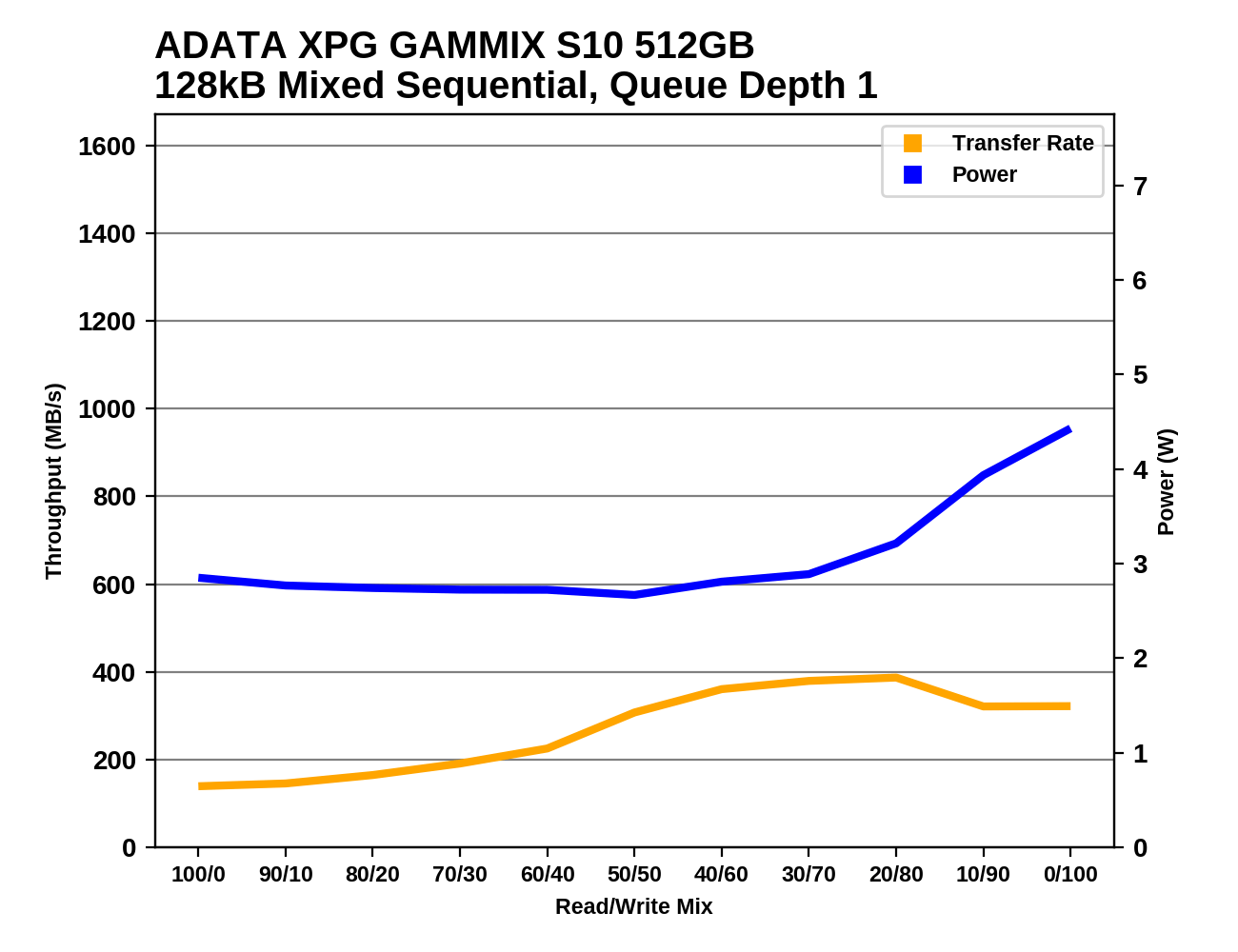
As with the random mixed I/O test, the mixed sequential I/O test fills the caches of the GAMMIX S10, leading to lower and less consistent performance toward the end of the test, after a first half showing modest performance increases.
Originally published at https://www.anandtech.com/show/11934/the-adata-xpg-gammix-s10-512gb-ssd-review (Wayback Machine).