
The Toshiba OCZ VX500 (256GB, 512GB, 1024GB) SSD Review
Random Read Performance
The random read test requests 4kB blocks and tests queue depths ranging from 1 to 32. The queue depth is doubled every three minutes, for a total test duration of 18 minutes. The test spans the entire drive, which is filled before the test starts. The primary score we report is an average of performances at queue depths 1, 2 and 4, as client usage typically consists mostly of low queue depth operations.
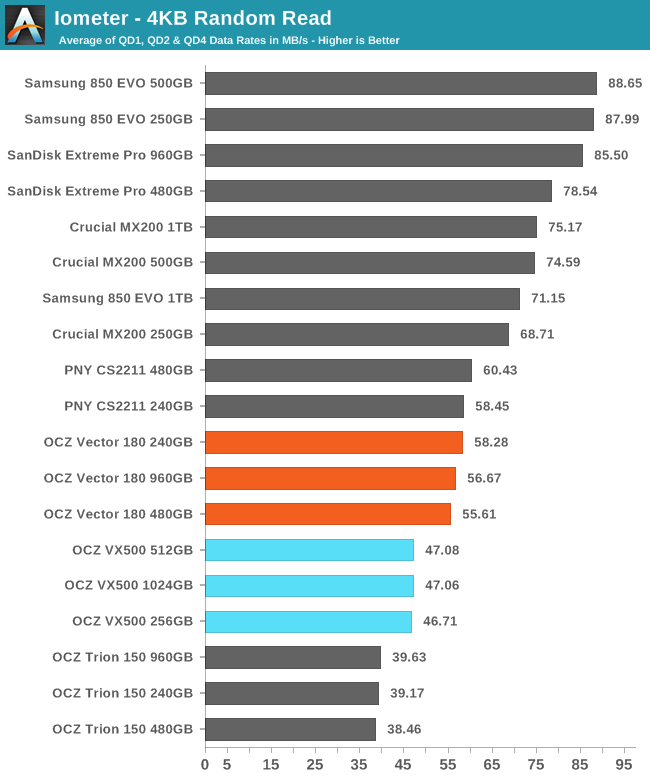
The random read speed of the VX500 is significantly slower than the Vector 180, to the point that some planar TLC SSDs are slightly faster, but it is still ahead of the Trion 150.
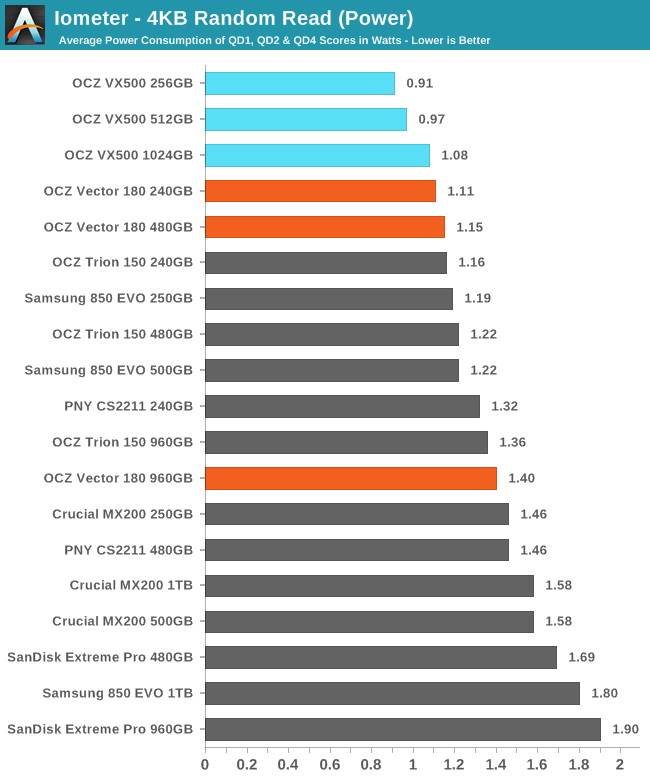
Power consumption during random reads is low enough that the VX500 maintains approximately the same load efficiency of the Vector 180 despite the speed disadvanatge.
 |
|||||||||
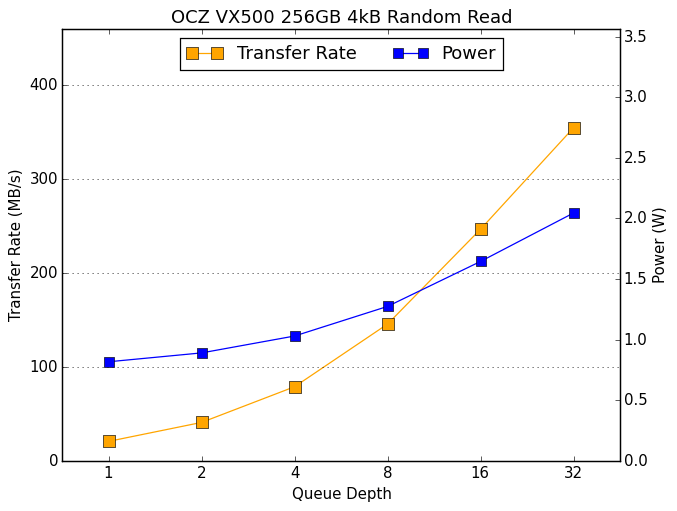
The VX500's performance scales well with queue depth but doesn't quite hit the level the Samsung 850 EVO and a few other drives top out at.
Random Write Performance
The random write test writes 4kB blocks and tests queue depths ranging from 1 to 32. The queue depth is doubled every three minutes, for a total test duration of 18 minutes. The test is limited to a 16GB portion of the drive, and the drive is empty save for the 16GB test file. The primary score we report is an average of performances at queue depths 1, 2 and 4, as client usage typically consists mostly of low queue depth operations.
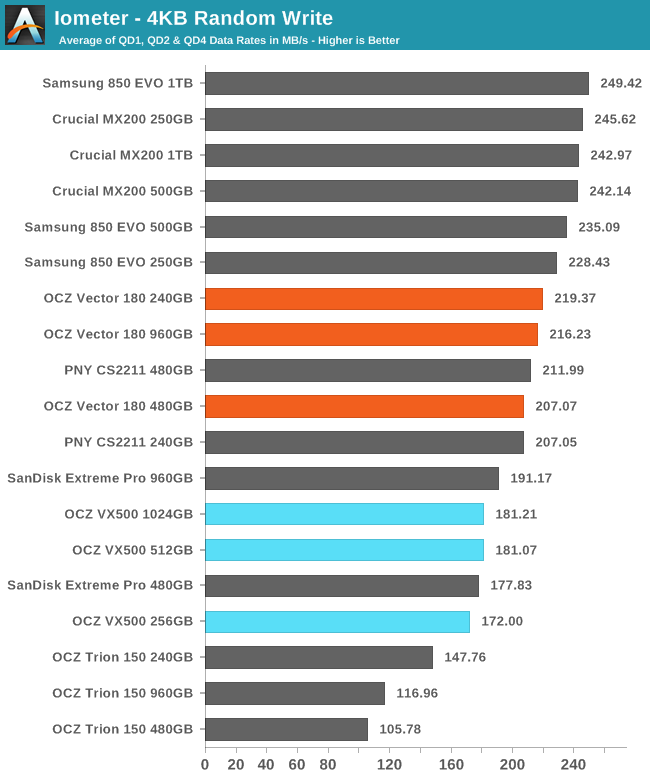
While the Vector 180 dominated the hour-long random write consistency test, it is only average on this shorter test of lower queue depths. The VX500 falls behind, but is still in the typical range for MLC SSDs.
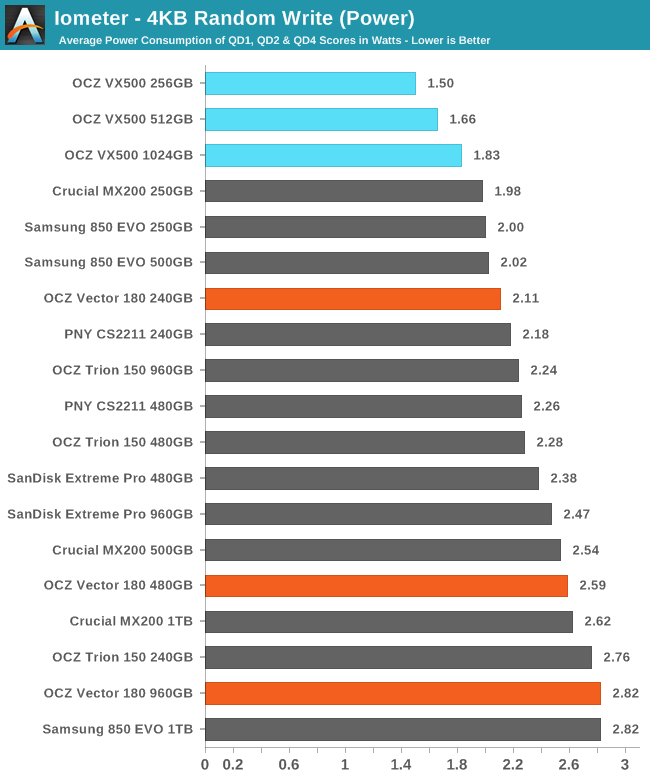
Power consumption of the VX500 is once again quite low, representing a significant improvement in efficiency over the Vector 180 and a good overall efficiency score.
 |
|||||||||
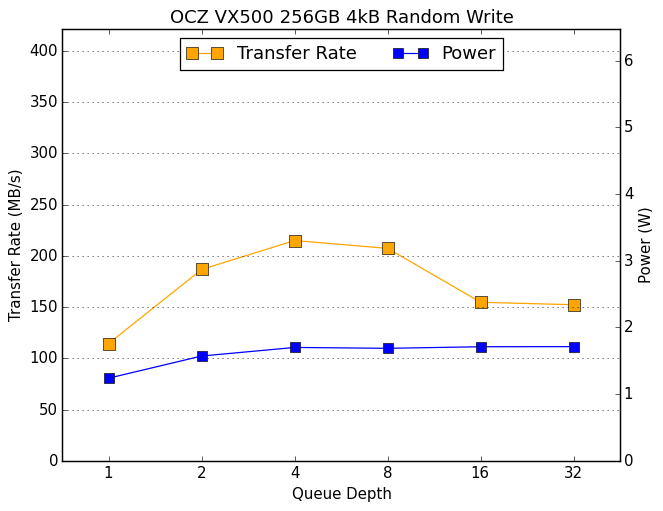
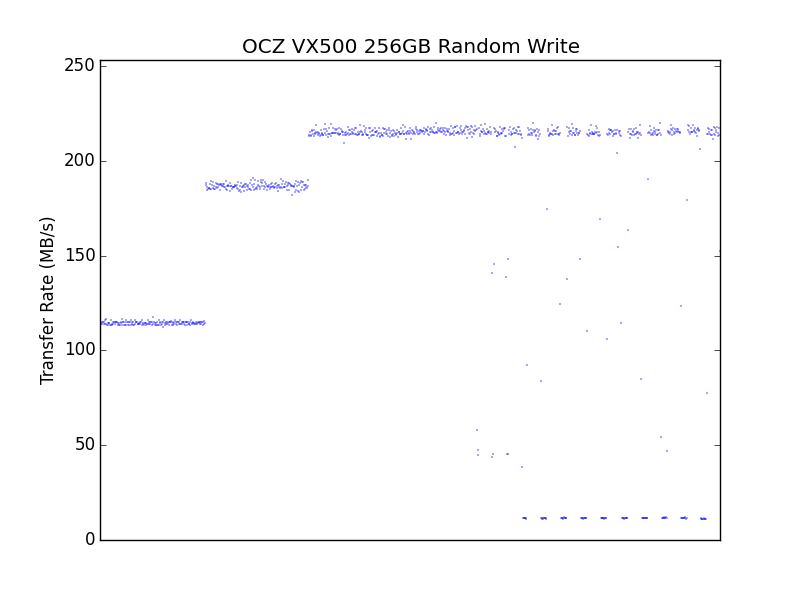
The VX500 random write performance plateaus at queue depth 4 instead of continuing toward high peak numbers, but this hardly matters for typical client workloads. The 256GB model also begins its transition from burst performance toward steady state before the test is complete and begins to stutter:
Originally published at https://www.anandtech.com/show/10674/the-toshiba-ocz-vx500-ssd-review (Wayback Machine).