
The MSI Z170A Gaming M7 Review: The Step Up to Skylake
- Posted in
- Motherboards
- Gaming
- MSI
- Skylake
- Z170
MSI Z170A Gaming M7 Conclusion
Of the motherboards we received for review before the launch of Skylake, we had a reasonable mix of the regular price bands, from $160 to $250, and even up at the top for $500. These more mid-range price bands are typically where most motherboard manufacturers duke it out for sales, despite the fact that the bulk of sales is usually below this. At $160-$300, it allows the manufacturers to stretch in terms of technical prowess and their view of the market.
The MSI Z170A Gaming M7 comes in at $230, arguably at the higher end of most people's budgets but enough to satisfy the enthusiast space. From a hardware perspective, the M7 focuses on its key marketing points towards gaming, such as the Killer E2400 network port, Nahimic audio software, easy overclocking functionality and new easier to use BIOS interface for new users. Other features come in as well - metallic guards to strengthen the PCIe slots when heavy graphics cards are in place, USB 10Gbps ports in 3.1-A and 3.1-C, dual M.2 slots that run at PCIe 3.0 x4 mode and SATAe connectivity.
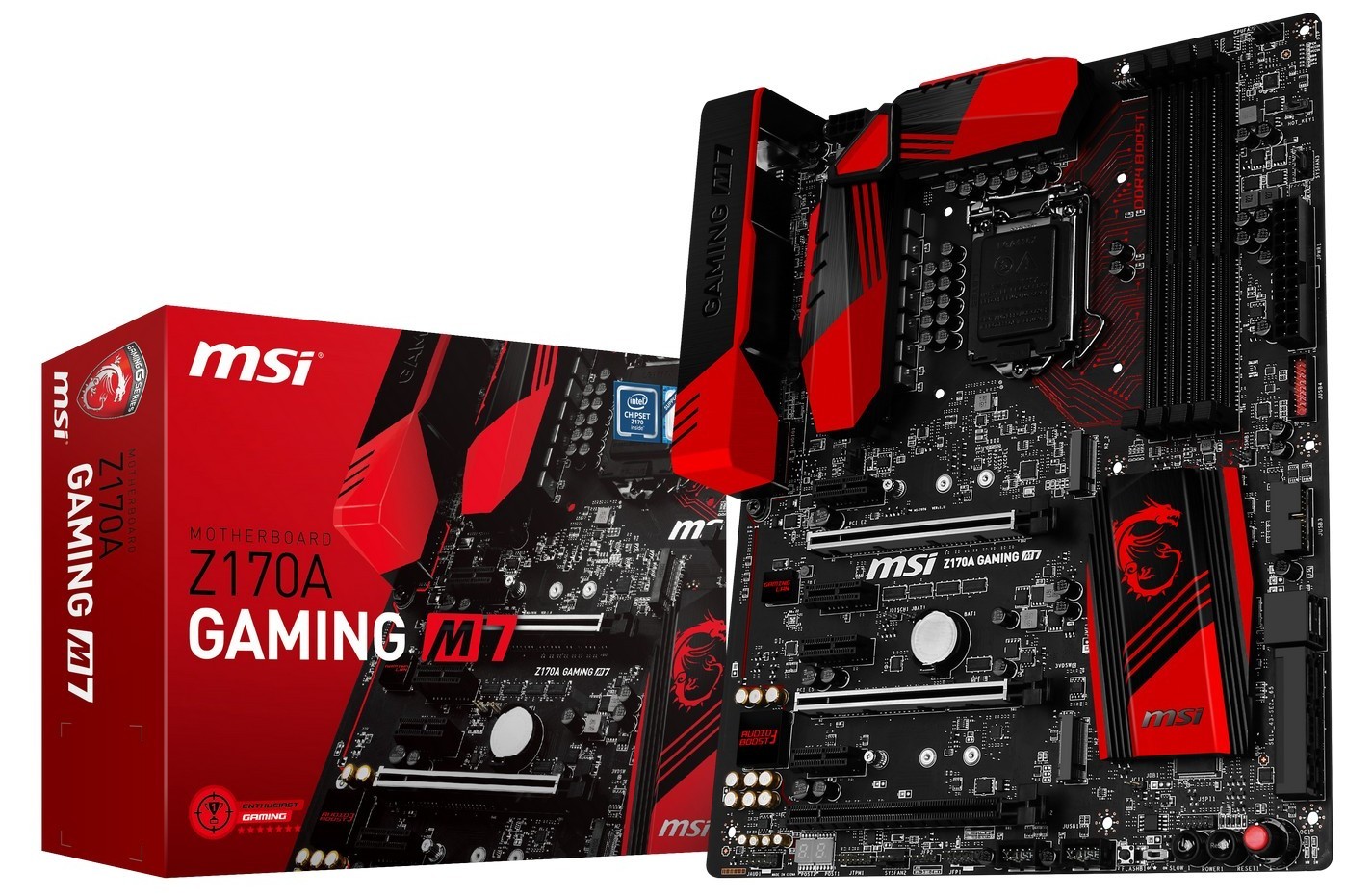
Negative points off the bat start with the Nahimic audio software. It completely cuts out the EQ, even when you uninstall it - a big no-no from anyone who genuinely likes to customize their sound quality. Most of the features the Nahimic software provides are essentially EQ adjustments anyway, leaving me to wonder why MSI is paying through the nose for license fees (and passing that cost to the buyer) rather than doing basic modifications to the Realtek software that comes free with the codec. Additional to this, even with the Nahimic implementation disabled, audio performance in our tests did not set the world alight. Power consumption at load (at stock) was a little high as a result of the motherboard applying more voltage to the processor than expected. This might be related to the MultiCore Enhancement used.
Also to note is that our overclock testing, perhaps due to the beta BIOS versions we were using at the time, seem to be behind some other products. But because a review is a snapshot in time, we perhaps shouldn't hold it against the board unless other MSI motherboards in the future perform similarly. Also, at $230, one might have expected either a second network port (wireless or wired) or at least an Intel network controller. For most users that care about the network controller, Killer comes across more of a marketing checkbox compared to the control normally attributed to the Intel network ports.
Where the MSI Z170A Gaming M7 wins comes down to our BIOS implementing MultiCore Enhancement by default, resulting in a better stock performance. As a result, all our base processor tests but the MSI ahead. The new EZ mode in the BIOS is a good design worth playing around with, as well as MSI having the best driver/software update software for motherboards we've ever seen. This becomes more useful given that later BIOSes should become available as time goes on.
At the end of the day, MSI might struggle to sell this for $230 MSRP. The market will have other motherboards to play with that offer more features with less marketing buzz (Killer/Nahimic) at the same price or lower, perhaps pushing users towards the Gaming M5 and below. There are some take home positives, such as the new easy overclock tool and the drive towards catering for their intended market, though pushing it in to a higher than expected price band may drop it off some build lists sooner than MSI would have hoped for. As we test more motherboards, we should be able to develop a taste for the ecosystem as a whole and understand how each of the motherboard manufacturers are approaching the Skylake platform.
Originally published at https://www.anandtech.com/show/9626/msi-z170a-gaming-m7-review (Wayback Machine).