
The Samsung Galaxy Note5 and Galaxy S6 edge+ Review
System Performance Cont'd
Now that we’ve covered some of the traditionally CPU-bound tests, we can start to look at tests that more strongly emphasize GPU performance. It’s worth noting here that while 3DMark is supposed to determine gaming and graphics performance, the overall score includes a CPU performance component in the form of a physics test that means it isn't much of a pure GPU test.
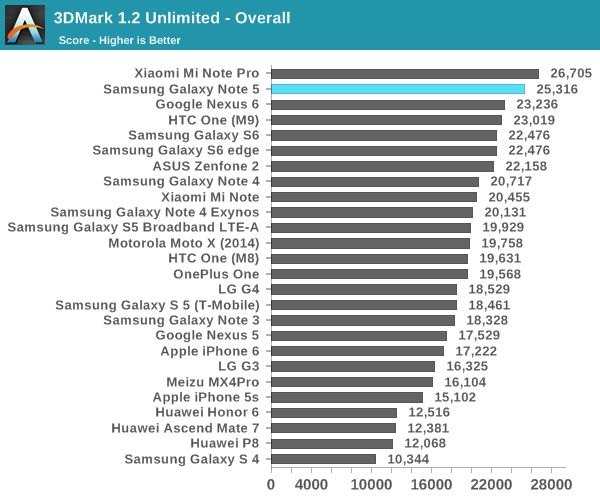
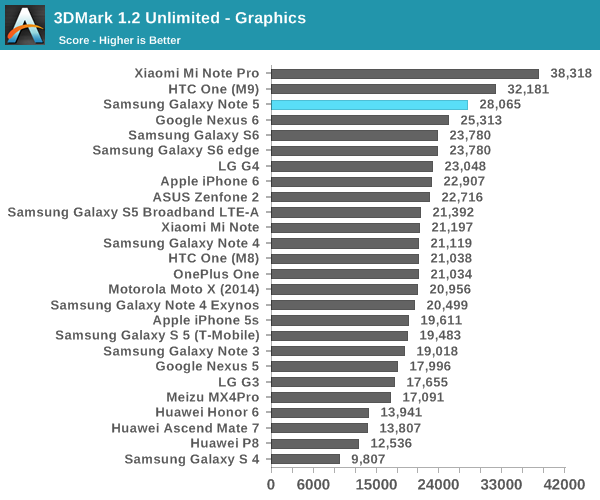
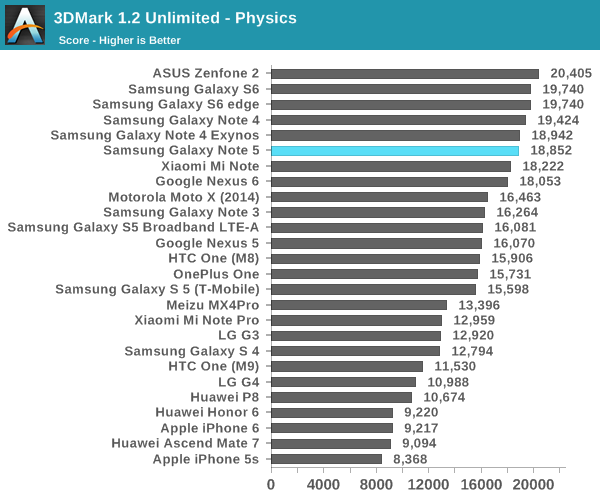
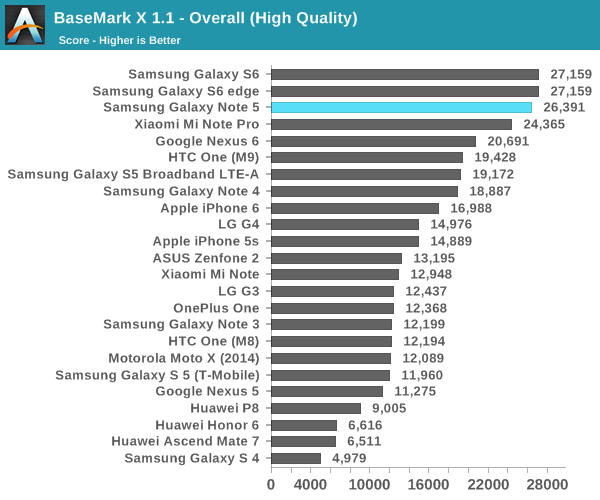
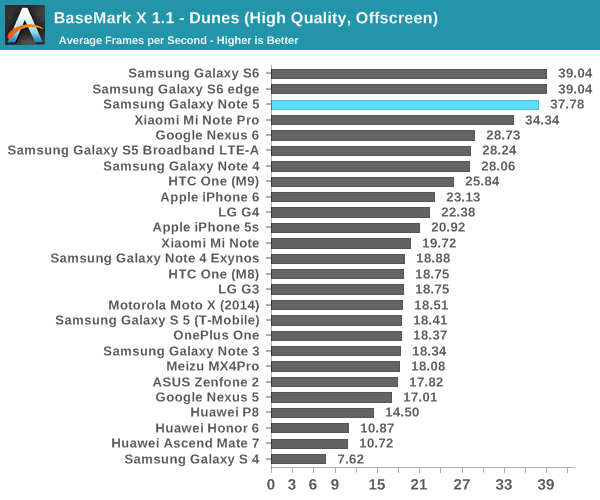
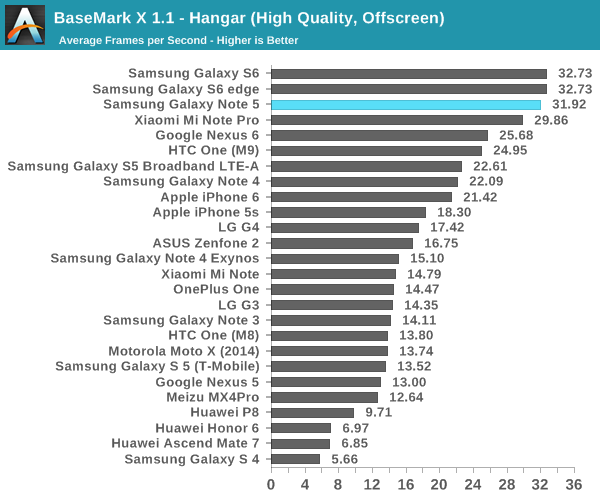
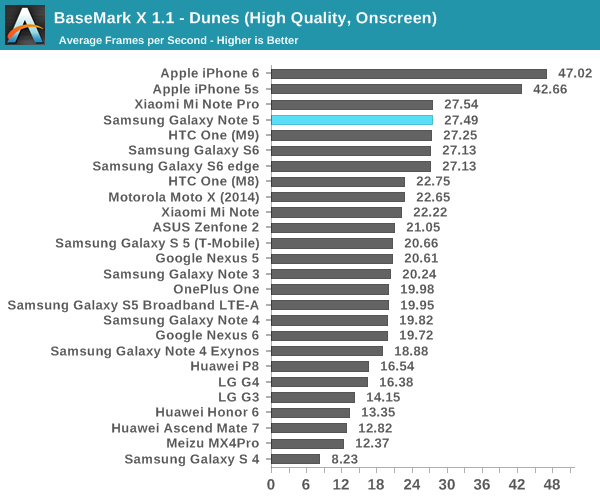
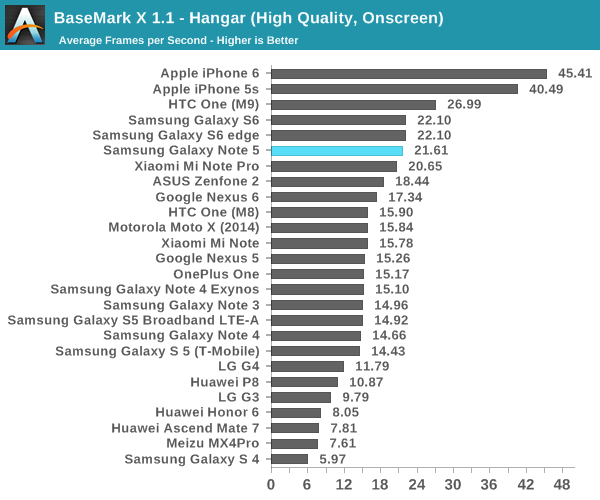
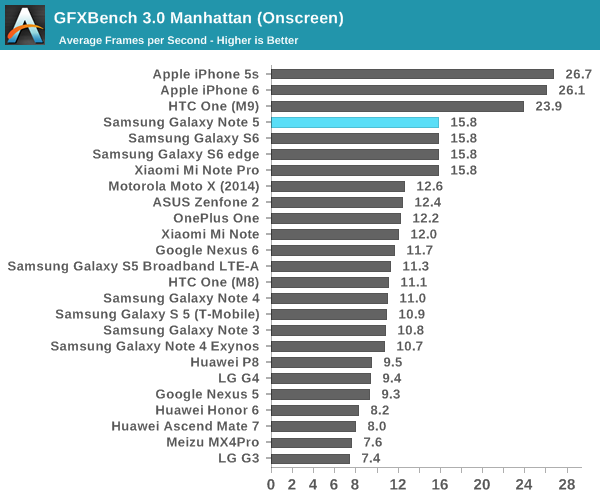
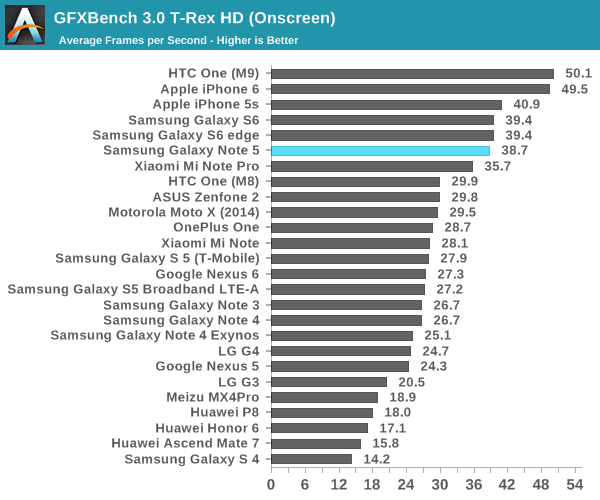
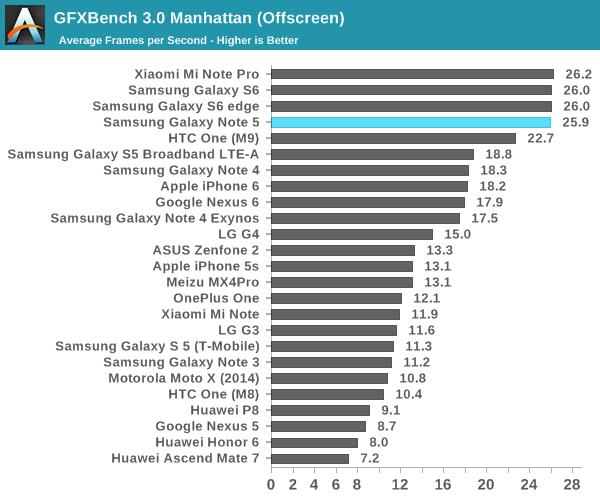
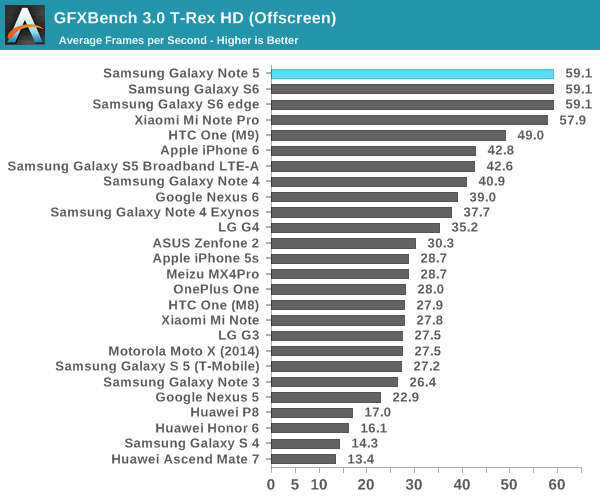
Overall, there's nothing really surprising about these results. The Exynos 7420 should continue to deliver great GPU performance for anyone interested in a high-end phablet or smartphone. There are some improvements in 3DMark in regards to graphics performance, but it's likely that we're just looking at newer drivers as the GPU doesn't heat up fast enough for throttling to be affecting these results.
NAND Performance
At this point, it’s probably not a surprise to know that NAND performance can have very real effects on user experience. If an OEM decides to skimp heavily on storage in order to drive the price down, it’s at least somewhat likely that the device will start to exhibit major IO pauses at some point in the device lifecycle. In order to test this, we rely on our standard storage tests which include Androbench with some custom settings to get more realistic test results along with StorageBench for iOS which is comparable to Androbench.
In the case of the Galaxy Note5 we’re still looking at a UFS storage solution similar to what was found in the Galaxy S6, but it looks like this is slightly newer as the storage is identified as a Toshiba THGLF2G8J4LBATDA chip rather than the Samsung variant that was found in the Galaxy S6. It’s unclear whether Samsung is now multi-sourcing UFS storage for their mobile devices or what distribution exists here.
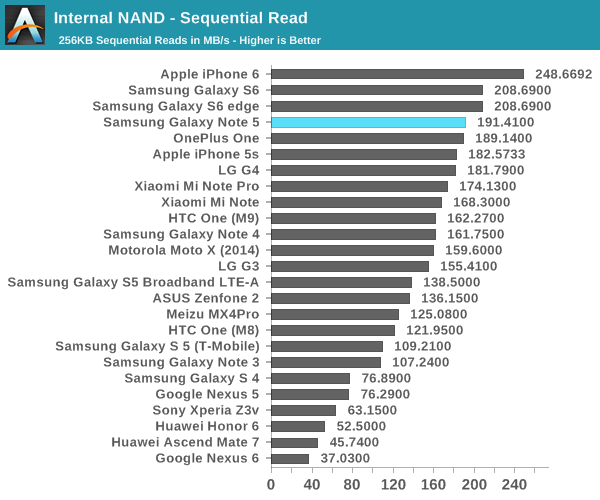
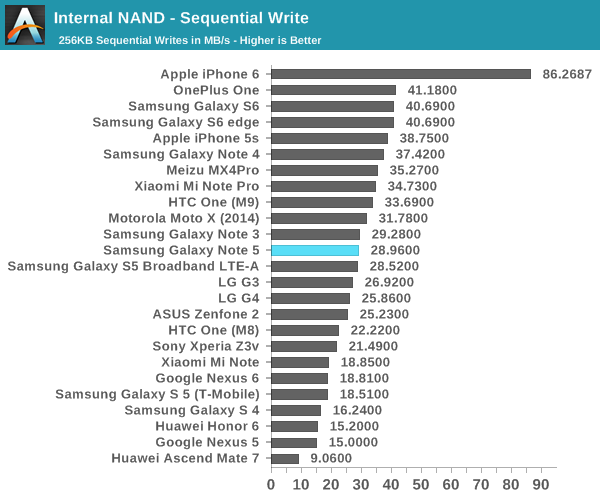
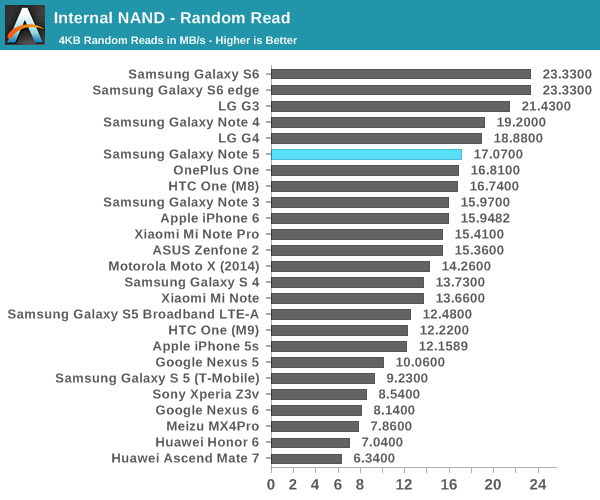
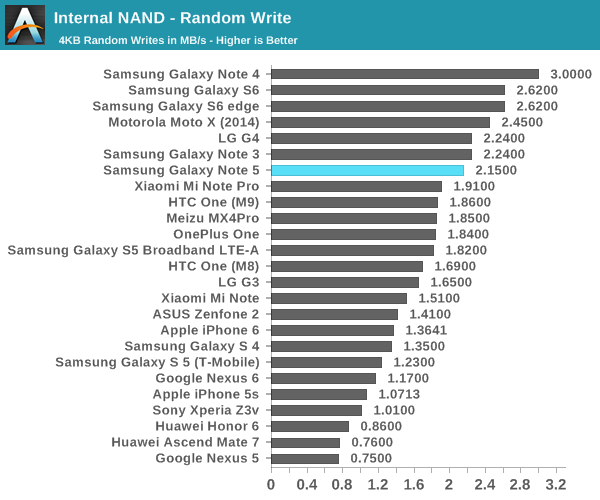
Interestingly, the Note5 regresses a little bit in storage performance relative to the Galaxy S6, which is likely due to the shift to Toshiba's NAND. However, this difference is small enough that in everyday use it's unlikely that it will be noticed. Performance over time should be acceptable as well.
Originally published at https://www.anandtech.com/show/9558/the-samsung-galaxy-note5-and-galaxy-s6-edge-review (Wayback Machine).