
The Mobile CPU Core-Count Debate: Analyzing The Real World
- Posted in
- Smartphones
- CPUs
- Mobile
- SoCs
Play Store Open & Scroll
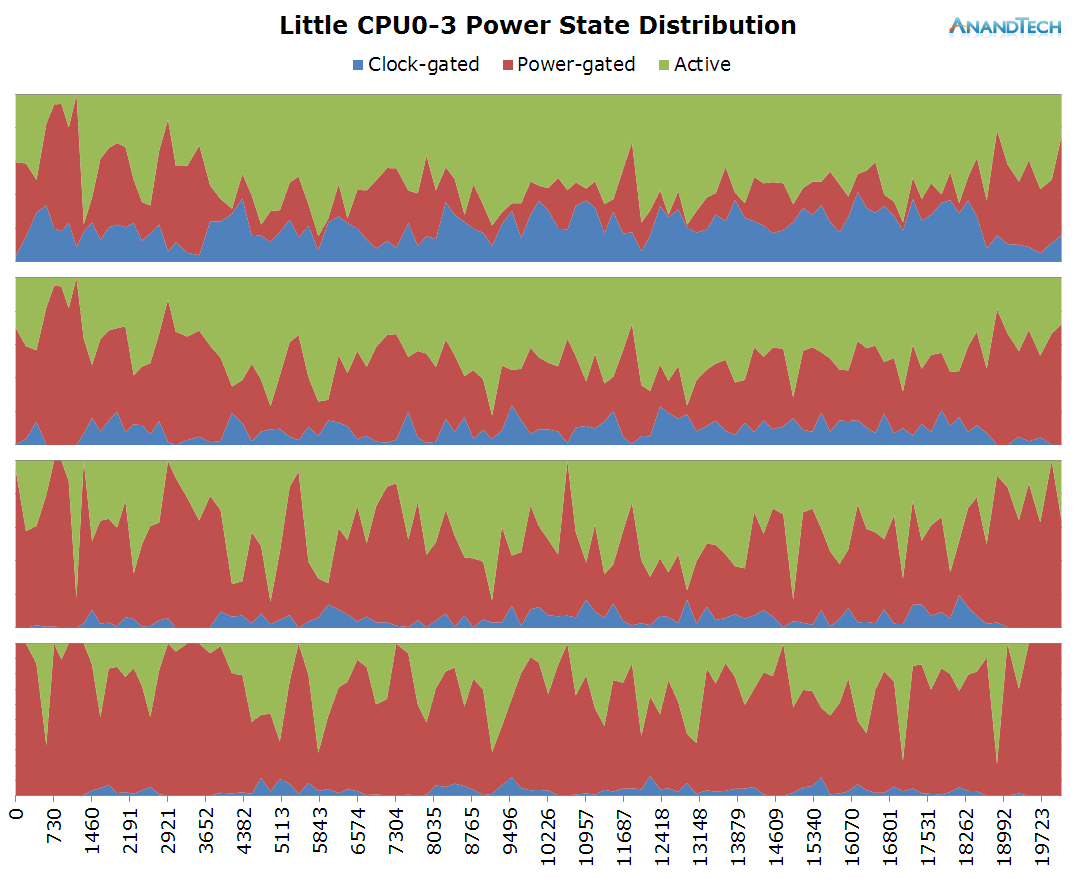
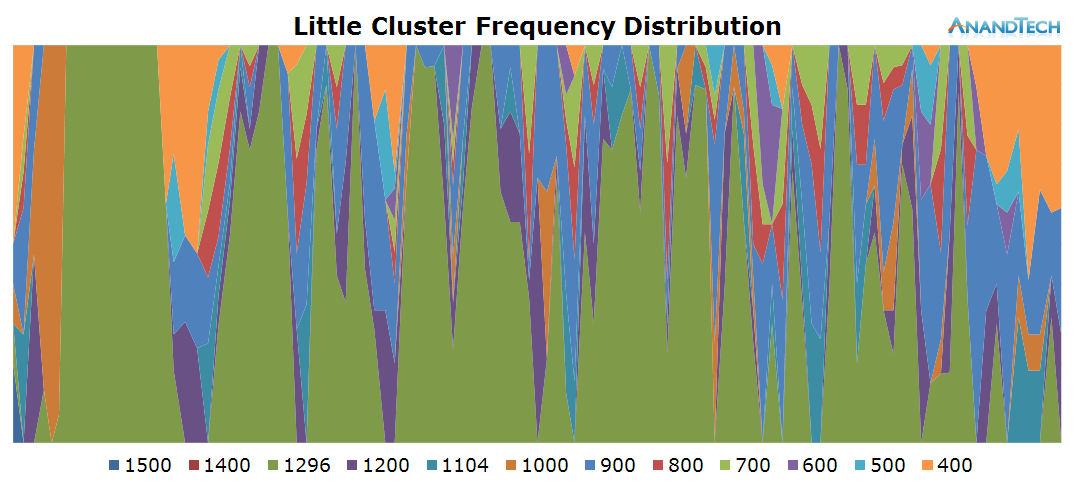
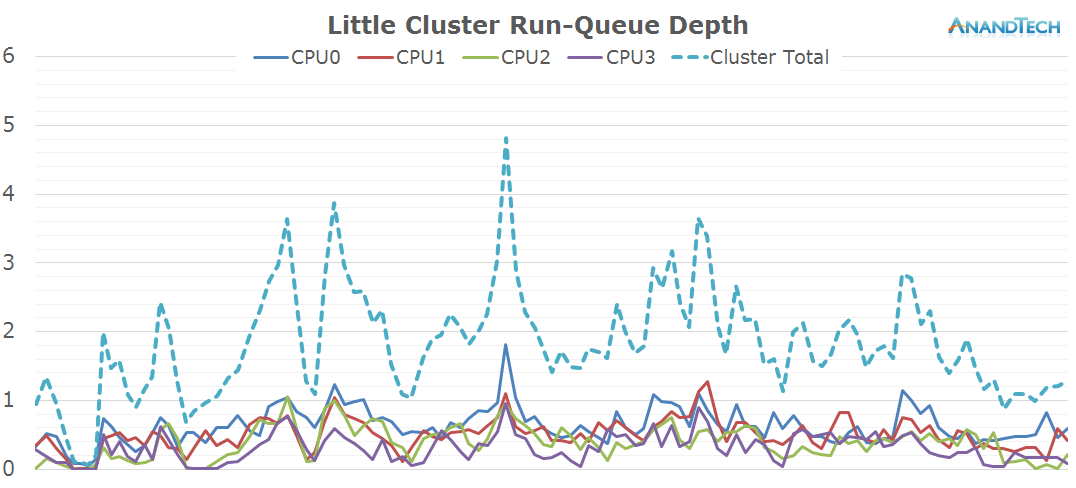
The little cores all have significant load placed onto them. It looks like the app multi-threads well in this scenario and the little threads are well fitted to accomodate the load that is placed onto them.
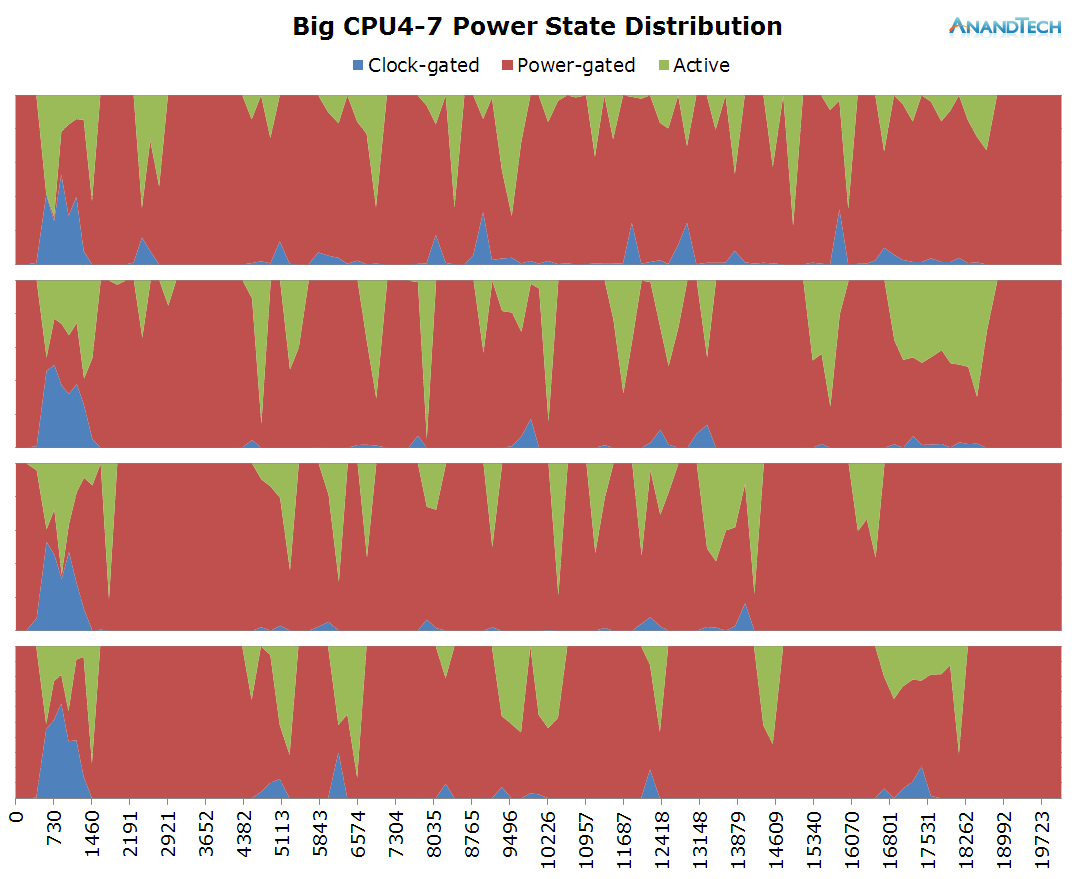
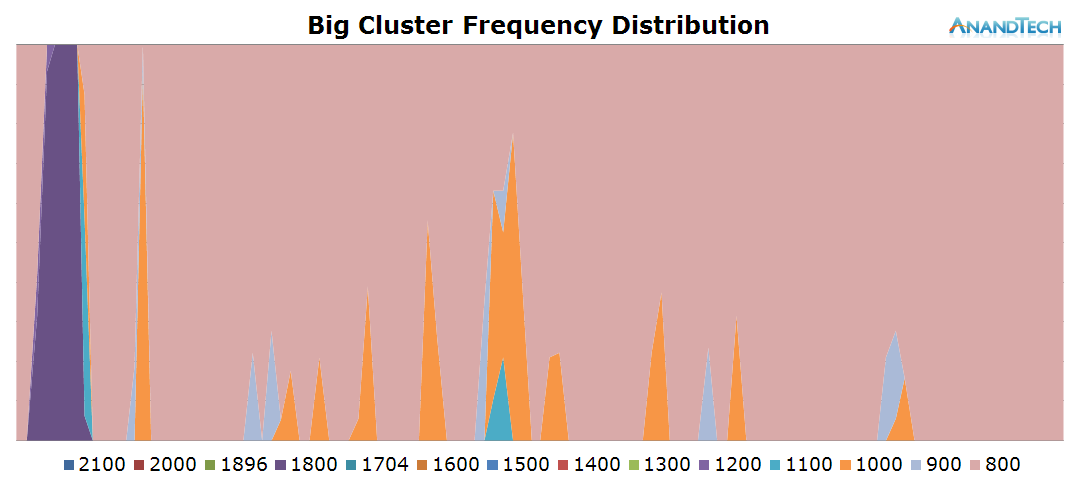
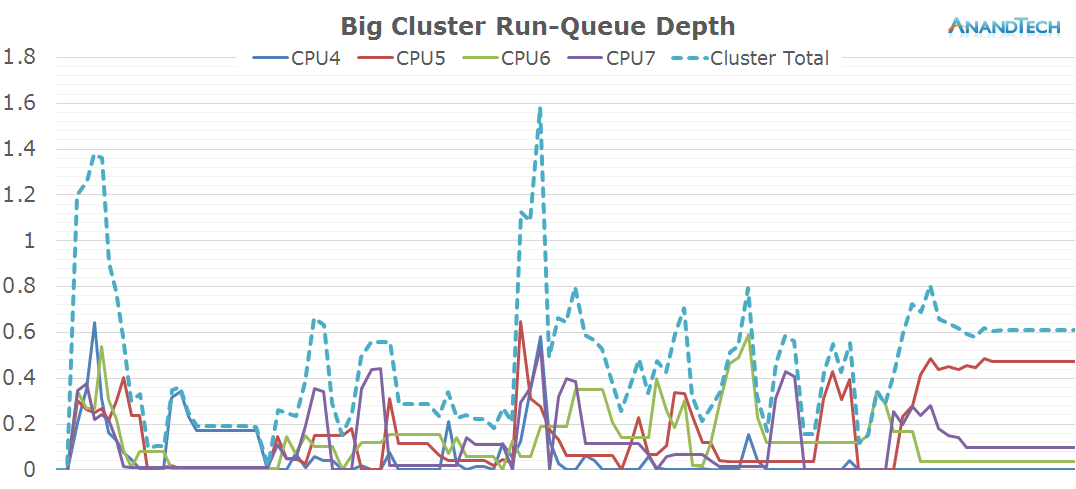
Surpsingly, we also see the big CPUs having some continuous load. The app launch itself triggers the big cluster to go to full speed of 2.1GHz and migrate threads onto all 4 CPUs. Scrolling through the page also loads at least 1 significant big thread. The CPU's frequency remains quite moderate though as we only see some small bursts to up to 1GHz while the rest of the time the big cores idle on the minimum 800MHz frequency.
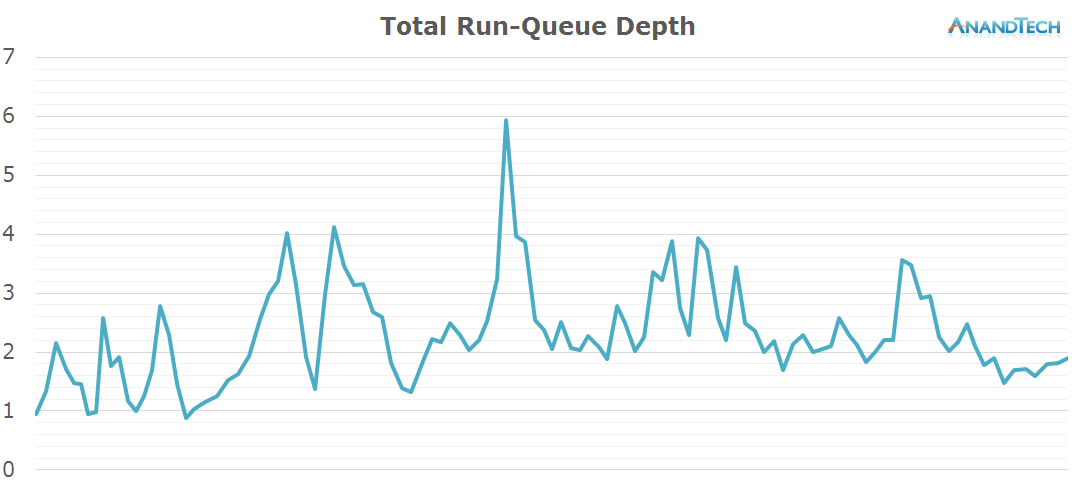
Overall, the Play Store app also seems to be optimized and aimed for 4-core designs. Here big.LITTLE seems to work well as we see a mix of small threads with a mix of big threads running concurrently on both clusters.
Originally published at https://www.anandtech.com/show/9518/the-mobile-cpu-corecount-debate (Wayback Machine).