
ADATA XPG SX930 (120GB, 240GB & 480GB) SSD Review: JMicron JMF670H Debuts
AnandTech Storage Bench - Heavy
While The Destroyer focuses on sustained and worst-case performance by hammering the drive with nearly 1TB worth of writes, the Heavy trace provides a more typical enthusiast and power user workload. By writing less to the drive, the Heavy trace doesn't drive the SSD into steady-state and thus the trace gives us a good idea of peak performance combined with some basic garbage collection routines. For full details of the test, please refer to the this article.
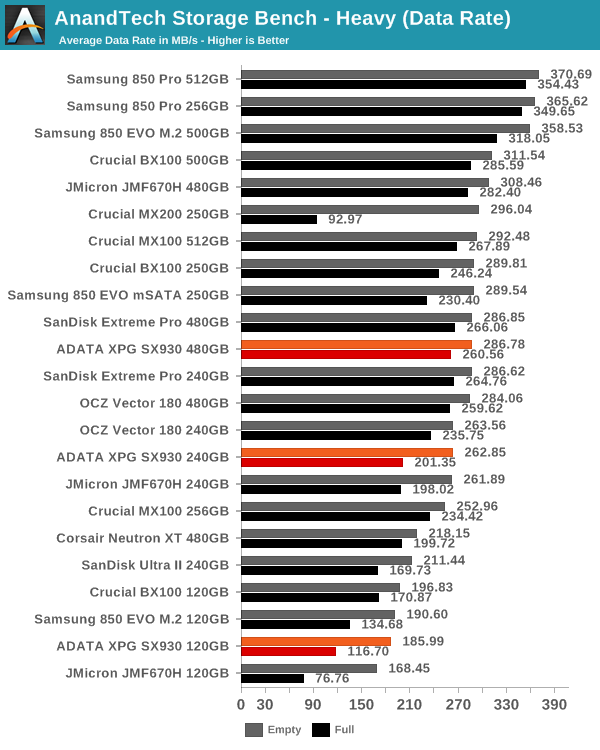
In our Heavy trace the SX930 is an average performer. To be frank, the JMF670H doesn't seem to have enough juice to go head to head with the 850 EVO and BX100, which is a shame because it leaves price as the only competitive advantage ADATA can have.
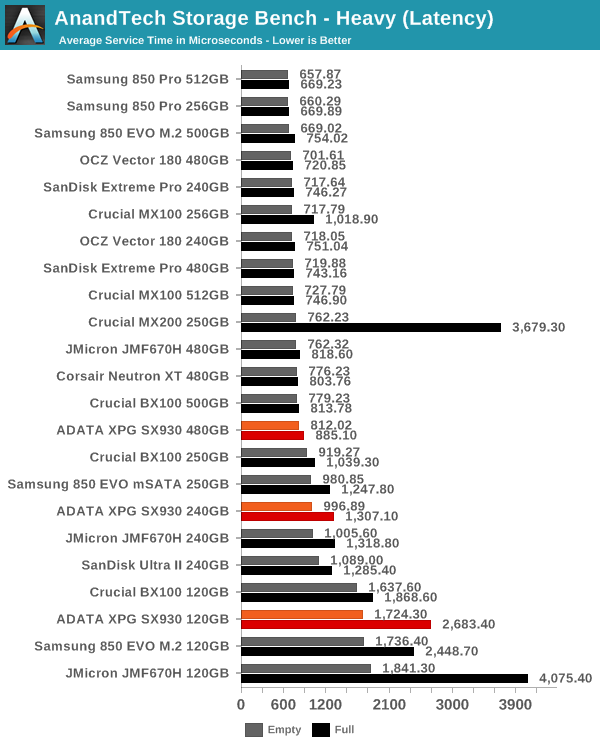
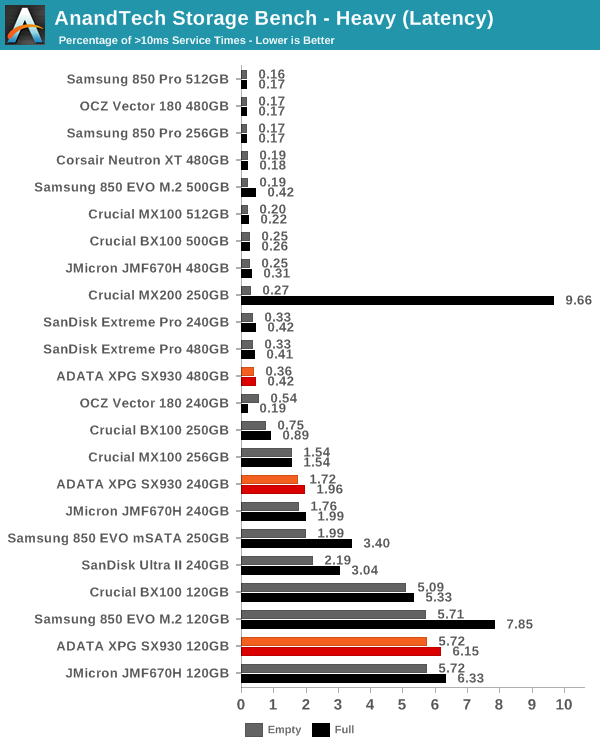
Surprisingly the 240GB model experiences more >10ms IOs in our Heavy trace than in The Destroyer. I would speculate this is due to the SLC cache filling up because the Heavy trace is more peak IO focused, whereas The Destroyer is built more for sustained performance, so it may be that in The Destroyer the controller just bypasses the SLC cache at some point and writes directly to MLC. In any case, optimizations are certainly needed to improve performance.
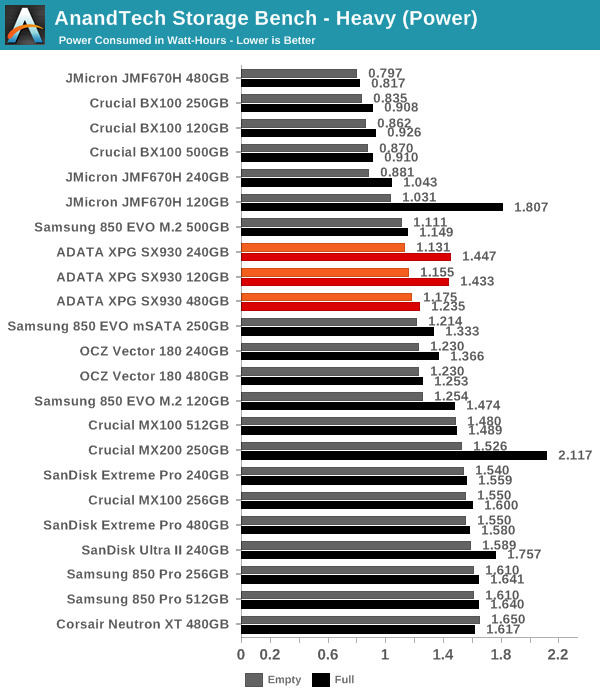
Power consumption, on the other hand, is relatively good. It's not BX100-level, but compared to some other high-end SSDs the SX930 has a more efficient power profile.
Originally published at https://www.anandtech.com/show/9433/adata-xpg-sx930-120gb-240gb-480gb-ssd-review (Wayback Machine).