
The Xiaomi Mi Note Pro and Mi Note Review
System Performance Cont'd
Now that we've gone over some of the more CPU-bound benchmarks for overall performance, we can look at some of the more GPU-bound benchmarks such as 3DMark, Basemark X, and GFXBench 3. Of course, it's important to note that we're actively in the process of migrating to newer GPU benchmarks so for now these benchmarks are really mostly representative of OpenGL ES 3 performance rather than 3.1.
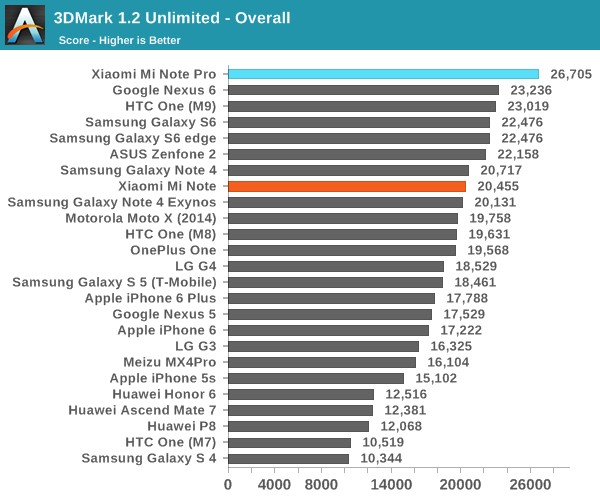
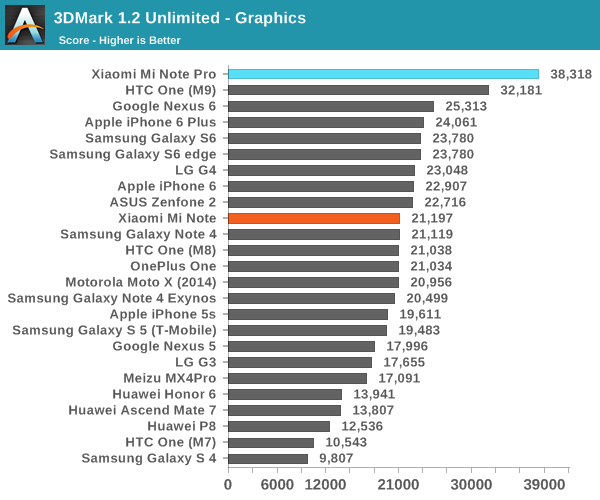
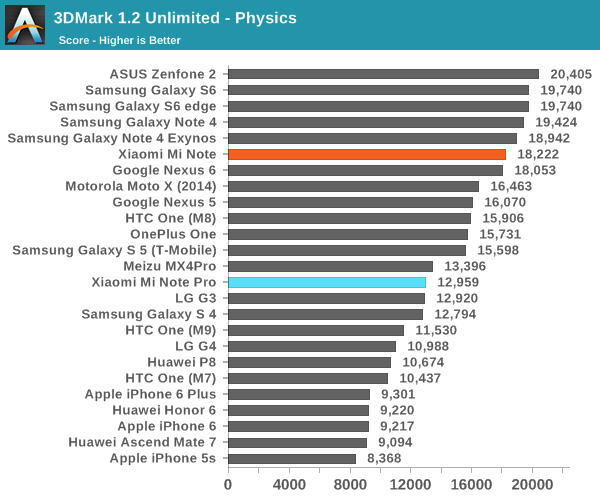
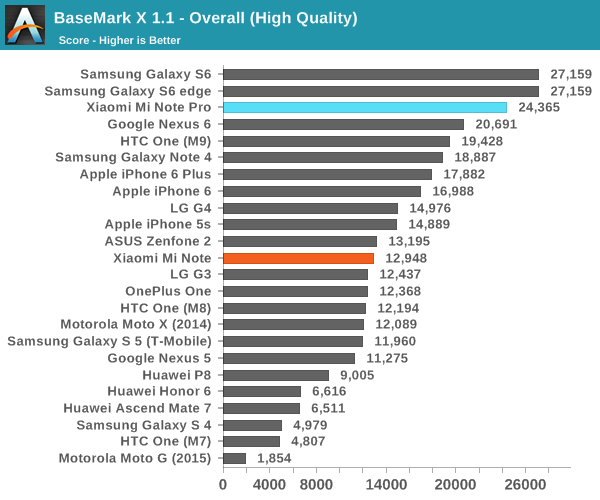
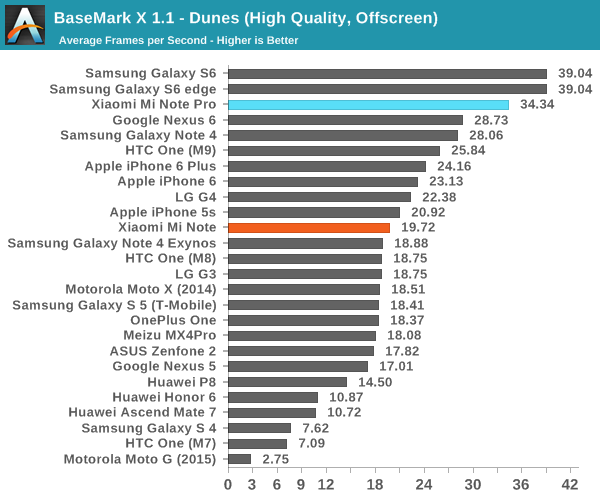
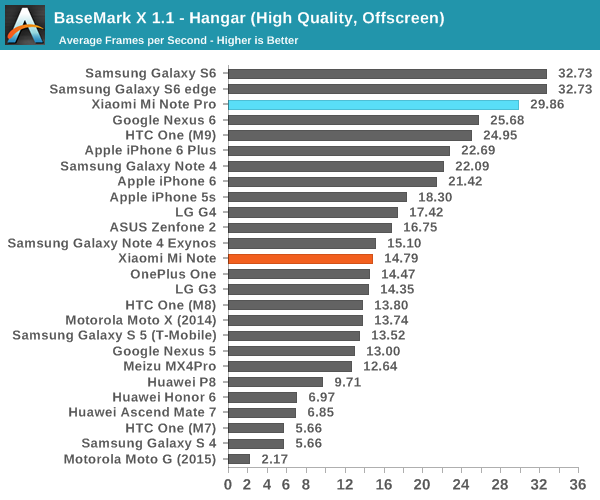
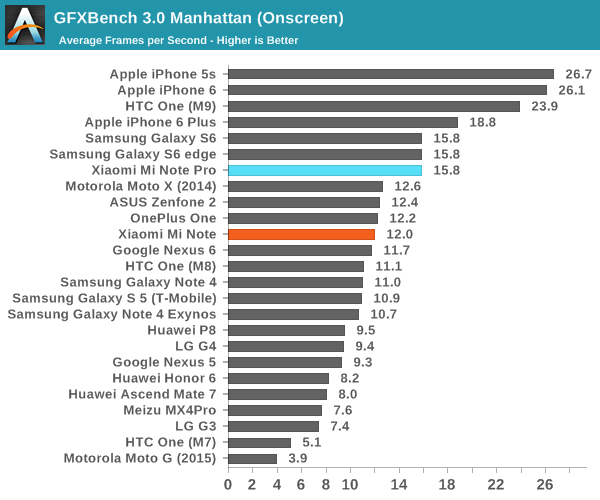
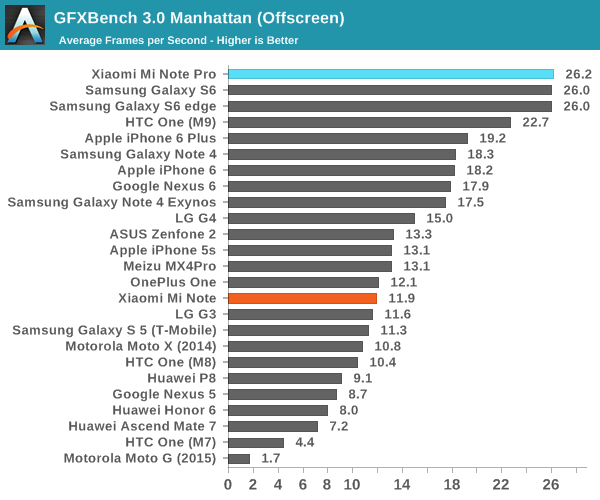
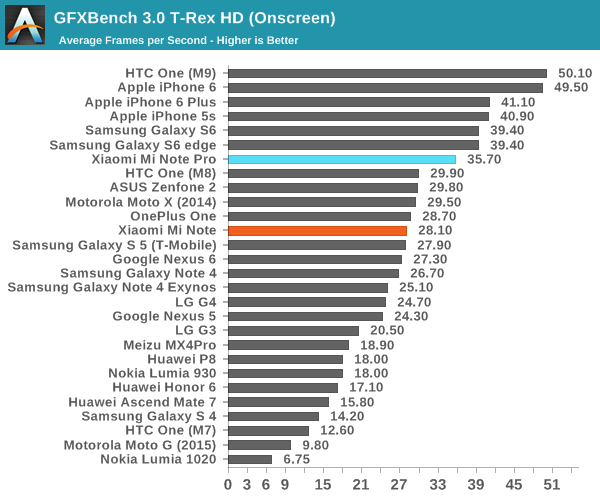
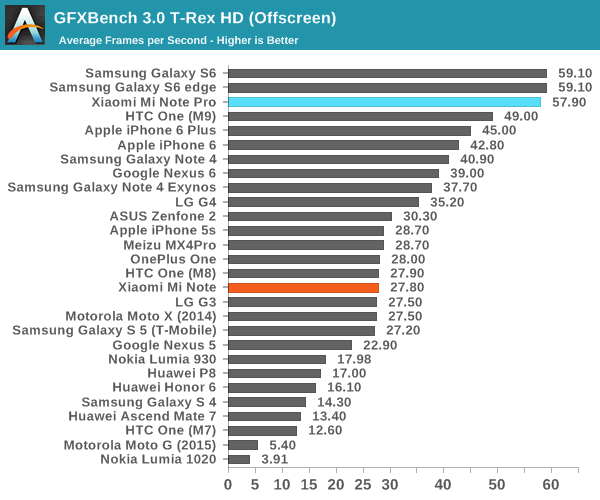
Interestingly, the GPU benchmark results show a pretty noticeable change relative to what we saw out of the One M9 at the launch of the first Snapdragon 810 phones. It's clear that some sort of driver optimization has been implemented as in every benchmark we see performance improvements well north of 5% that would be seen from purely clock speed gains. This highlights just how volatile GPU performance can be as Adreno 430 is now roughly equivalent to the T760MP8 in GFXBench and 3DMark. However, we still see the Adreno 430 lagging behind in Basemark X, which suggests the architecture of the Adreno 430 is a limiting factor in some workloads.
NAND Performance
While it’s often easy to forget about internal storage outside of capacity, it turns out that good storage performance is critical for a number of general purpose computing tasks. Mobile OSes aren’t necessarily as affected by storage performance as a desktop or laptop that is caching parts of RAM on internal storage, but even so it’s definitely possible to see the problems that result from cutting too deep here. Probably the most well-known example of this sort of cutting was the original Nexus 7 in 2012, which suffered from severe issues due to a lack of TRIM and general poor performance. In order to test mobile devices for this sort of problem, we use our standard benchmarks for testing basic read and write performance of the internal storage solution. In the case of the Xiaomi Mi Note Pro, we see a Samsung CGND3R eMMC package, while the Xiaomi Mi Note uses Toshiba’s 016GE2 eMMC solution.
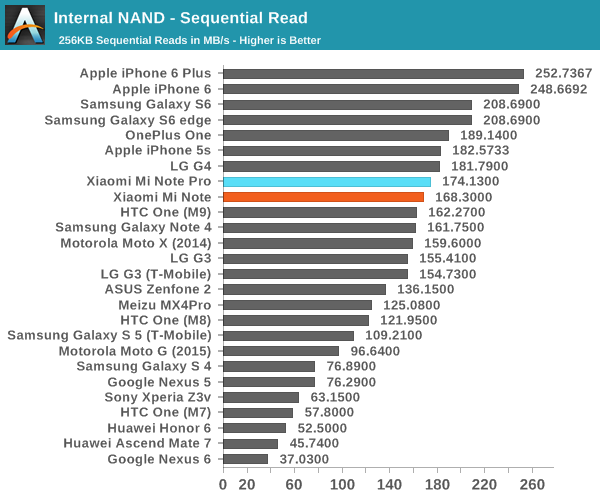
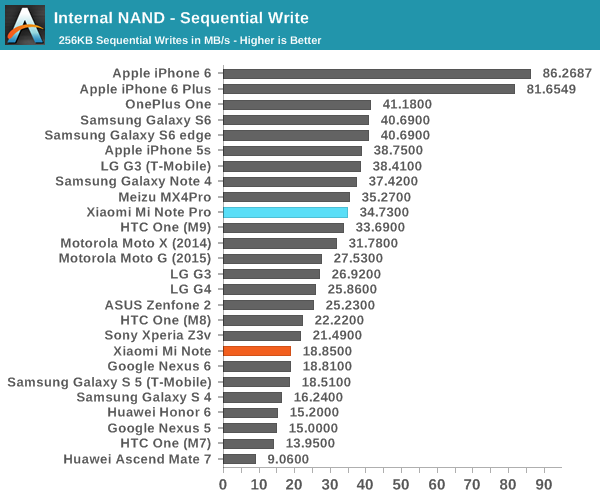
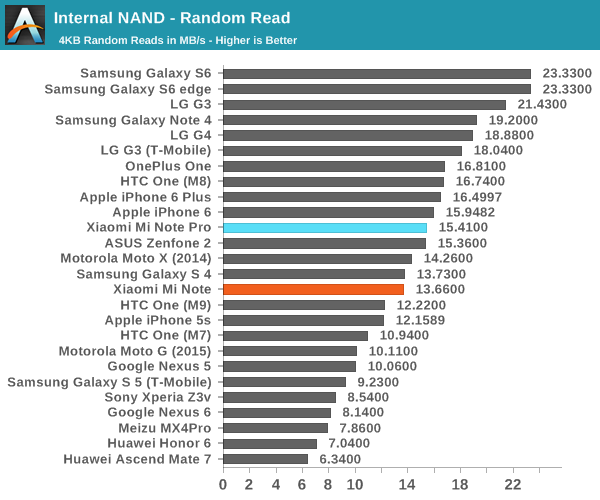
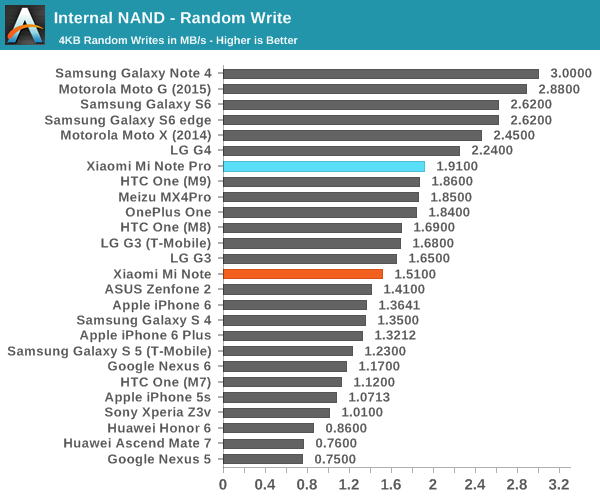
In practice, neither has incredible performance, but performance is far from poor here. For the most part, the user experience effects on storage performance will be somewhat hard to notice as sufficient storage performance means that the bottleneck for any kind of lag or stutter would be elsewhere in most applications.
Originally published at https://www.anandtech.com/show/9386/the-xiaomi-mi-note-pro-and-mi-note-review (Wayback Machine).