
The Acer Aspire R 13 Review: Convertible Notebook With A Twist
GPU Performance
The Acer R 13 comes with Intel’s HD 5500 GPU which we have seen several times already. The i7-5500U has a GPU with a maximum frequency of 950 MHz which is slightly higher than the Core i5 models 900 MHz. With Broadwell also came the new Gen 8 graphics, and while they are certainly a step up over Haswell’s Gen 7.5 series, the 15 watt models are not going to be enough to run the latest and greatest games at great frame rates.
The Acer Aspire R 13 was run through our standard Ultrabook set of tests for the GPU, which includes a couple of synthetics as well as DOTA 2.
3DMark
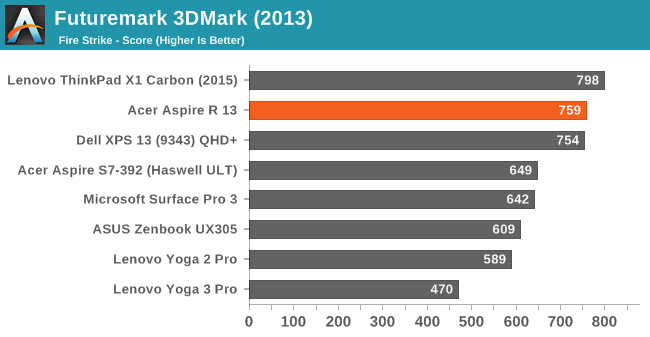
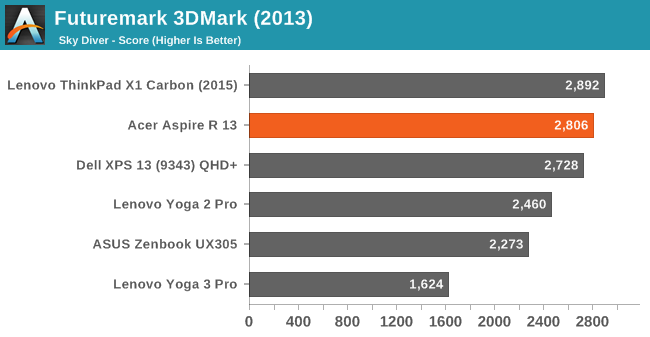
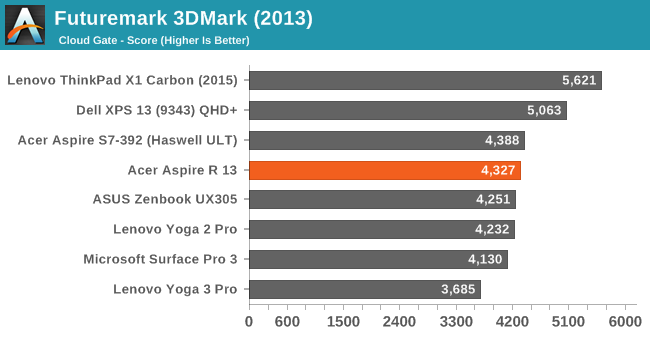
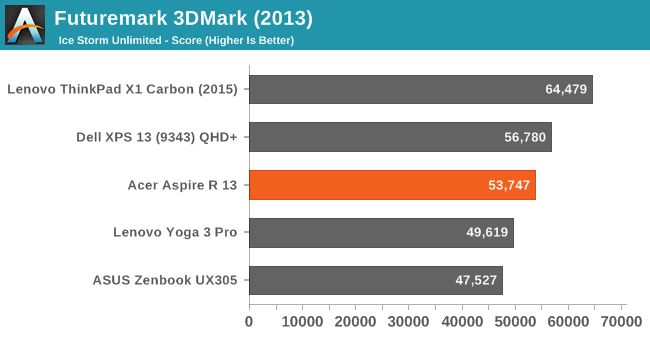
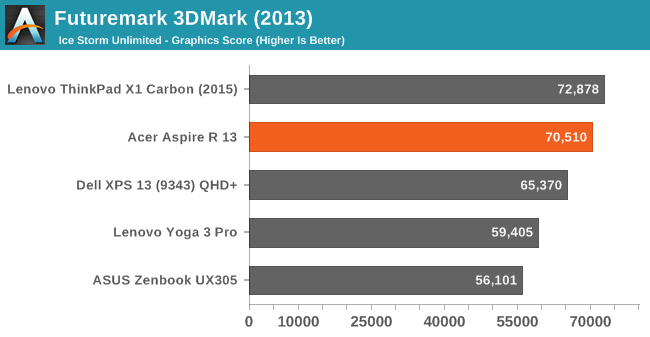
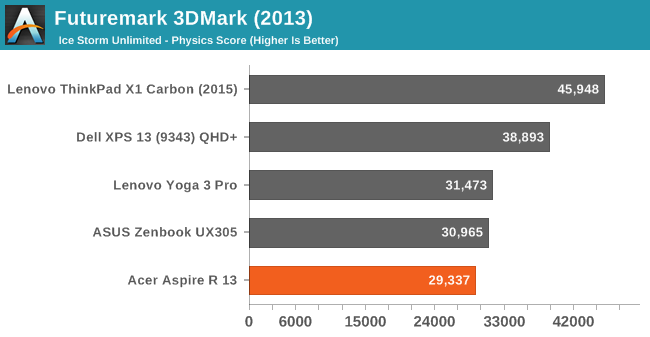
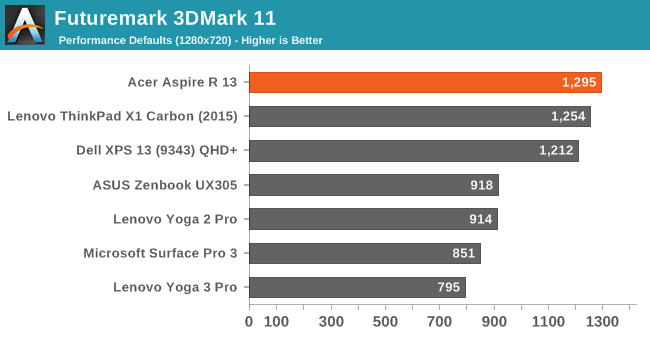
Futuremark’s 3DMark has several tests which vary in intensity. We run the Fire Strike, Sky Diver, Cloud Gate, and Ice Storm Unlimited tests, and for Ultrabooks, the Cloud Gate lineup is really where the integrated GPUs can start to make a dent. Ice Storm Unlimited is a cross-platform benchmark also available on iOS, Android, and Windows Phone, so it can be used to see where the mobile platforms stand. The Acer R 13 did not give the best results on the GPU tests, which means it may have been running into thermal issues despite the active cooling solution. I’ll dig into this more in a minute.
GFXBench
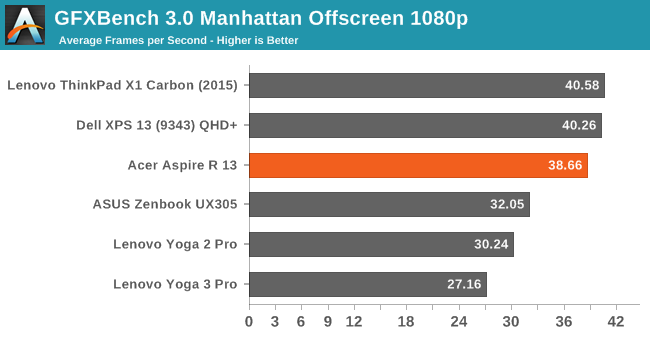
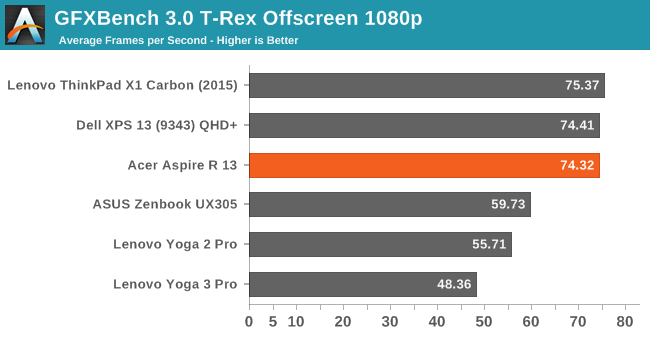
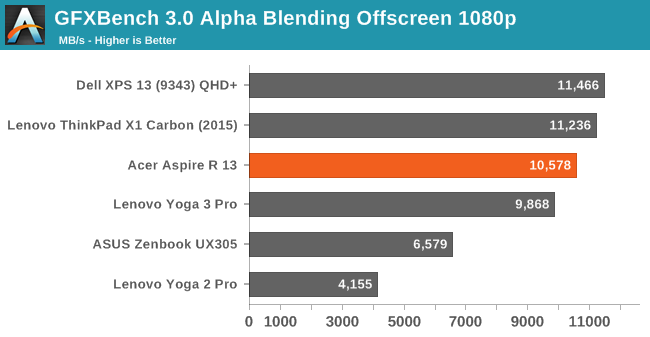
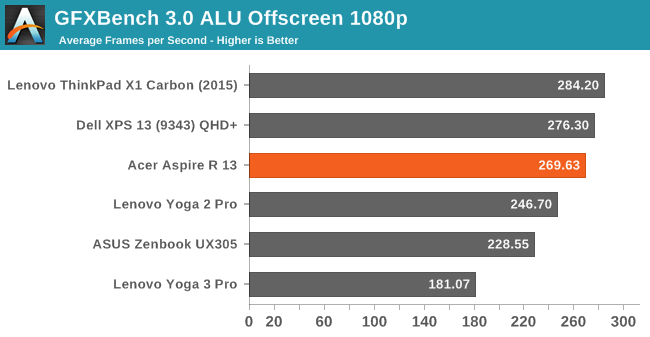
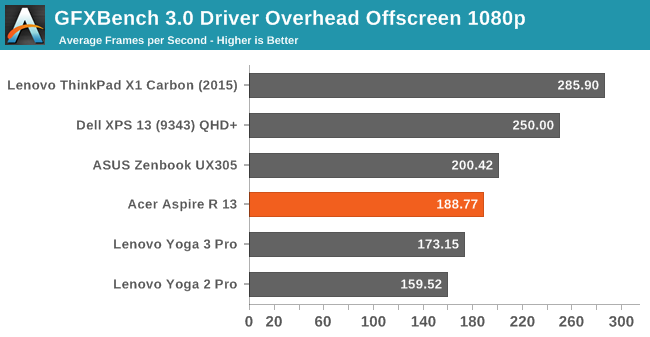
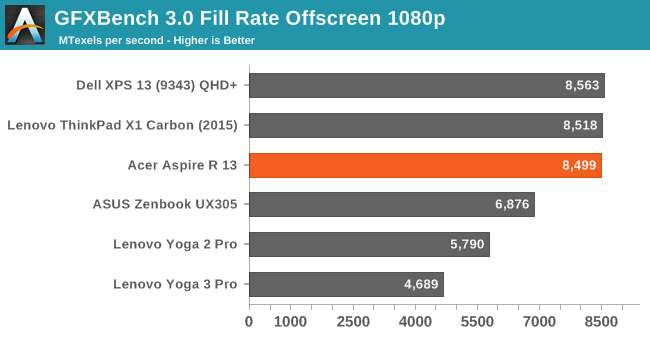
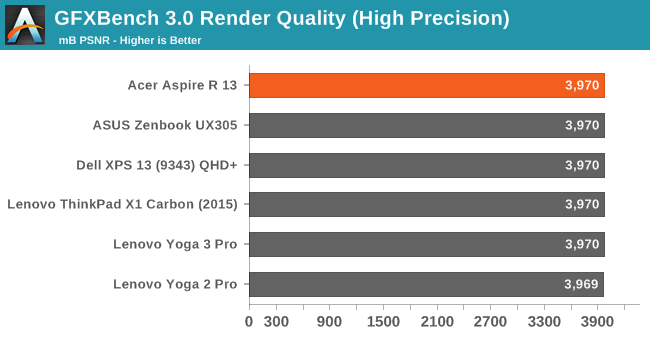
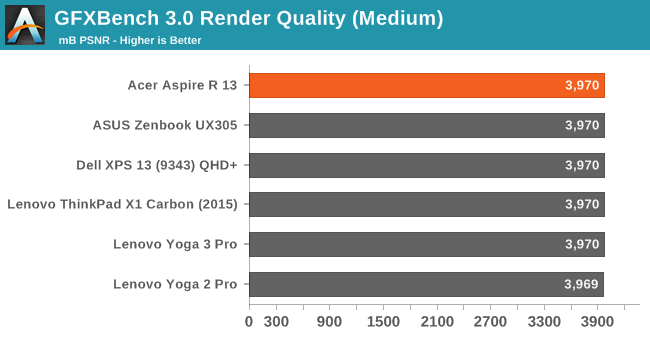
GFXBench is a cross platform benchmark and for notebooks, we use the DirectX version available in the Windows Store. The Acer comes in slightly under some of the other Broadwell units but is pretty close in this light workload.
DOTA 2
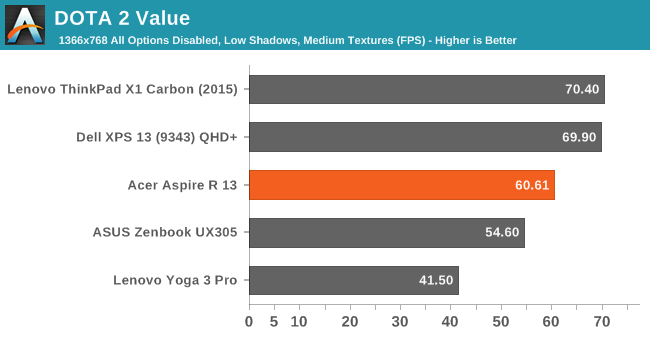
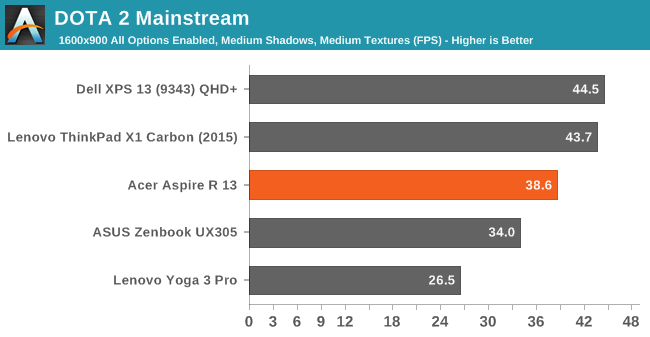
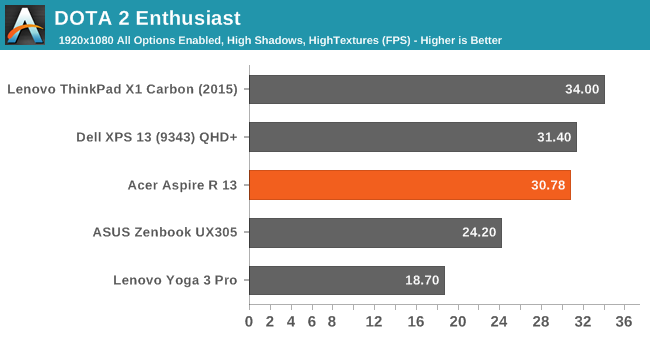
For Ultrabook reviews, we turn to DOTA 2 because it is a very popular online arena game, and the graphical demands are low enough that it can be run comfortably on integrated graphics. In this test, the Acer R 13 falls even farther back of the other Broadwell devices. Since the Core i7 has the highest clocked GPU in the HD 5500 series, I dug into this to see what was going on.

The cooling solution in the Acer Aspire R 13 can’t keep up with the high GPU demands of gaming, and it ends up running the Core i7 package pretty warm and it has to throttle down. I added an extra line on the chart in red to display what the maximum GPU frequency is of 950 MHz, and it is very clear that the GPU does not achieve that frequency very often, and drops down quite a bit to 850 MHz, and sometimes even lower to 800 MHz. We performed this same test on the Dell Latitude 14 7000, with a Core i5-5200U, and it had no problem maintaining its 900 MHz maximum GPU frequency during this test. Clearly Acer has some work to do on system cooling in order to dissipate the entire 15 watts of the processor.
Originally published at https://www.anandtech.com/show/9377/the-acer-aspire-r-13-review (Wayback Machine).