
ASUS S1 Mobile Pentium III-M 1.2GHz
- Posted in
- Laptops
The back of the S1 is home to a few more components necessary for function. Again, real-estate in the S1 is precious so it is not surprising that the majority of chips on the back of the system's motherboard are clustered around the Intel FW8280 southbridge.
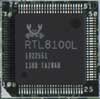
Directly below the southbridge is a ReakTeK RTL8100L fast ethernet controller; the chip that powers the internal ethernet jack.
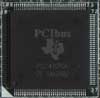
To the lower right of the southbridge is a Texas Instruments PCIbus PCI1410PGE chip. This chip gives functionality to the S1's single type II PCMCIA slot.
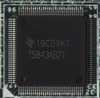
Finally, to the right of this chip, is another Texas Instruments chip, the TI 19CDXKT chip. This chip powers the S1's 4-pin firewire port.
Also mounted on the S1 motherboard's underside is the Intel ICH, which controls the memory allocation of the integrated video, and a FOXCONN connector that accepts the unit's modem card.

Due to the size restrictions, the audio connections on the S1 are mounted not on the motherboard but on a daughter card that sits slightly above the motherboard's front left tip.

The hard drive in our S1 was a 30.0GB Fujitsu MHN2300AT drive. Like all notebook drives we have seen in systems thus far, the Fujitsu MHN2300AT spins at 4200RPM and has a slightly faster 12ms access time. Overall it is note a bad drive for a thin-and-light system where slower and less power hungry drives are often used to preserve battery life.

The single speaker, located on the front left side of the S1, produced fairly good sound, albeit in mono. Again, we have come to not expect too much from laptop speakers, especially if there is only one of them.

When away from the desk, the S1 is powered by a 6-cell lithium ion battery. The battery provides 1450mAh and 32W/h. This places the battery in the S1 among the less powerful batteries we have seen, as it is about the same as the PaceBlade PaceBook's 6-cell 30W/h battery.
Originally published at https://www.anandtech.com/show/916 (Wayback Machine).