
PaceBook PaceBlade: The Tablet PC Arrives
- Posted in
- Laptops
The back of the CPU is home to the graphic chip, the firewire controller, the LAN chip and the PCMCIA controller.
Video for the PaceBook is provided by a Silicon Motion Lynx3DM8 graphics chip. The chip, which came out over a year ago, offers 2D and 3D support, although it is not meant to be a gaming chip and is akin to mobile integrated graphics controllers. The chip in our system included 8MB of integrated video memory and also includes hardware rotation, allowing the system to change from landscape to portrait mode, as well as fairly good power management technology. Again, although the Lynx3DM8 supports 3D, it is certainly not happy running it as even the animated Windows XP screens ran a bit slow and jumpy.

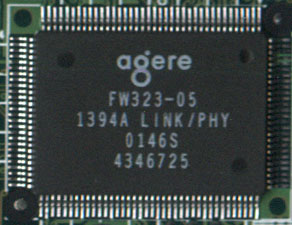
Firewire support for the 4-pin unpowered firewire connection is provided by an Agere FW323-05 controller.
Since the ALi southbridge does not include an ethernet controller, ethernet support for the built-in ethernet port is provided by a Realtek RTL8139CL ethernet controller.

The PaceBook that we received came outfitted with a 20GB Fujitsu MHN2200AT hard drive. This drive is very similar to the hard drives we have seen in other mobile products, as it features a 12ms access time and a 4,200RPM rotation speed.

The two speakers on the PaceBook sounded fairly good considering their size. Like other notebooks, distortion became a problem when the volume was cranked up.

When away from the desk, the PaceBook uses a 6-cell lithium-ion battery that provides 30Wh. This battery is significantly less powerful than some of the other batteries we have seen in conventional notebooks, such as the WinBook N4's battery which outputs 59.2W/h.
Originally published at https://www.anandtech.com/show/912 (Wayback Machine).