
Analyzing Intel Core M Performance: How 5Y10 can beat 5Y71 & the OEMs' Dilemma
DOTA 2 Results
DOTA 2 is a multiplayer battle arena game, and for this test we are using the same setup as our Mainstream benchmark, but this time with a full game. At 1600x900, all of the devices should be around 30 fps, and the overall test is about 45 minutes.
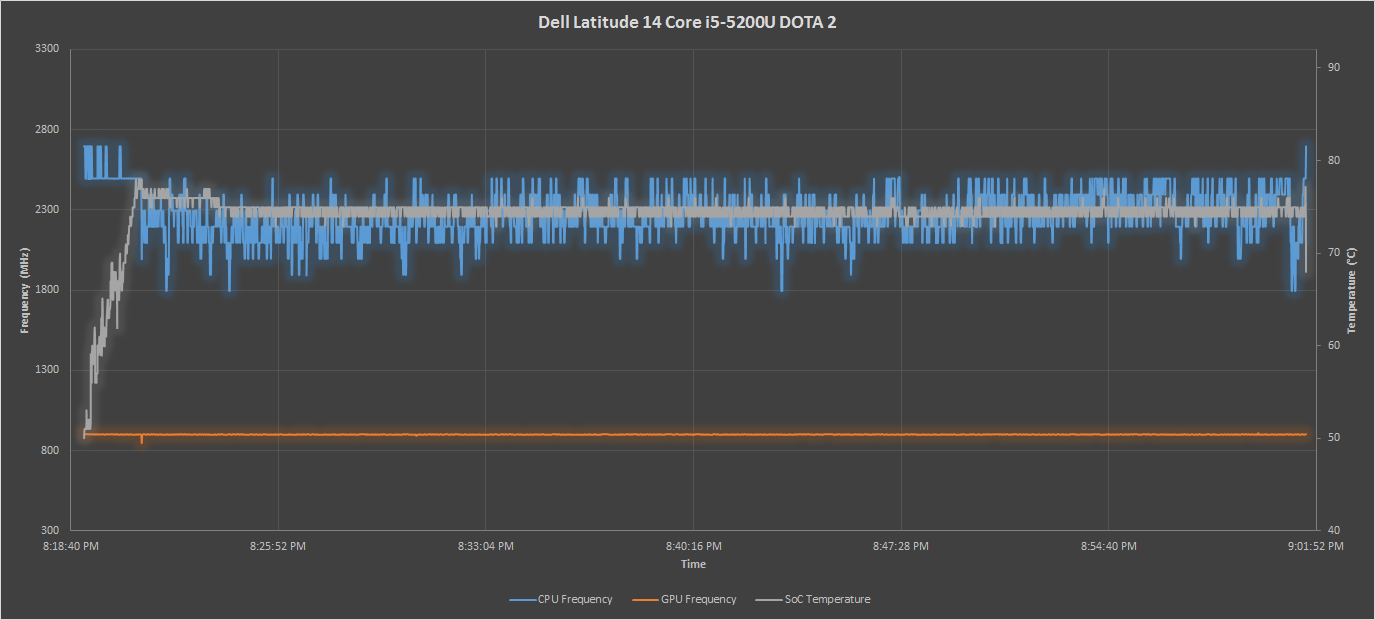
The Core i5 once again does a great job throughout this test. The CPU frequencies are dropped to keep the GPU running at full speed. The GPU basically runs at full speed for the duration of this test. The Venue 11 Pro is not so lucky, with it quickly heating up and being forced to throttle both the CPU and the GPU. The ASUS continues its amazing run, and showcases what can happen with a good passive cooling solution. The Yoga 3 Pro is not so lucky, with that pesky 65°C set point rearing its ugly head, which causes a big drop in overall frequency on such a long sustained workload.
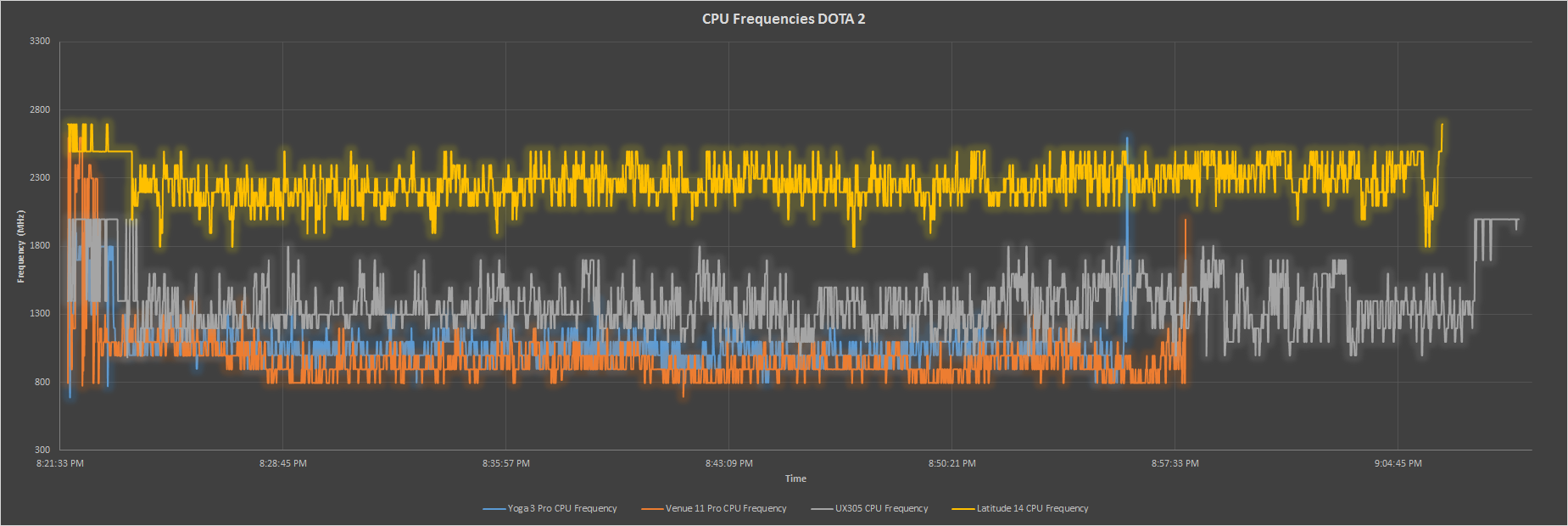
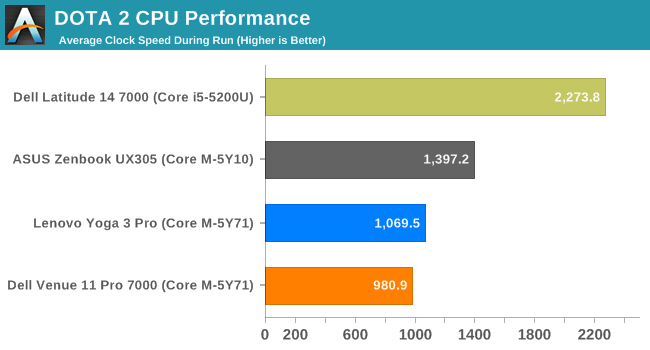
The average CPU frequency for this sustained real world gaming workload has even the Core i5 having to give up some CPU headroom to keep the GPU fed with power. The ASUS has a sizable advantage here, and both the 5Y71 devices drop well under their base 1.2 GHz CPU frequency when the GPU is running at maximum.
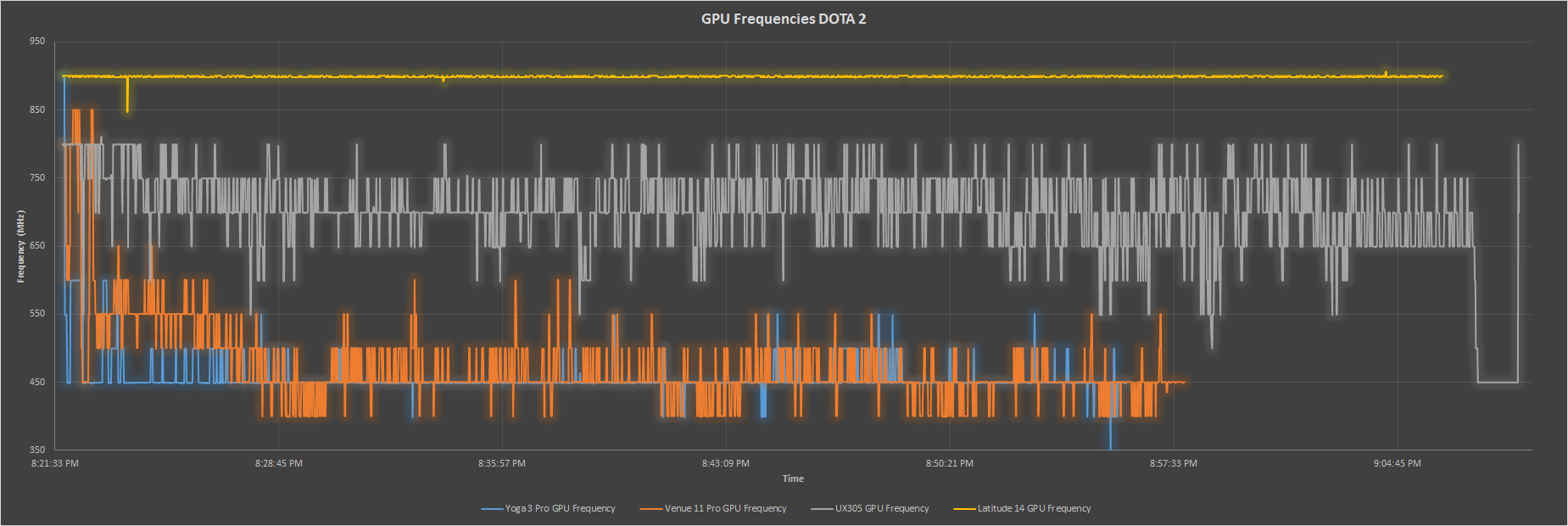
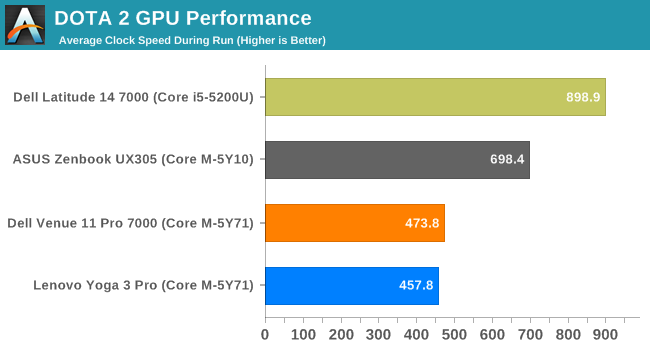
The GPU is really the story though, since this is a gaming workload. Amazingly the ASUS is only 100 MHz off of its maximum turbo frequency as an average for this 45 minute workload. Both the Dell Venue 11 Pro and the Yoga 3 Pro do not have enough cooling to keep these kinds of sustained GPU loads going.
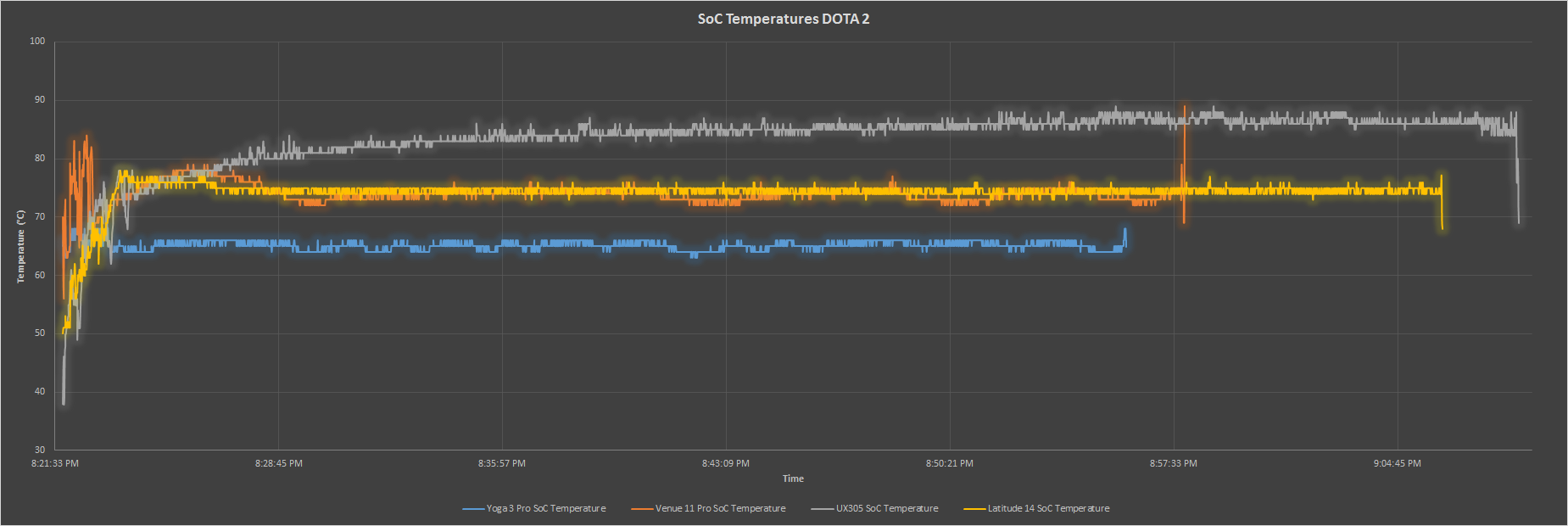
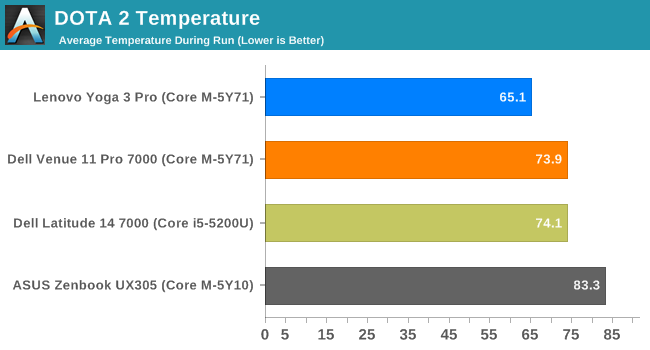
The Yoga 3 Pro is by far the coolest SoC in almost all of these tests, with its combination of active cooling and a 65°C maximum SoC temperature. The ASUS is far and away the hottest device in this test, but it also does a lot more work than the other Core M devices, and it is not getting any hotter by the end of the test, so the device cooling is doing its job.
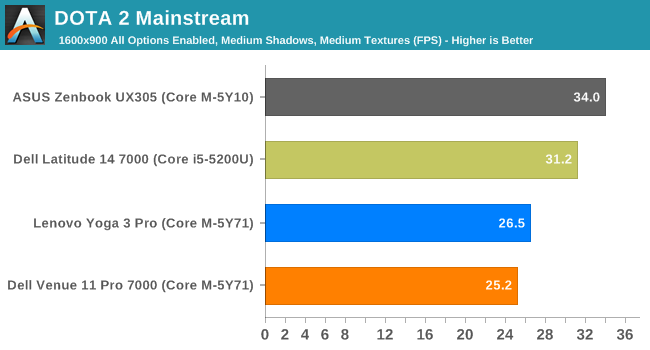
It is clear at this point that the ASUS can keep the GPU frequency much higher than the other Core M devices due to the nature of its cooling, and form factor. The DOTA 2 test is really dominated by it. It is much faster in this test than the other Core M devices, and once again due to the single-channel nature of the Core i5, the ASUS even outperforms the Core i5 in this test.
Originally published at https://www.anandtech.com/show/9117/analyzing-intel-core-m-performance (Wayback Machine).