
The ASRock X99 Extreme11 Review: Eighteen SATA Ports with Haswell-E
The ASRock X99 Extreme11 Conclusion
There are particular areas of each electronics market that the general consumer doesn't see or might have difficulty understanding. If a general consumer is concerned primarily about cost, then seeing a market where money-is-no-object offers a strange perspective. Ultimately, the ASRock X99 Extreme11 is in one of these brackets. Most home users would agree that $600+ for a motherboard feels insane, but for the storage and compute markets to which it is focused, $600 can be a drop in the ocean of total system cost. It may even save a few $$$ if it has the required features already onboard.
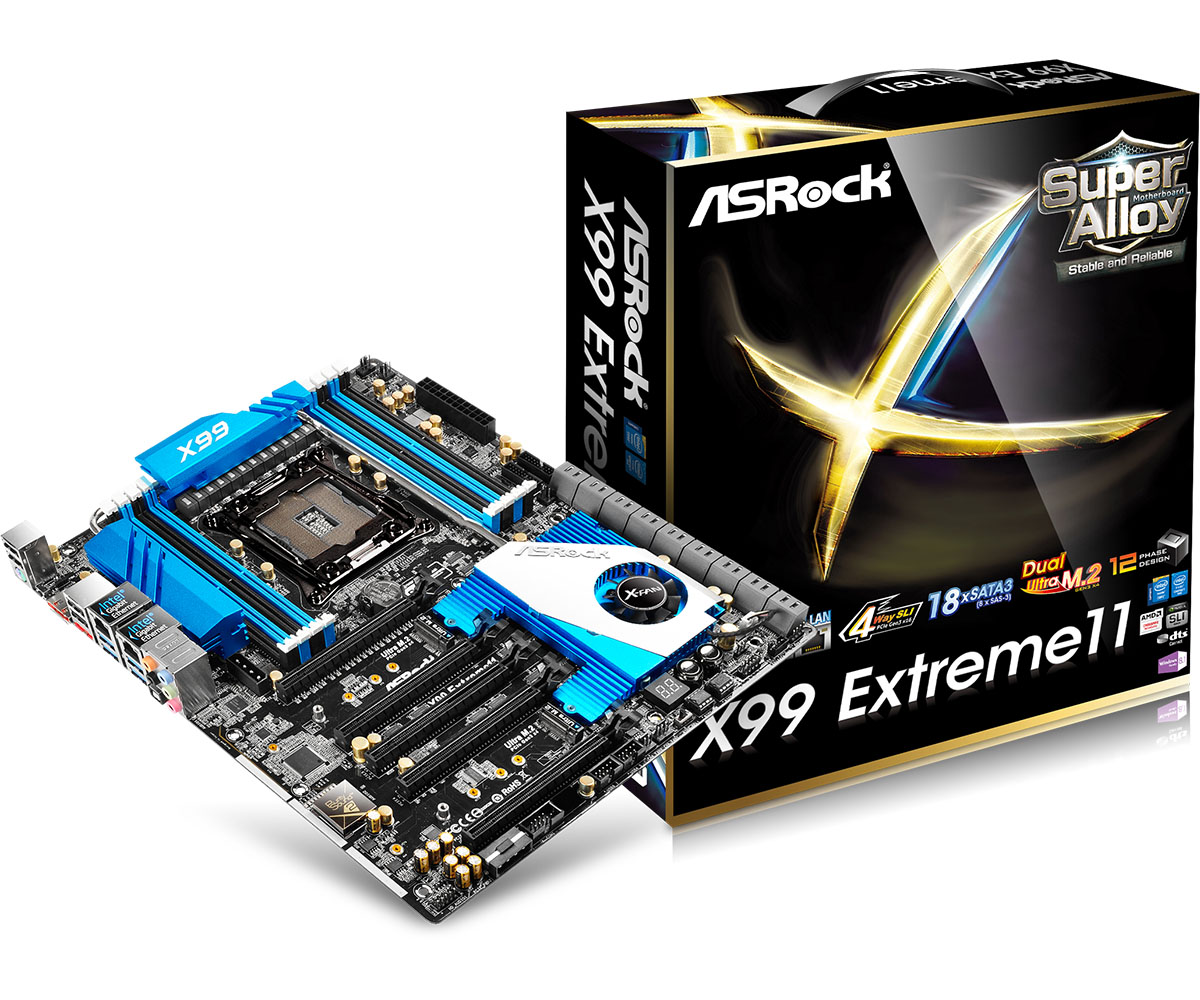
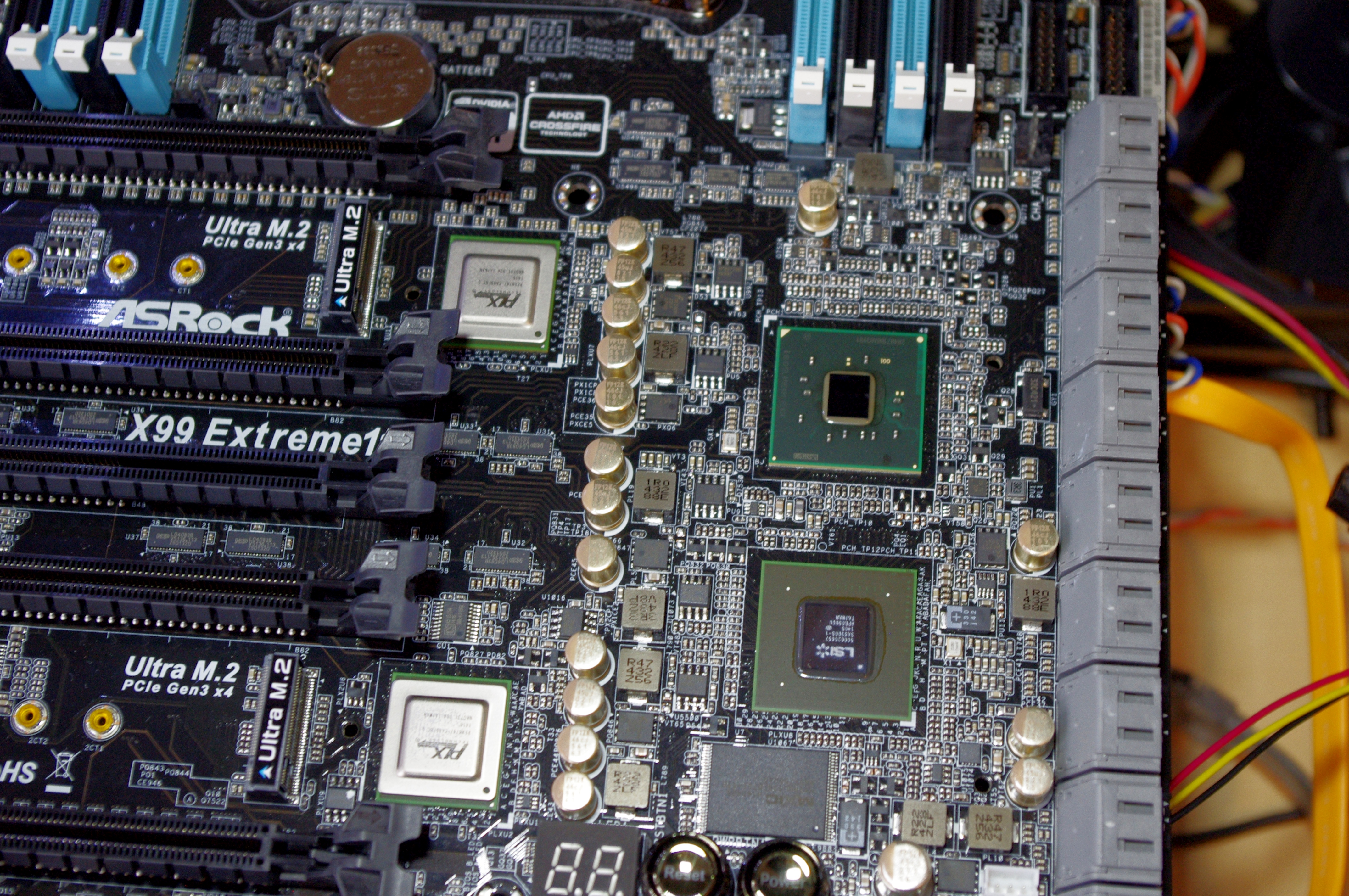
The reason for the cost of the X99 Extreme11 stems from two PLX8747 PCIe 3.0 switches providing x16/x16/x16/x16 for four-way PCIe coprocessor action as well as an LSI 3008 SAS/SATA controller giving eight more storage ports. These eight ports combine with the ten from the chipset for a total of eighteen.
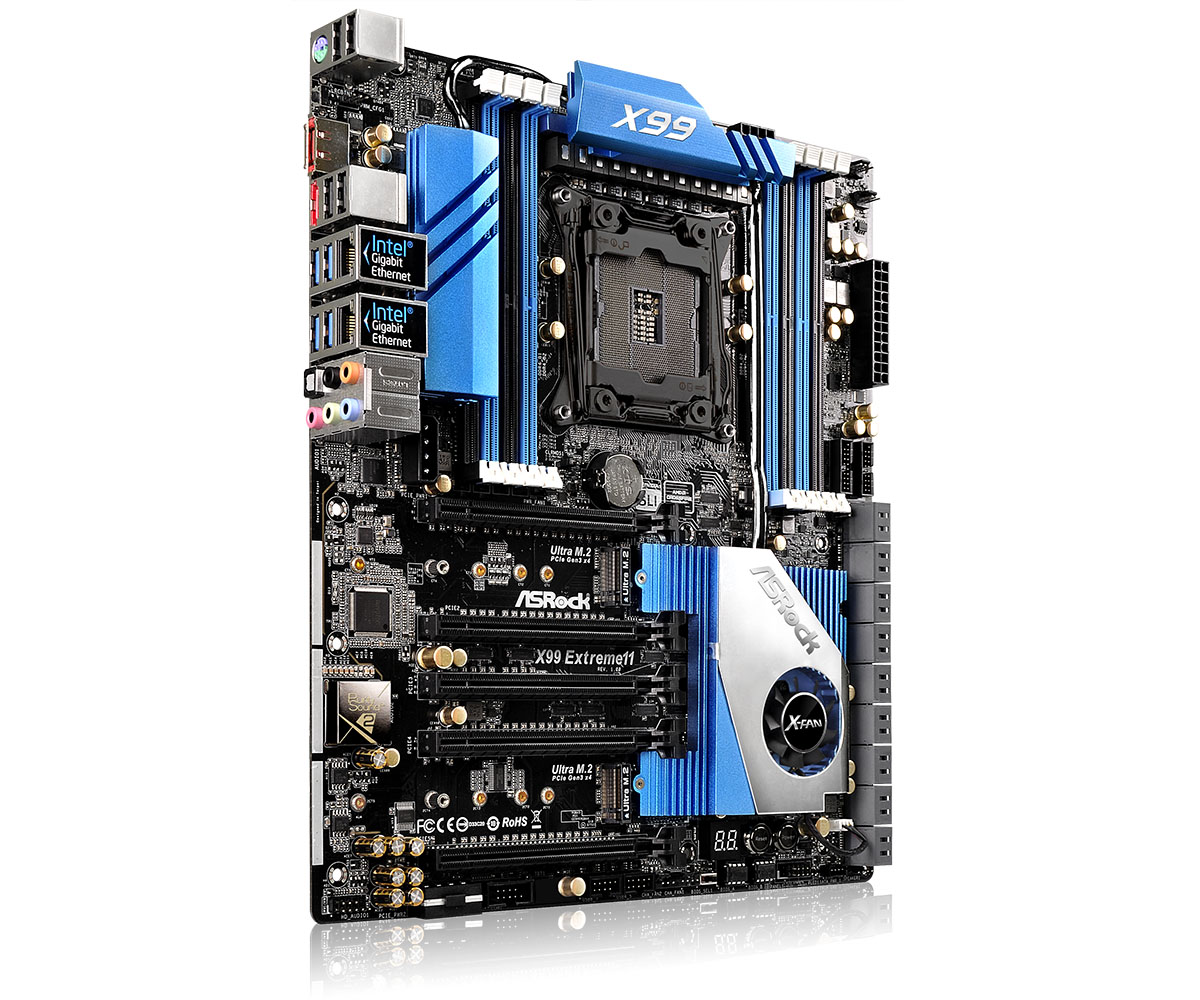
In the hierarchy of reasons to buy a motherboard, having a particular functionality rates high and it is the functionality that will cause users to buy the Extreme11, similar to the X99 WS-E/10G we reviewed previously. Alongside the to-buy features, the motherboard also comes with dual Intel network ports (I218-V and I211-AT), support for Intel Xeons and 128GB of RDIMMs and a boosted Realtek ALC1150 audio solution in the form of Purity Sound 2.
A key metric in our tests for such a board is power consumption, and given the extra components it perhaps comes as no surprise that under load the Extreme11 draws 244W at CPU load and comes in as nearly the most power hungry out of the X99 boards we have tested. The extra components pushes POST times nearer 25 seconds also. One surprising outcome was the PCH USB 3.0 speed, coming top in our test.
While the Extreme11 is not necessarily bought for performance, the base BIOS we tested with implemented a form of multi-core turbo, giving it high marks across almost all of our CPU suite. Overclocking performance on our mediocre CPU matched that of other X99 motherboards, with the range of automatic options providing suitable feedback to place a manual set of parameters.
In the past, I have always said that the first thing users consider when purchasing a motherboard is if it has a certain feature they need. (Next in the order of narrowing down the options, assuming no prior experience with a brand, is usually price, then looks, then performance, extras and support.) The ASRock X99 Extreme11 sits in that niche for users who want Haswell-E or Xeon E5 v3 as well as storage and multiple PCIe coprocessors - a niche with only few motherboardsin the self-build community, making the Extreme11 a straightforward option.
Originally published at https://www.anandtech.com/show/9060/the-asrock-x99-extreme11-review-eighteen-sata-ports-with-haswelle (Wayback Machine).