
NVIDIA Tegra X1 Preview & Architecture Analysis
Final Words
With the Tegra X1, there have been a great deal of changes when compared to Tegra K1. We see a move from Cortex A15 to A57 on the main cluster, and a move from a single low power Cortex A15 to four Cortex A53s which is a significant departure from previous Tegra SoCs. However, the CPU design remains distinct from what we see in SoCs like the Exynos 5433, as NVIDIA uses a custom CPU interconnect and cluster migration instead of ARM’s CCI-400 and global task scheduling. Outside of these CPU changes, NVIDIA has done a great deal of work on the uncore, with a much faster ISP and support for new codecs at high resolution and frame rate, along with an improved memory interface and improved display output.
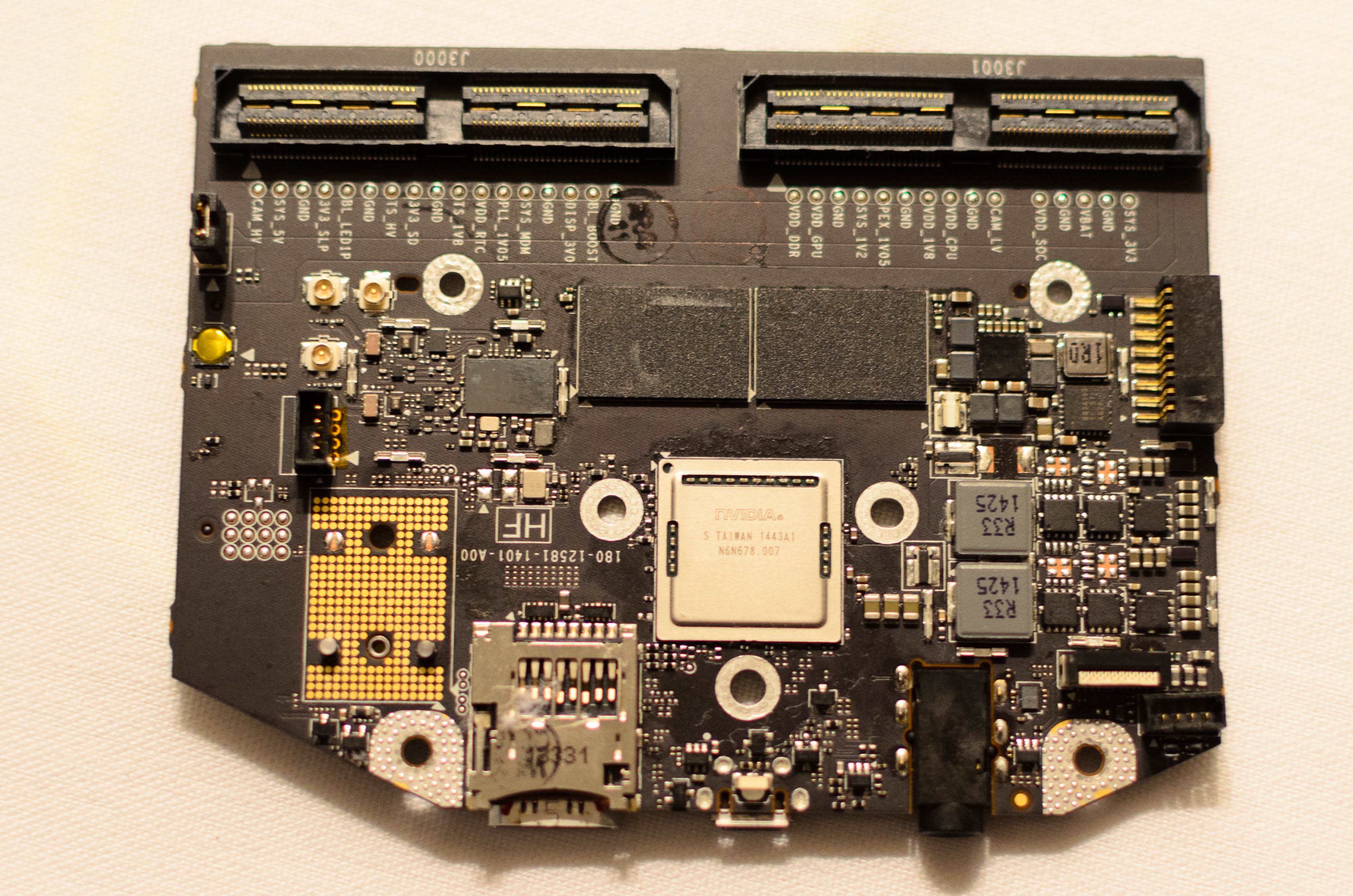
Tegra X1 Reference Platform
Outside of CPU, the GPU is a massive improvement with the move to Maxwell. The addition of double-speed FP16 support for the Tegra X1 helps to improve performance and power efficiency in applications that will utilize FP16, and in general the mobile-first focus on the architecture makes for a 2x improvement in performance per watt. While Tegra K1 set a new bar for mobile graphics for other SoC designers to target, Tegra X1 manages to raise the bar again in a big way. Given the standards support of Tegra X1, it wouldn’t be a far leap to see more extensive porting of games to a version of SHIELD Tablet with Tegra X1.
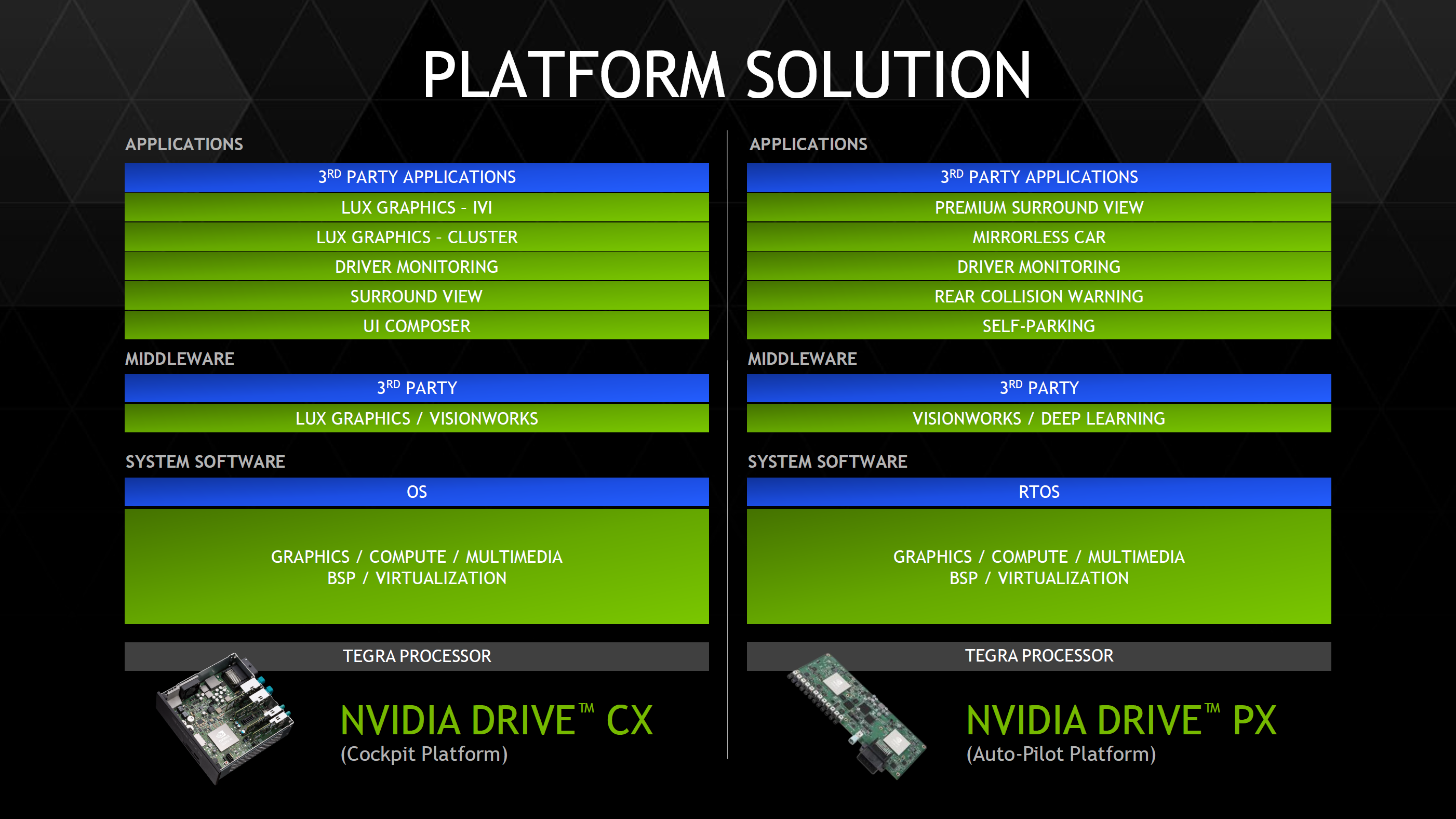
NVIDIA has also made automotive applications a huge focus in Tegra X1 in the form of DRIVE CX, a cockpit computing platform, and DRIVE PX, an autopilot platform. Given the level of integration and compute present in both DRIVE CX and PX, there seems to be a significant amount of value in NVIDIA’s solutions. However, it remains to be seen whether OEMs will widely adopt these solutions as car manufacturers can take multiple years to implement a new SoC. Compared to the 3-4 month adoption rate of an SoC in a phone or tablet, it's hard to pass any judgment on whether or not NVIDIA's automotive endeavors will be a success.
Overall, Tegra X1 represents a solid improvement over Tegra K1, and now that NVIDIA has shifted their GPU architectures to be targeted at mobile first, we’re seeing the benefits that come with such a strategy. It seems obvious that this would be a great SoC to put in a gaming tablet and a variety of other mobile devices, but it remains to be seen whether NVIDIA can get the design wins necessary to make this happen. Given that all of the high-end SoCs in the Android space will be shipping with A57 and A53 CPUs, the high-end SoC space will see significant competition once again.
Originally published at https://www.anandtech.com/show/8811/nvidia-tegra-x1-preview (Wayback Machine).