
ASUS TUF Z97 Mark S Motherboard Review: The Arctic Camo Special Edition
- Posted in
- Motherboards
- Asus
- TUF
- Z97
- Sabertooth
ASUS TUF Z97 Mark S Conclusion
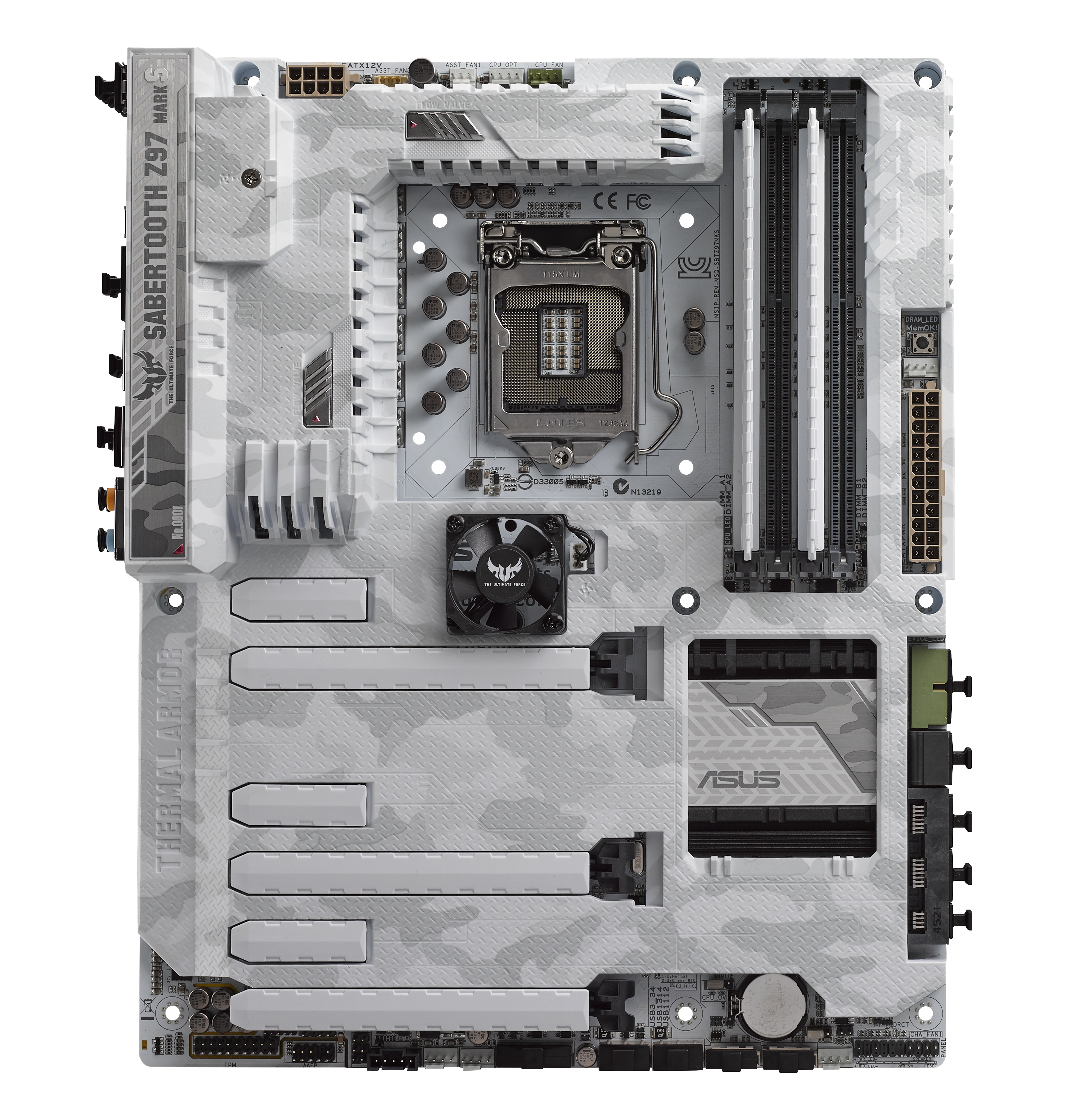
To end with a cliché: beauty is in the eye of the beholder. For those that like a clean white camouflage design, it is easy to be seduced by the Z97 Mark S. After the positive responses ASUS received after showing a preview at Computex, it was almost a no-brainer release for them. This was something their following requested, and in my opinion it has been implemented well. There definitely feels like an attention to detail, even if the detractors might call it a paint-job over a TUF Mark 1.
Putting aesthetics to the side and looking at the motherboard pragmatically, it offers a few controllers over the base Z97 implementation, such as extra SATA ports and extra USB ports both from ASMedia controllers. Networking is provided by Intel I218-V and Realtek 8111GR controllers, with the bundled TurboLAN software allowing for packet prioritization. Audio comes in the form of an adjusted Realtek ALC1150 setup with PCB separation and filter caps, and PCIe layouts support x8/x8 multi-GPU gaming configurations.
The motherboard comes with Thermal Armor pre-attached, giving the white PCB of the motherboard a cleaner look, and in the box are a number of slot protectors and port defenders to reduce dust or corrosion. TUF branded motherboards are designed for their longer five year warranty, and while these might help extend that, they are not a condition for the warranty. ASUS instead offers air baffles for directional airflow and fan management software to help the situation as well as implementing components with a longer life span.
In terms of benchmarks, the Z97 Mark S comes out very well. Idle power consumption was a little high, but load power consumption was average and POST times were a reasonable 11 seconds. The Z97 Mark S takes the record for the best DPC Latency we have ever seen on a motherboard (an award it shares with the Maximus VII Impact we are currently testing), and also has very good audio scores. Due to its use of MultiCore Turbo, it also scores highly in our CPU tests.
The BIOS and software situation for ASUS products is ever evolving. While the package is missing some minor tweaks I would like to see, both the software and BIOS are more well-rounded than others and offer good tools in general. TUF motherboards have very good fan control systems, attempting to tune for power and noise, and I am pleased to see RPM/Temperature graphs in the mix as well. There is a lack of OC options in the OS software, and no one-touch button for overclocking, despite the Z97 chipset being used which might deter users who have never fiddled in a BIOS before.
Pricing of the ASUS Z97 Mark S has yet to be announced, but we assume it to be in the $260-$300 region alongside the other Z97 TUF motherboards. At $300 it might be a bit of a stretch price, even for a limited edition motherboard, but at $260-$275 it makes more sense.
It is very rare we get a chance to review the first production motherboard from a limited edition line but the Z97 Mark S performed solid from the start. For anyone wanting to show off a white motherboard build, the buck starts at the Mark S with a few white LEDs. Even if a user keeps it in a closed case for private viewings, the fact that it is a TUF range product is a big plus.

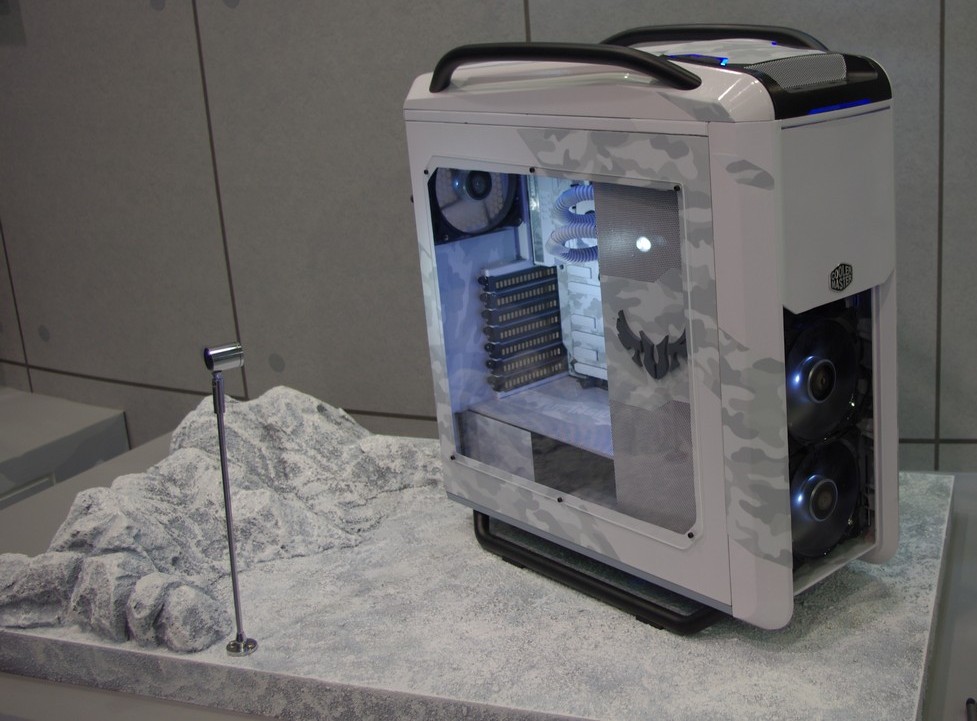
All ASUS needs to do now is create a TUF line of GPUs, and a limited edition white one, and put the two together. Failing that, I expect to see the Galaxy booth at CES to pair a Mark S with their white HOF cards. At Computex ASUS showed off an example build with one of their pre-release units:
Originally published at https://www.anandtech.com/show/8696/asus-tuf-z97-mark-s-motherboard-review-arctic-camo (Wayback Machine).