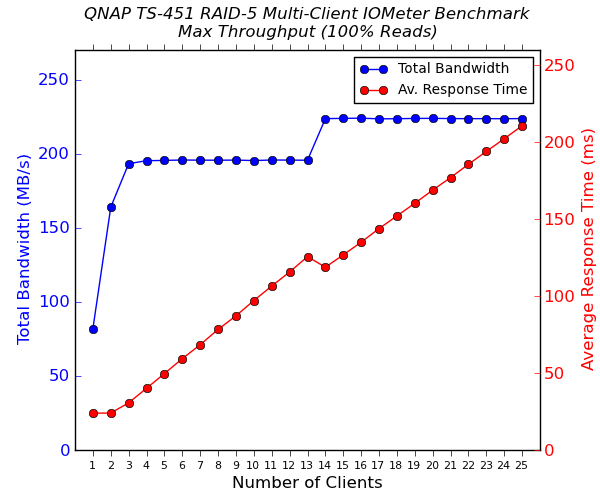
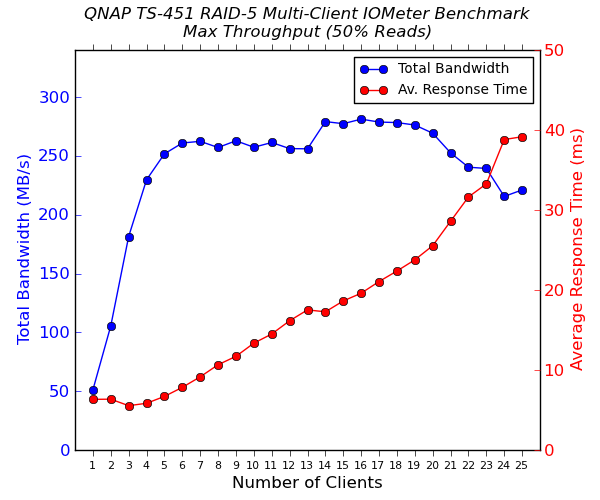
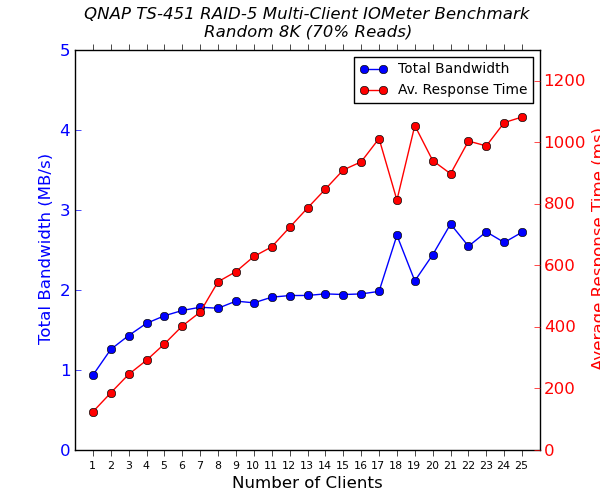
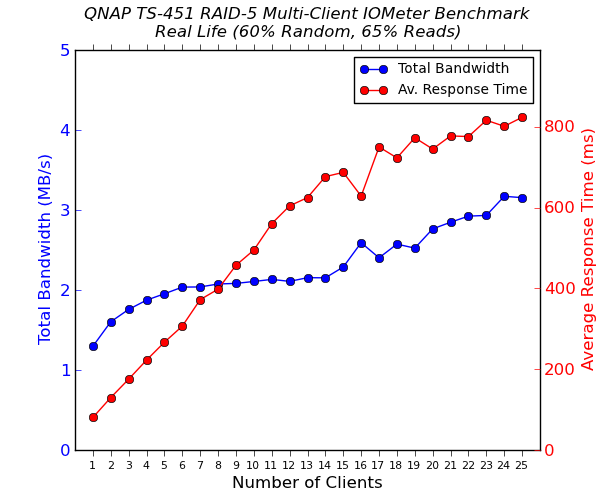
We put the QNAP TS-451 through some IOMeter tests with a CIFS share being accessed from up to 25 VMs simultaneously. The following four graphs show the total available bandwidth and the average response time while being subject to different types of workloads through IOMeter. The tool also reports various other metrics of interest such as maximum response time, read and write IOPS, separate read and write bandwidth figures etc. Some of the interesting aspects from our IOMeter benchmarking run can be found here. Since we have two network links, they can be teamed in 802.3ad dynamic link aggregation mode.
The real competition here is the Thecus N4800, which is based on the previous-generation Atom D2700. While the QNAP TS-451 wins out in some of the multi-client benchmarks (in terms of both total bandwidth as well as average response time), the N4800 does manage to win a few too. Ultimately, it is the target market (home users) as well as the power consumption numbers (which we shall see in the next section) that tend to make the Bay Trail platform an attractive upgrade option for NAS owners with previous-generation Atom-based units.