
Overclockable Pentium Anniversary Edition Review: The Intel Pentium G3258
Pentium-AE Is A Processor We Want, But Not The Processor We Need
Testing the Pentium G3258 has been fun. There was a well of nostalgia in me that was particularly excited to get the processor in and get a chance to play with the overclocking potential. Even though this does not seem to be a fully-fledged member of the Devil’s Canyon cohort, Intel should receive kudos for providing the ‘cheap and cheerful’ unit which might instill a new wave of overclocking enthusiasts.
While the performance at stock is nothing to shout about, the feel of the processor in its overclocked mode was fast – even faster than the top tier processors. That is benefit afforded by an overclocking platform - web browsing and any other simple operation that needs a single thread will be as quick as you can get it. The downside occurs if anything CPU-limited or multi-threaded attempts to push its workload through the system. If the software can take advantage of hyperthreading very easily, then no matter how high the Pentium-AE is overclocked, the i3 will win every time. As we move into the future, software is becoming more adept at using these extra threads.
Intel had several choices when it came to providing a cheaper overclocking processor. It had to come with appropriate branding (20+ years of Pentium), but also not be instantly recognizable (Pentium G3258 sounds generic) and it must not interfere with their high end product lines when going for full-out performance. Unfortunately, those last two points are just some of the reasons that a gaming enthusiast might want a nicely performing system on the cheap and why the Intel Pentium-AE is not the right processor to do it with.
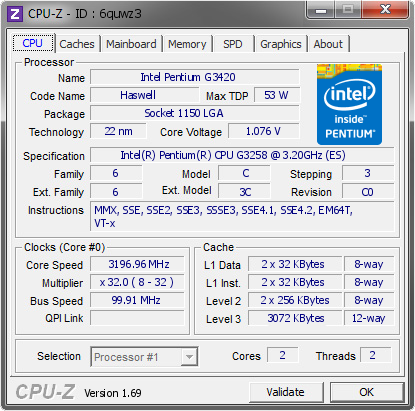
To start, Intel missed a trick by not calling it a K processor, but if you want a processor to not take much of the spotlight, it gets a generic name. The specifications of the processor at stock leave cause for concern. Intel could have chosen a DDR3-1600 model for unlocking, but it chose the DDR3-1333 model instead. While one could postulate that this would offer more dies to sell (by being a lower classification, more dies would fit into this bracket overall), I doubt that Intel is stretching to fill die quotas at this low end of the spectrum. The other concern comes back to the fact that Intel wanted to leave a big enough gap between the Pentium-AE and the i5/i7-K processors, so fitting the CPU with a low amount of L3 cache and DDR3 support would help in this context.
Certain games get a boost with the Pentium-AE overclocked, such as F1 2013 and Company of Heroes 2, but the overclocking is more important when it comes to multiple GPU scenarios. The downside of that conclusion is that an i3 is better at multiple GPU scenarios right off the bat, and for single GPU gaming the trend is towards games that can use the threads. This is a big discrepancy between when we used to overclock older CPU and today – the games today can use multiple cores. Having a lack of cores can really damage frame rates in some titles, especially when the amount of GPUs starts to rise. Unfortunately the only way to get more cores is to buy a better processor, or buy one that unlocks cores. The former reason in the last sentence is what helps Intel in the long run from the Pentium-AE cannibalizing i5 and i7 sales.
This review ends not so much on a conclusion, but more of a request. But given what we have seen thus far when discussing the place of the G3258 with everything else, it might be a fruitless request, but I would like to try.
Please Intel, create an i3 overclocking processor.
An i3-K Would Complete the Set
If the overclocking community is to grow, there needs to be some positive encouragement, rather than an ecosystem where a user can buy an overclocked Pentium-AE gaming machine and it is beaten by an extra $45 which might have been spent on a good cooler enabling the overclock. Having the extra power of the i3 might, in time, encourage users to expand their remit and purchase the i5/i7 and overclock it further, with a potential route to the enthusiast X-series processors over time. The dual core Pentiums are limiting the potential of discrete graphics now that gaming can take advantage of processor cores. As long as an i7-K and i5-K processors are released at the same time, an overclockable i3-K would give you the trifecta of K processors that becomes instantly marketable, along with growing and creating communities around them.
Originally published at https://www.anandtech.com/show/8232/overclockable-pentium-anniversary-edition-review-the-intel-pentium-g3258-ae (Wayback Machine).