
JMicron JMF667H Reference Design (128GB & 256GB) Review
Random Read/Write Speed
The four corners of SSD performance are as follows: random read, random write, sequential read and sequential write speed. Random accesses are generally small in size, while sequential accesses tend to be larger and thus we have the four Iometer tests we use in all of our reviews.
Our first test writes 4KB in a completely random pattern over an 8GB space of the drive to simulate the sort of random access that you'd see on an OS drive (even this is more stressful than a normal desktop user would see). We perform three concurrent IOs and run the test for 3 minutes. The results reported are in average MB/s over the entire time.
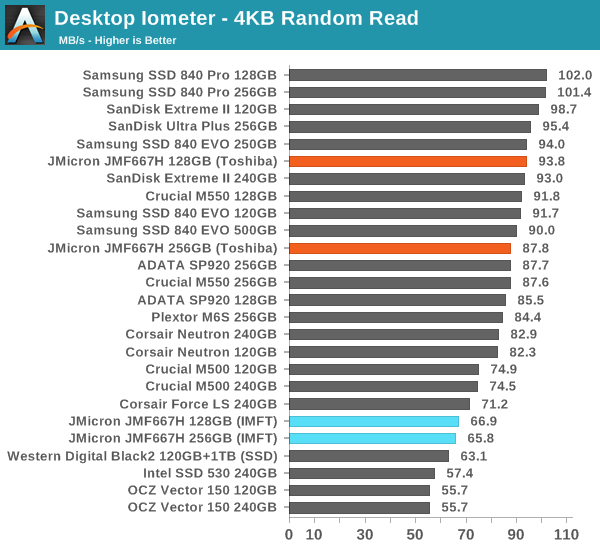
Once again there is quite a big difference depending on what NAND is used. With Toshiba NAND, the JMF667H is at the same level with the high-end drives but IMFT NAND drops it to the lower-end. From what I have heard, Toshiba's NAND is faster in general and the higher die count further boosts performance.
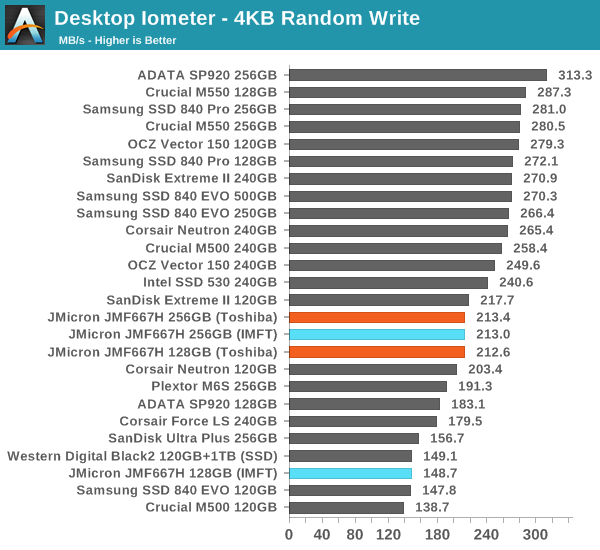
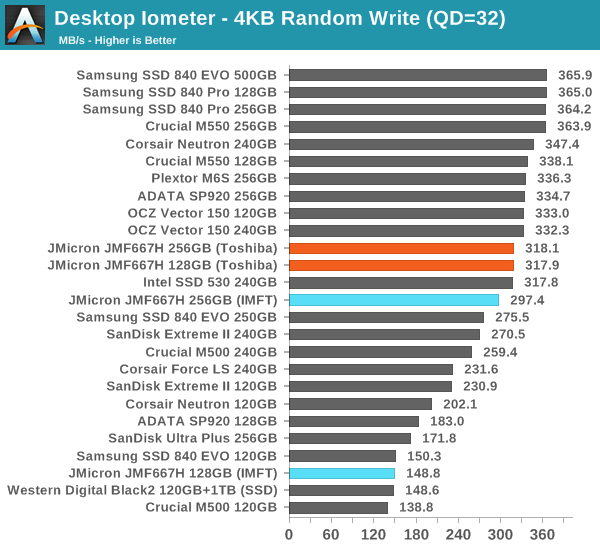
Random write performance is fairly average. I'm guessing the controller/firmware introduces some bottlenecks because the performance isn't really affected by the NAND other than in the 128GB configuration.
Sequential Read/Write Speed
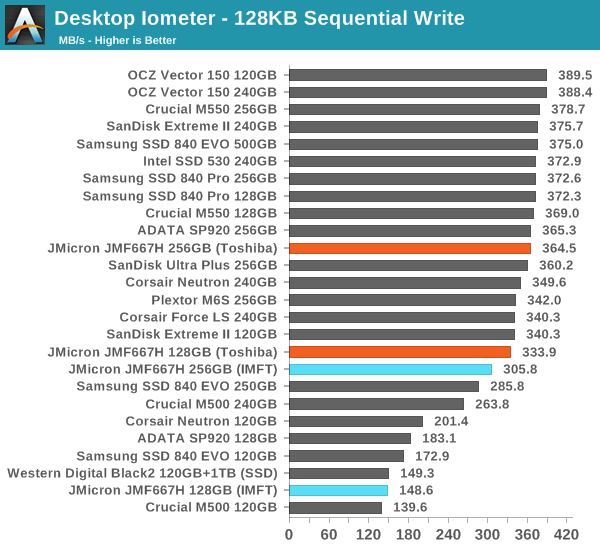
To measure sequential performance we run a 1 minute long 128KB sequential test over the entire span of the drive at a queue depth of 1. The results reported are in average MB/s over the entire test length.
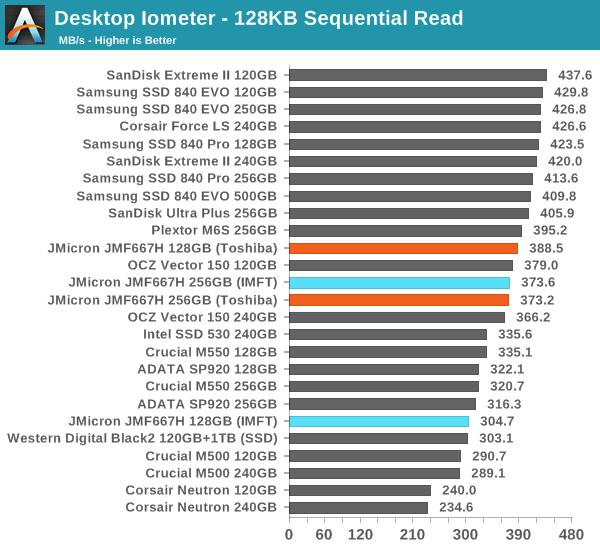
Sequential performance is also average. There is some variation especially in write performance depending on the NAND but even the IMFT version performs relatively well.
AS-SSD Incompressible Sequential Read/Write Performance
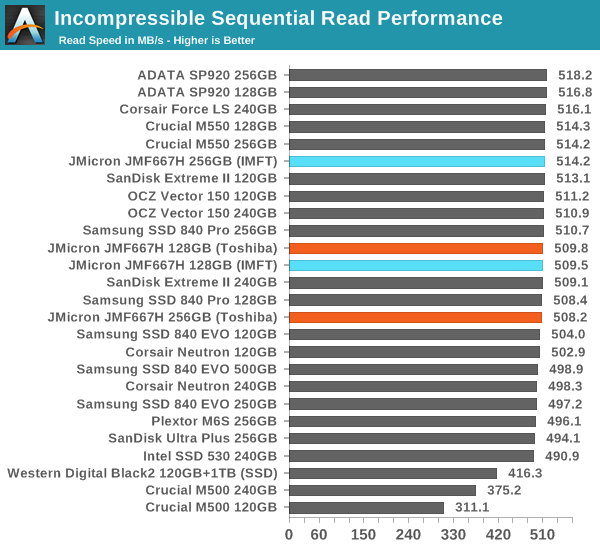
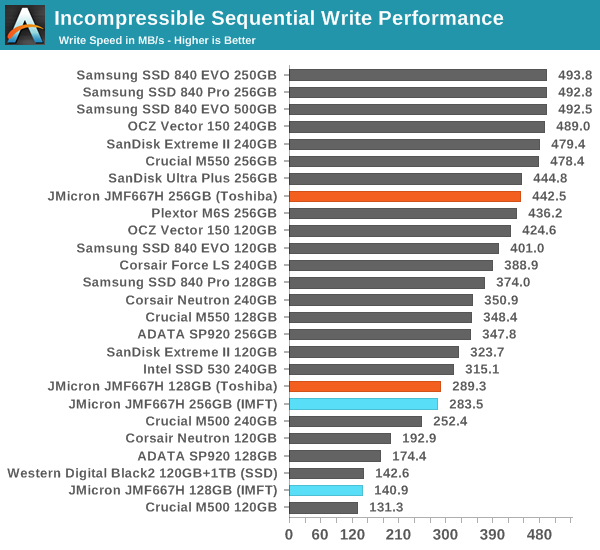
The AS-SSD sequential benchmark uses incompressible data for all of its transfers. The result is a pretty big reduction in sequential write speed on SandForce based controllers.
Originally published at https://www.anandtech.com/show/8013/jmicron-jmf667h-reference-design-review (Wayback Machine).