
The AMD Radeon R7 265 & R7 260 Review: Feat Sapphire & Asus
Synthetics
As always we’ll also take a quick look at synthetic performance. Since the R7 265 and R7 260 are based on the same venerable AMD GCN GPUs we've come to know over the last 1-2 years, there shouldn’t be any surprises here other than slight performance differences..
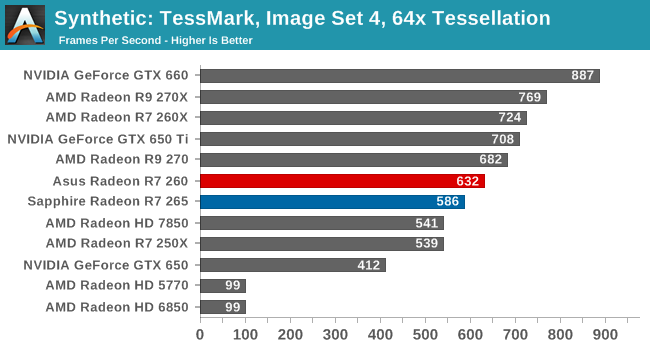
Right off the bat, TessMark highlights an interesting outcome of AMD’s clockspeed choices when paired with their geometry frontend design. Since both Pitcairn (R7 265) and Bonaire (R7 260) have the same 2 triangle/clock geometry rate, the higher clocked R7 260 actually offers better tessellation performance than the lower clocked R7 265. In gaming workloads of course there’s more than just geometry throughput to be concerned about, but this does bring to light one of those amusing edge cases where cards on either side of a GPU upgrade aren’t always faster than they first appear.
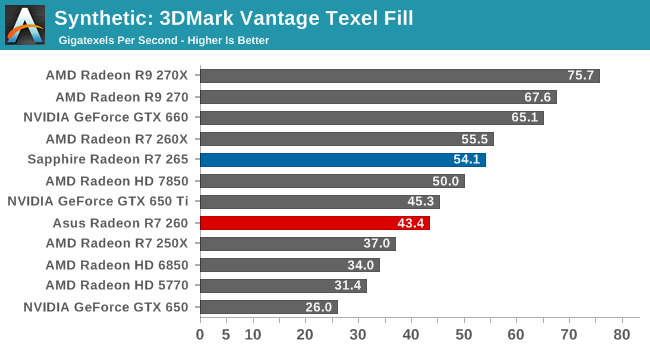
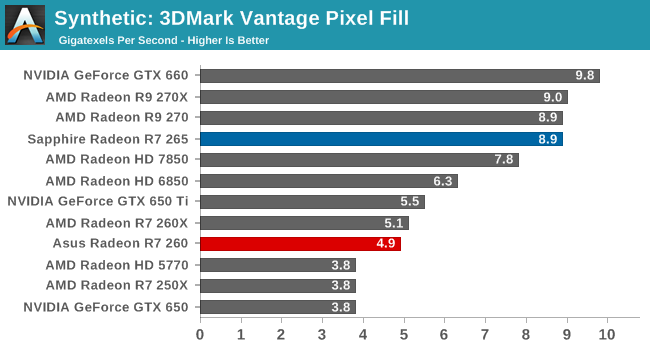
3DMark also finds an interesting edge case for us, once again relating to the number of processing units in R7 265. Texture throughput on R7 265 is slightly below R7 260X due to the fact that R7 260X’s 1.1GHz clockspeed more than makes up for the 12% deficit in the number of texture units available. The end result is that R7 260X is able to push more texels in a second than R7 265 can, even with fewer texture units to do it with.
Originally published at https://www.anandtech.com/show/7754/the-amd-radeon-r7-265-r7-260-review-feat-sapphire-asus (Wayback Machine).