
Motorola Moto G Review
Display on mobile devices is one area where we’ve seen considerable improvement. Pixel density has gone up, contrast ratios have improved, and the emphasis on low power in a platform gated by its battery size means there’s always innovation happening. In the case of the Moto G, what we’re after should really be a display that looks visually appealing without any of the egregious issues that plague most midrange devices – poor viewing angles, low resolution, low contrast, dim displays.
On paper, the Moto G has what would probably have been a flagship display for a mobile device a year or two ago, it’s a 4.5-inch LCD with 1280x720 resolution and 326 PPI pixel density. The comparison point is the Moto X with a 4.7 inch AMOLED panel of the same 720p resolution and 312 PPI pixel density.
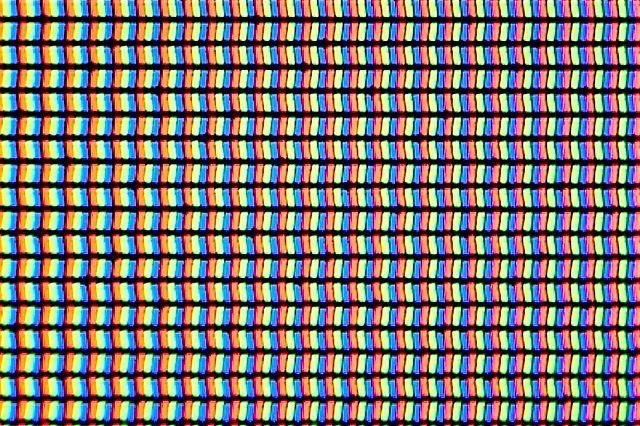
I’m pretty impressed with how the Moto G’s display looks. Subjectively, viewing angles are good, there aren’t any of the issues I normally attribute to non-flagship devices either with low pixel density or contrast that fails to please. There’s no light leakage at all from any of the corners.

One unfortunate thing about the Moto G I was sampled however is the presence of two small bubbles in the cover glass. I initially thought these were dust, but inspection with a microscope reveals they are in fact inhomogeneities in the cover glass.
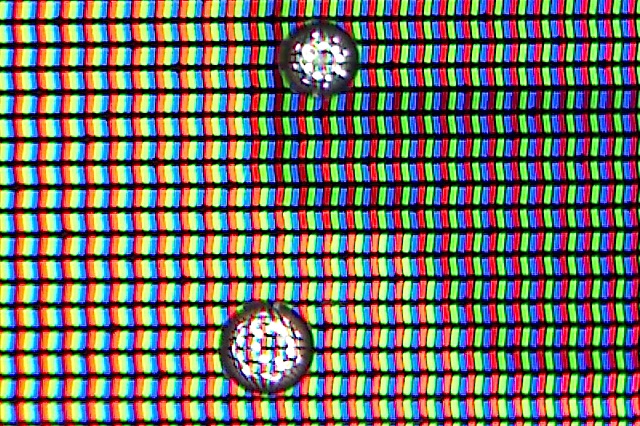
I’m not sure whether these kind of defects are within spec for the Moto G, but they’re distracting and visible on most solid colored UIs or views. I’ve never seen something like this on any handset I’ve reviewed to date.
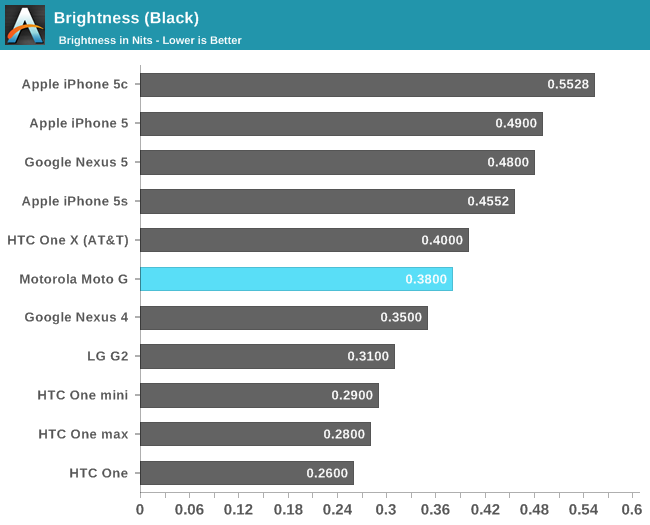
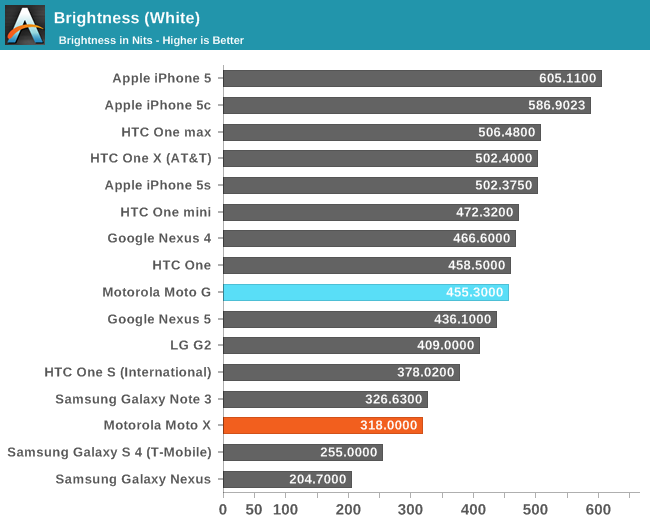
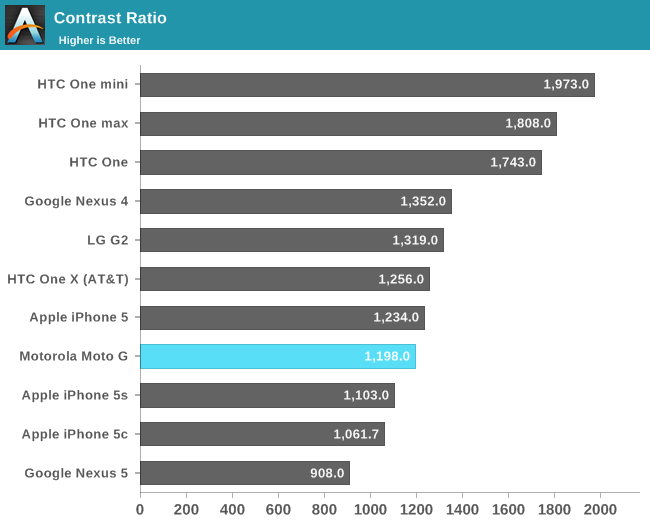
The Moto G goes plenty bright, at just over 455 nits, and delivers contrast numbers that are pretty darn good for the price point at just shy of 1200. Normally black levels are out of control on the lower end devices, I’m not sure if the Moto G uses an IPS panel, but suspect it does.
Upon inspection I immediately noticed that the Moto G display was very, very blue. To measure color accuracy we turn to the same combination of measures that we have used for a while now.
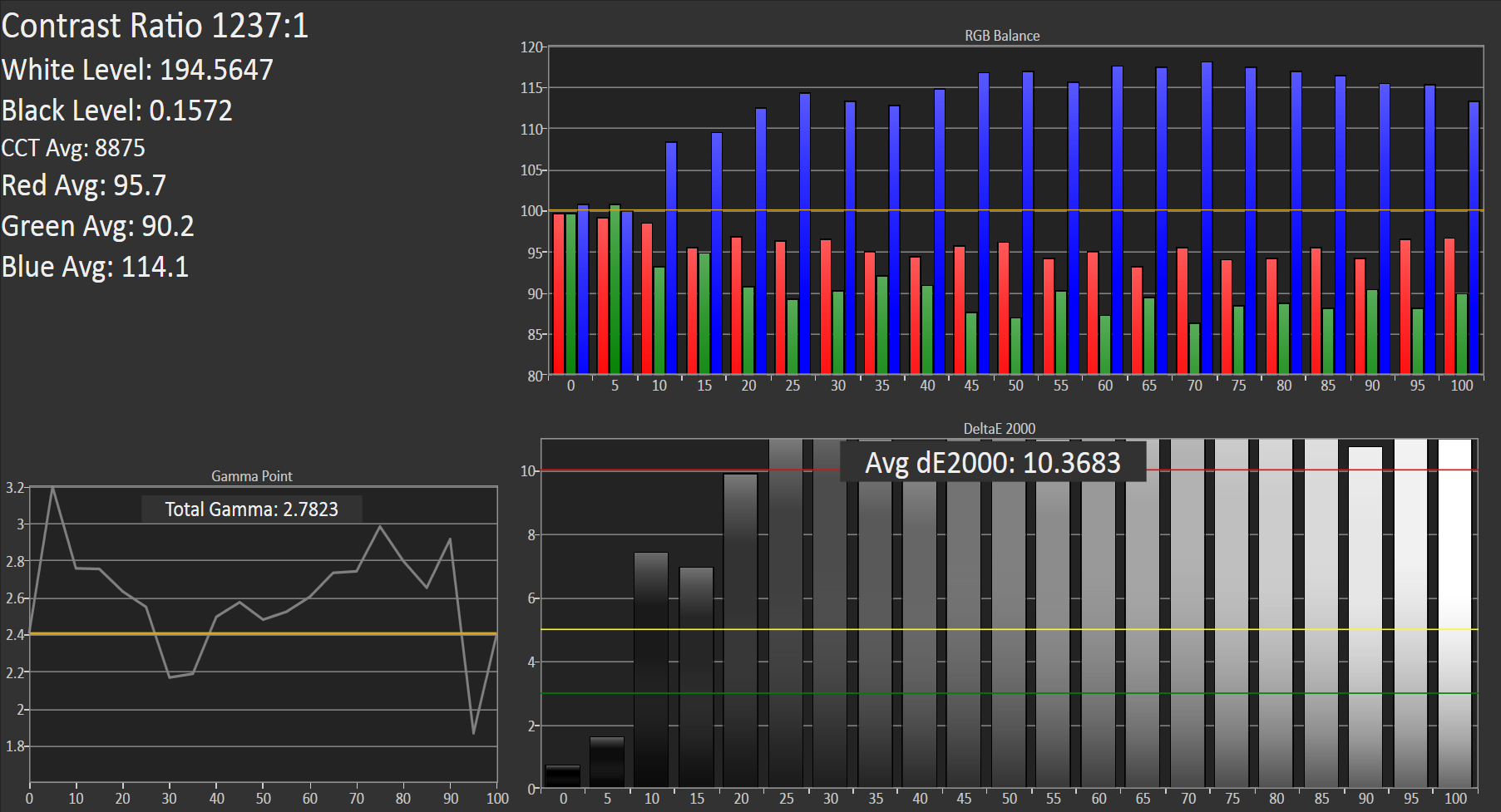
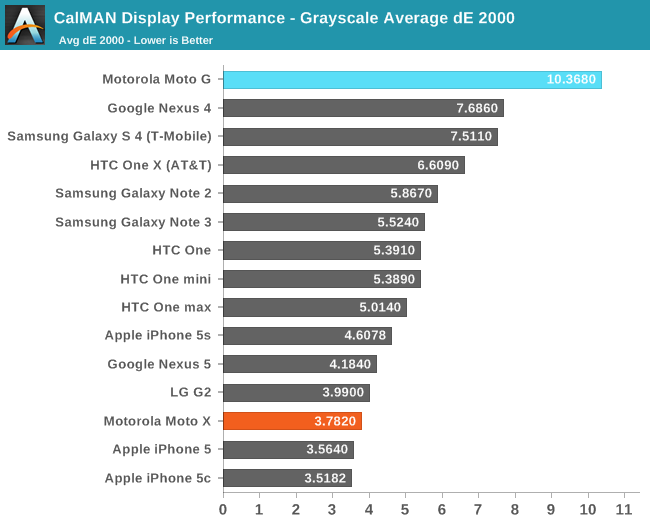
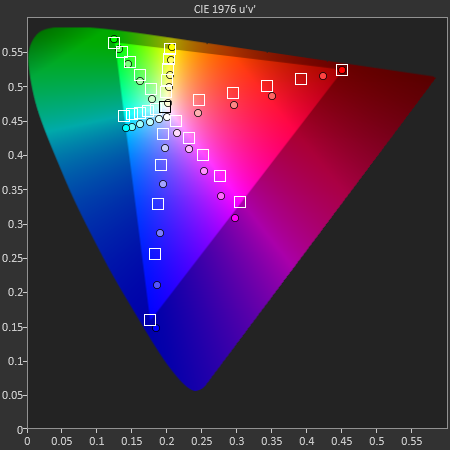
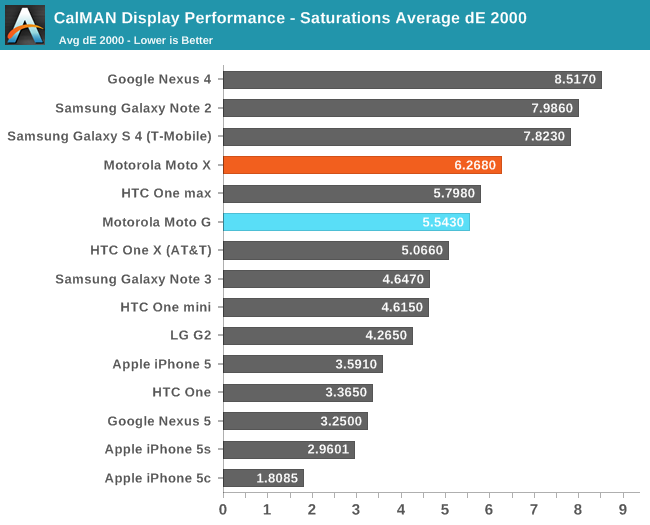
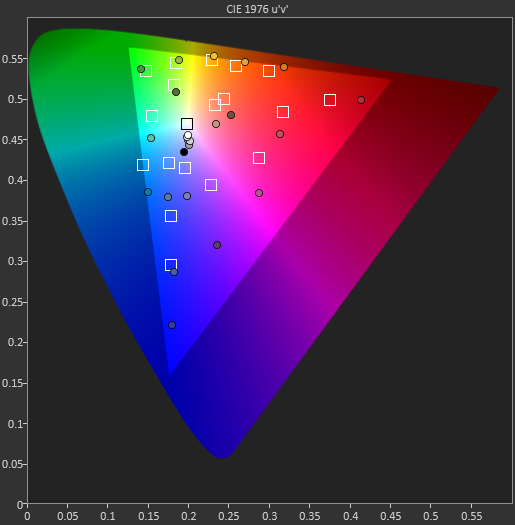
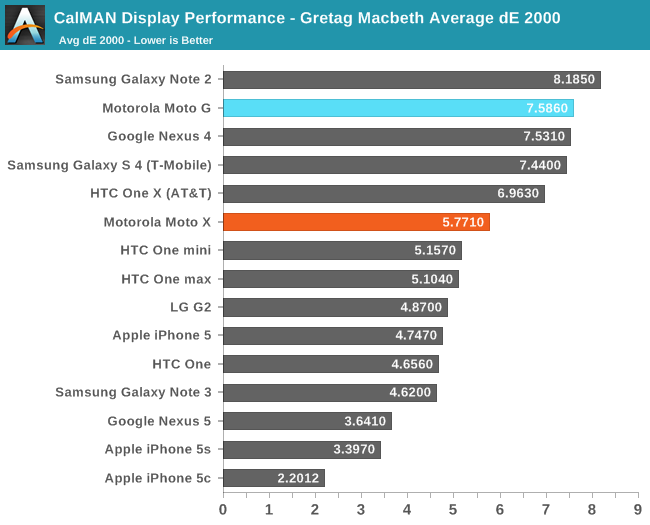
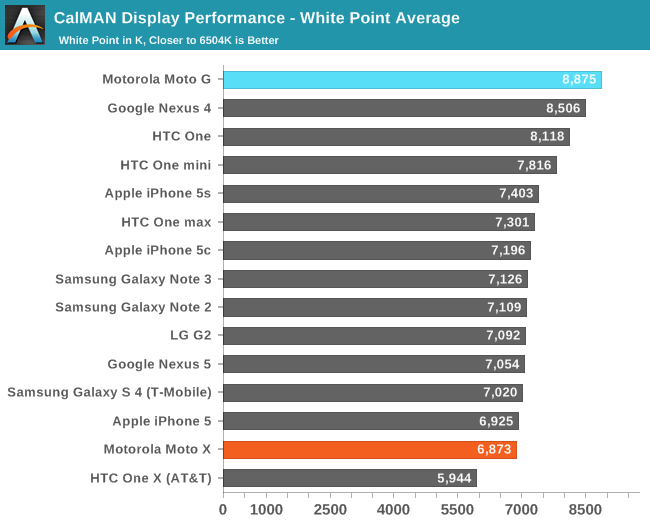
My comparison points are unfortunately primarily high end devices, which makes the Moto G look comparatively poor. The Moto G display tuning is indeed very blue with a white point of nearly 9000K, but I wouldn’t be surprised to learn this is a function of the backlight LEDs used or intrinsic properties of the panel.
Color calibration is something we’ve only just now started to see get taken seriously on the high end devices, if we can’t expect it to be a regular staple there, the midrange is obviously a lost cause. I wouldn’t fault the Moto G for not being very accurate, but it is something to be aware of as a sacrifice at this price point if you’re considering it over a high-end phone. On the flipside, the pixel density and contrast of the Moto G’s display seems excellent given the price, and I suspect the defects in my Moto G’s cover glass are specific to this unit.
Originally published at https://www.anandtech.com/show/7586/motorola-moto-g-review (Wayback Machine).