
HTC One max Review - It's Huge
Obviously the highlight of the One max is its huge 5.9-inch 1080p display. After all, the huge display is literally the reason for the max moniker and its gargantuan size. It’s still an IPS LCD, and like the One, resolution is 1920x1080. Using the same resolution at larger size means lower PPI, but the One max is still high enough (373.4 PPI) that individual pixels shouldn’t be visible at all.
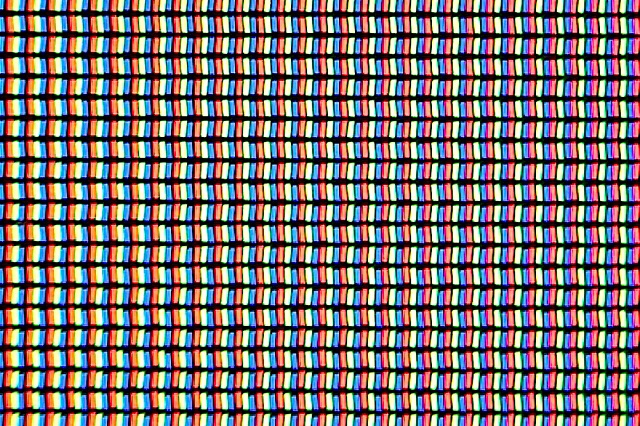
One interesting thing to note about the One max however is that the android display density is still set to 480 PPI, putting it in the same DENSITY_XXHIGH category as the One. This means that applications will look like scaled copies of what you’d expect them to look like on the One. There’s an interesting ongoing debate about what users really expect from these larger-sized smartphones and the demographic that’s buying them. Do users want scaled, larger applications which are easier to read, or the ability to display more content. HTC oddly enough seems to have scaled parts of their own UI, for example the widget panels are five row instead of four on the One max, and the launcher defaults to the 4x5 size instead of 3x4 which would look downright silly, further the status bar is also smaller.


HTC One (Left), HTC One max (Right) – Note the grid and icon size changes
I’m not complaining, it’s just interesting to see 480 in Android but the HTC apps scaled down to give more real-estate, which is what I’d prefer since I have good vision.


One improvement I’m really happy about in Sense 5.5 is a change to the auto brightness function. Rather than just have a checkbox, the One max will allow you to set an upper bound for the auto brightness algorithm. Ideally I would like a higher or upper bound, or a bias function (+/- some delta), but this is a step in the right direction.
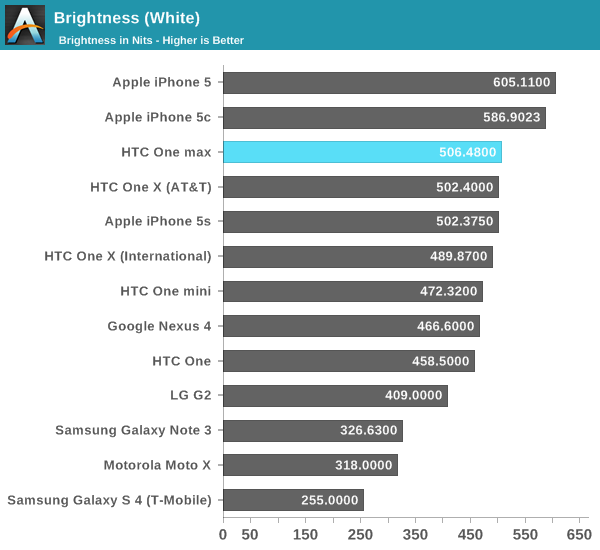
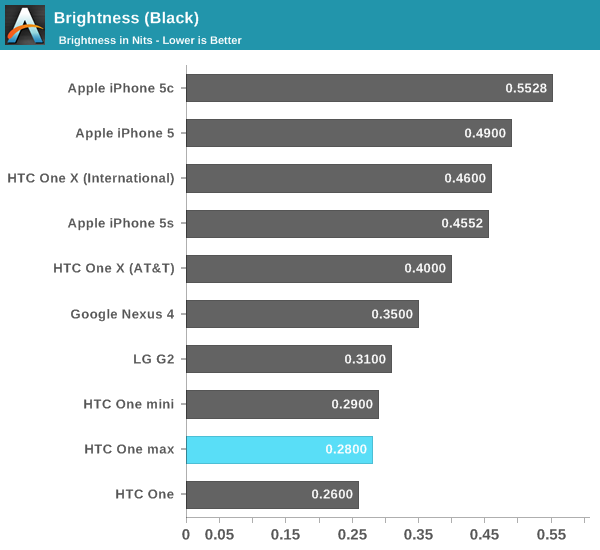
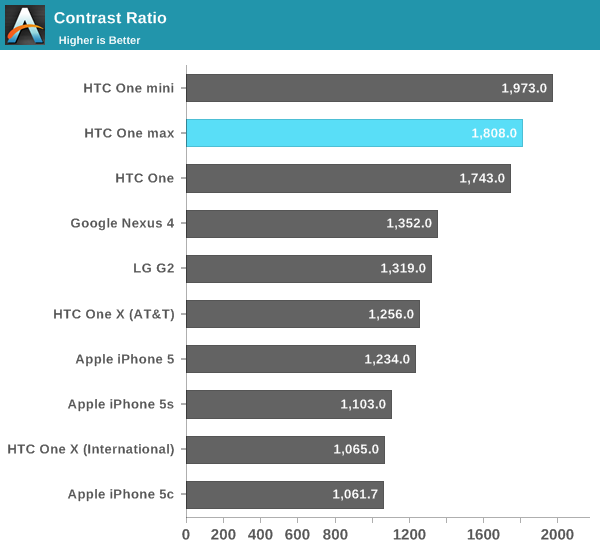
The One max display goes very bright, up to 506 nits, higher than the One or One mini. White point is also a bit more controlled than the One, at 7301 K average. My biggest complaint about the One max is that like the One it has a dynamic brightness/contrast function that adjusts screen brightness as a function of the content being displayed. That alone isn’t a huge problem, it’s just that there’s no way to disable it in the UI, which would be great, since it’s distracting watching screen brightness change as you move around the UI. I would love to see HTC go the Google approach and restrict these functions to full screen video playback, and give the option to turn it off entirely.
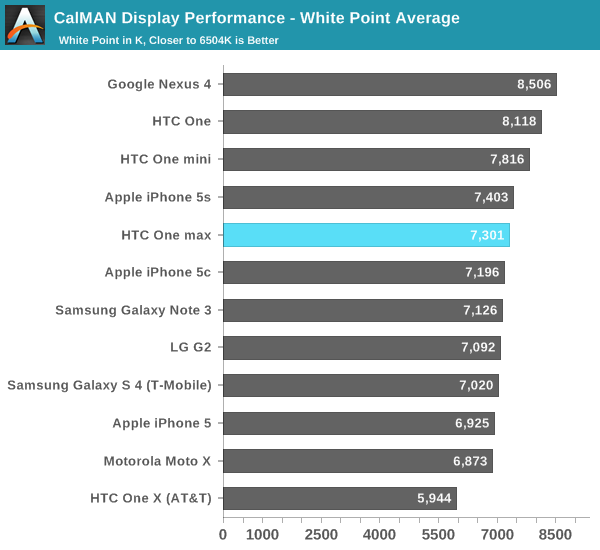
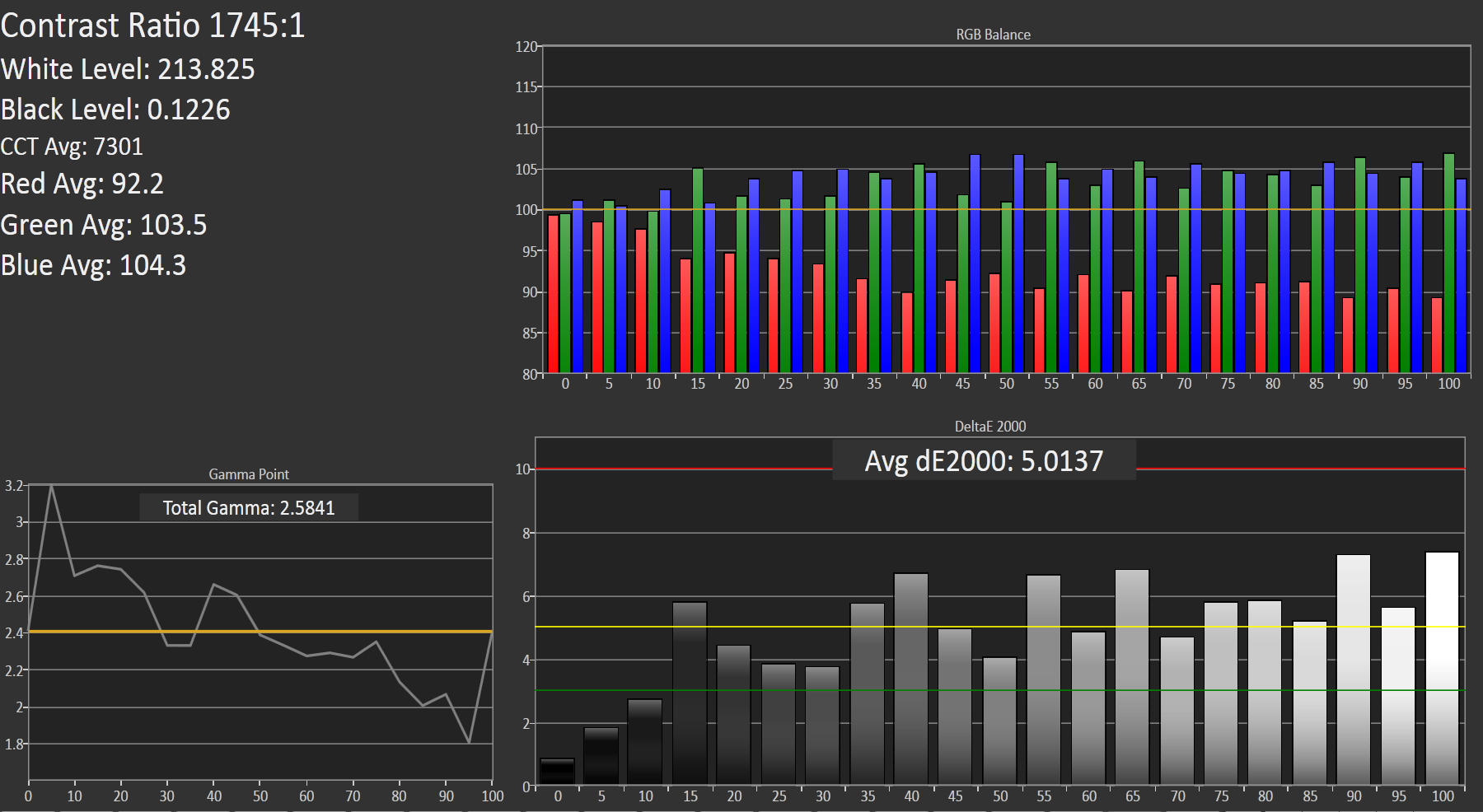
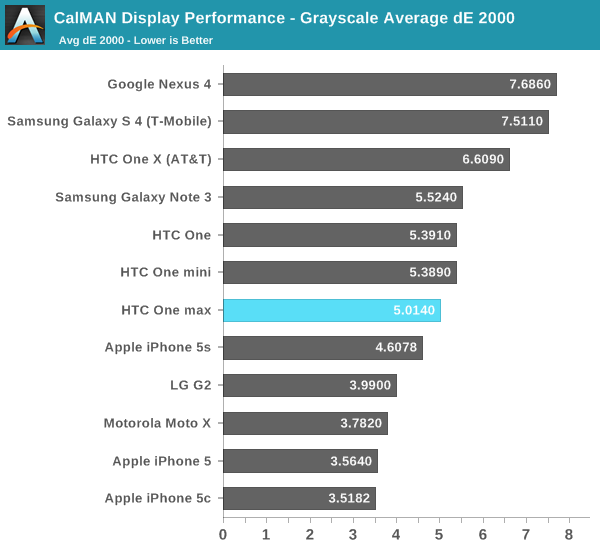
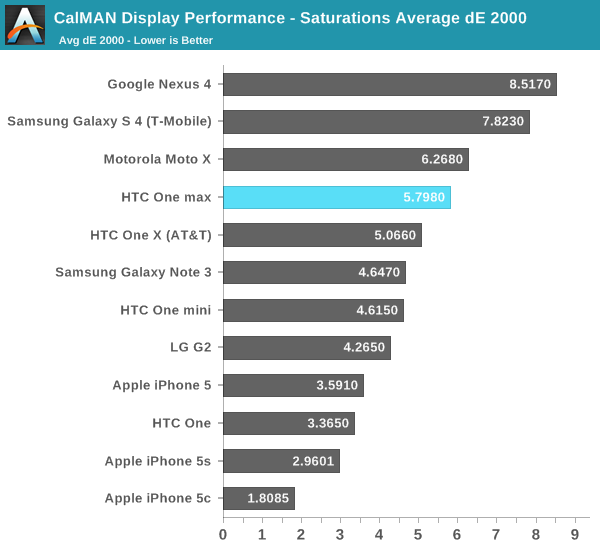
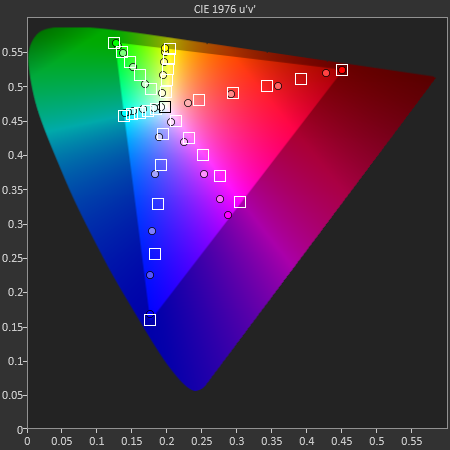
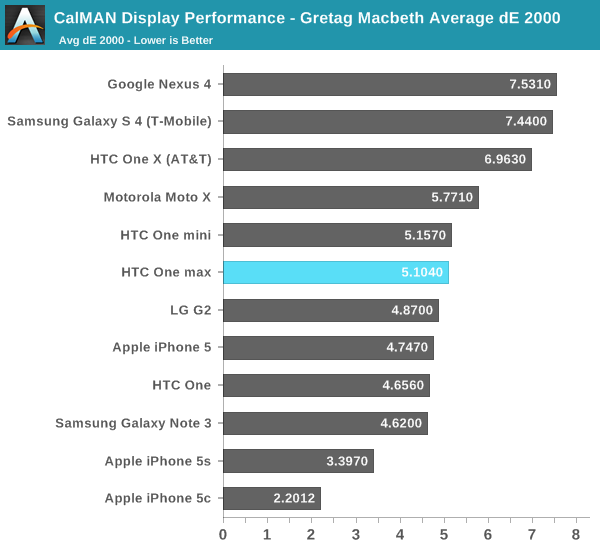
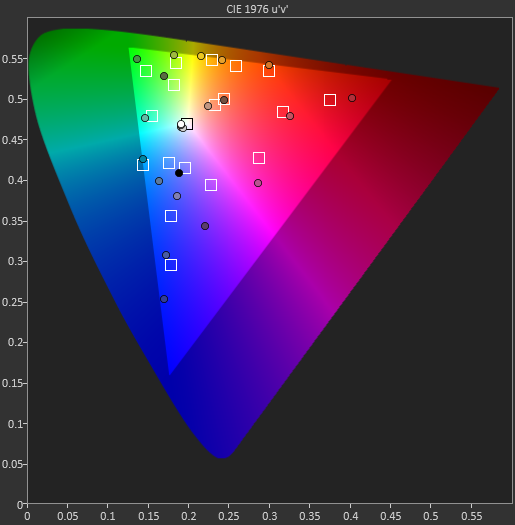
Running it through our display tests, it’s clear that the One max also has a bit of the saturation boost we’ve seen popping up on other phones as well. The saturation curves are great until the second to last point, which is almost set to maximum saturation. I’d love to see even more emphasis on color accuracy for the next generation of phones, the One max seems to be in the general ballpark of the One, but slightly worse.
Originally published at https://www.anandtech.com/show/7455/htc-one-max-review-its-huge (Wayback Machine).