
Corsair Force LS (240GB) Review
Random Read/Write Speed
The four corners of SSD performance are as follows: random read, random write, sequential read and sequential write speed. Random accesses are generally small in size, while sequential accesses tend to be larger and thus we have the four Iometer tests we use in all of our reviews.
Our first test writes 4KB in a completely random pattern over an 8GB space of the drive to simulate the sort of random access that you'd see on an OS drive (even this is more stressful than a normal desktop user would see). I perform three concurrent IOs and run the test for 3 minutes. The results reported are in average MB/s over the entire time. We use both standard pseudo randomly generated data for each write as well as fully random data to show you both the maximum and minimum performance offered by SandForce based drives in these tests. The average performance of SF drives will likely be somewhere in between the two values for each drive you see in the graphs. For an understanding of why this matters, read our original SandForce article.
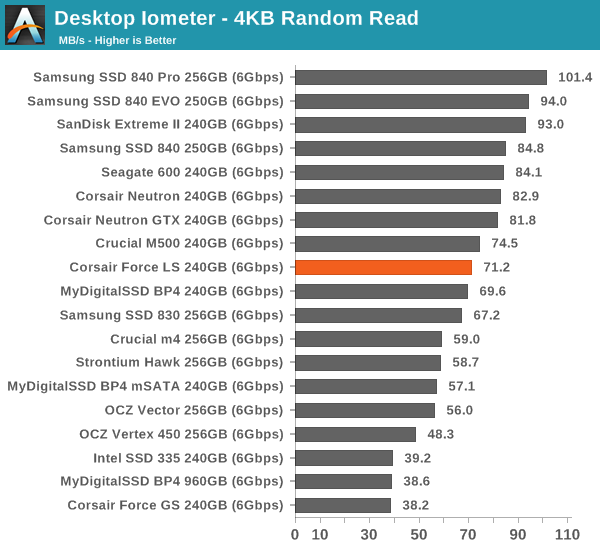
It looks like random read performance has received some improvements in the latest firmware, making the Force LS 14MB/s faster than MyDigitalSSD's BP4.
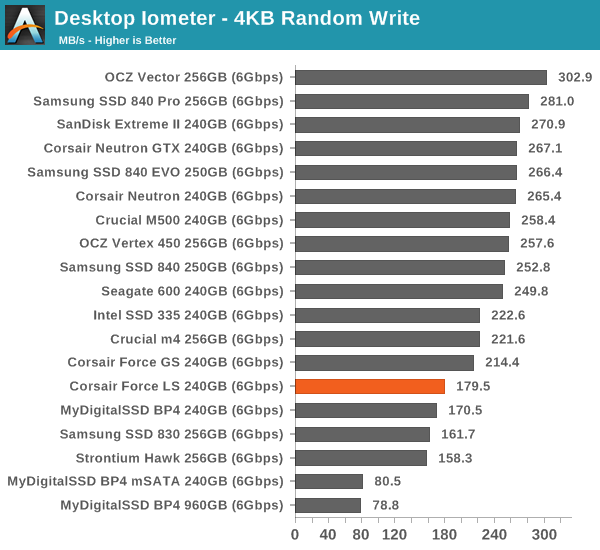
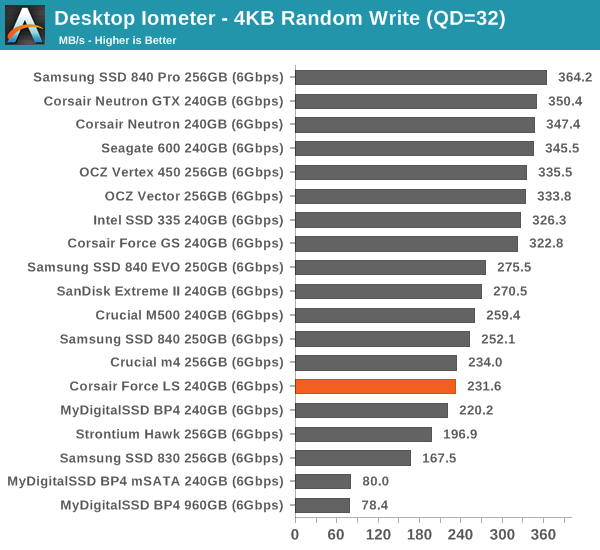
Random write performance is also marginally better than BP4's but overall it's Phison's biggest issue. Dealing with random writes has always been the toughest job for manufacturers, especially if you're aiming to make a budget SSD. It's good to see some improvement on this front but Phison must step up their game if they're looking to play in the high-end series.
Sequential Read/Write Speed
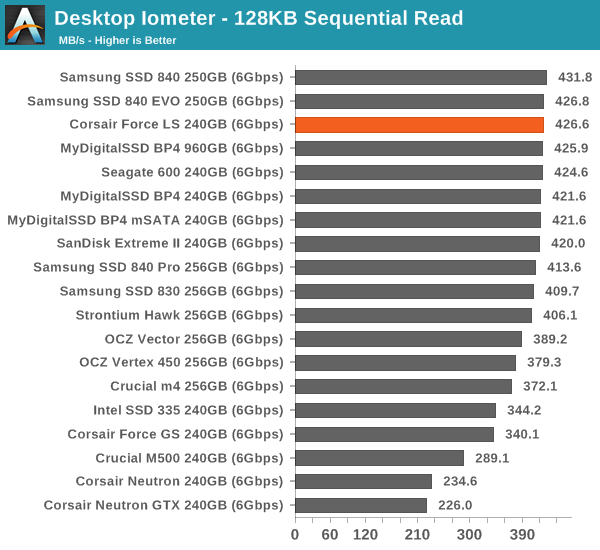
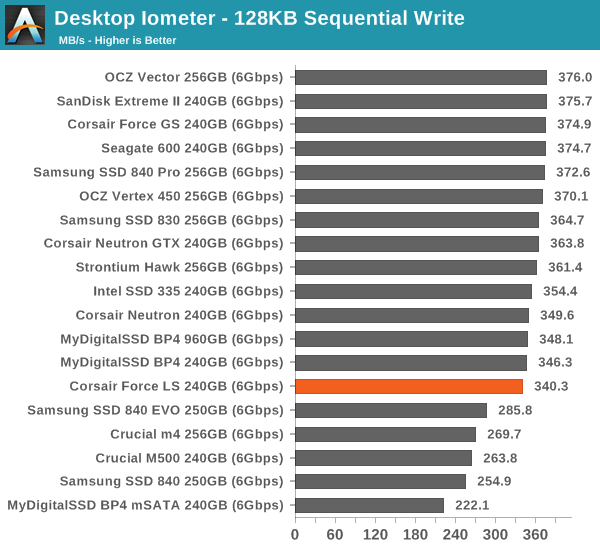
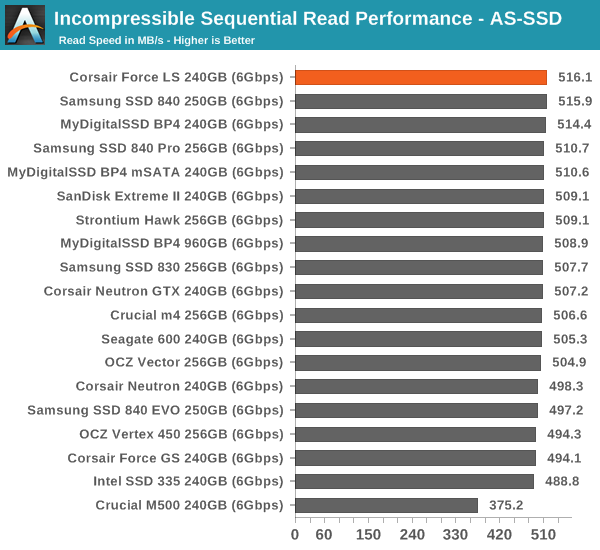
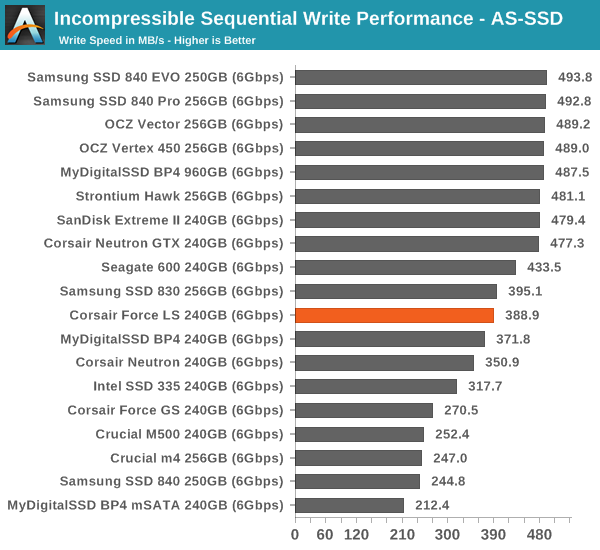
Sequential transfers are much easier to deal with and that we can see in the results. Read performance is top-of-the-class and write performance is not far behind the fastest models.
AS-SSD Incompressible Sequential Read/Write Performance
Originally published at https://www.anandtech.com/show/7337/corsair-force-ls-240gb-review (Wayback Machine).