
Alienware 17 Gaming Notebook Review
To say I went into this review of the Alienware 17 optimistic is accurate; surely Alienware would be able to tame Haswell and the NVIDIA GeForce GTX 780M, wouldn't they? If not them, then who? Yet the truth is unfortunately far more complicated, which has led to this review taking much longer than I had hoped. Testing, then retesting, then sanity check testing, then retesting again, then sanity check retesting...and even then being left without as clear a conclusion as I'd like?
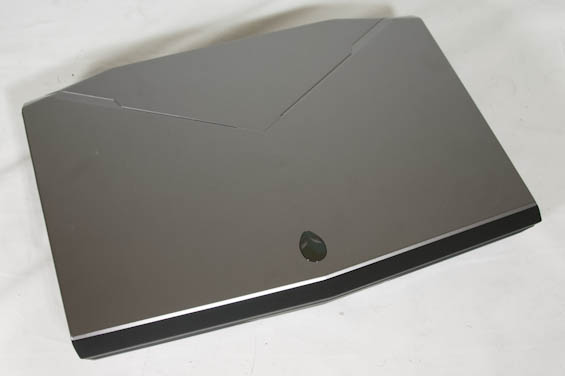
I'm getting ahead of myself, though. First things first: the Alienware 17 represents the first major design change for Alienware in years. On the strength of the matte display, it's a net victory. The subtantial ridge at the edge of the chassis actually winds up being easier on the wrists for typing than the old design, the lighting rim is slick, and nobody complains about an aluminum lid. Alienware also smartly includes 802.11ac connectivity standard.
Yet there's still so much room for improvement. The new aesthetic, like the old one, takes some warming up to, but I can't help but feel like Alienware could've come up with something cleaner. When you open the bottom of the notebook you don't get the sense that space has been wasted, yet when you look at it you just wonder if it had to be this bulky. Backlighting the touchpad was arguably a waste of time and effort, and the revised keyboard layout is a modest step back.
Once you update the BIOS in the Alienware 17, performance is brought in line with other Haswell/780M notebooks, but it's still a bit behind the curve. The 780M in our review unit wasn't hitting the high peaks that competing Clevo notebooks saw, and more and more I'm feeling like this is going to be a bit of a lottery. The performance difference is measurable but ultimately negligible. What we're really dealing with is twofold, I think: Haswell's turbo capacity could very well vary from chip to chip even among the same model, and that could also be true of the GeForce GTX 780M. We're already dealing with binned GK104 chips as it is. What we're looking at, as far as I'm concerned, is variation in "bonus performance" coupled with basic performance that needed to be eked out of the driver. The hardware is working fine, and it's stable, and it's a pleasure to game on.
While I'm more than happy to take Alienware to task for shipping with a performance crippling BIOS, once the A04 is in place the notebook is essentially golden. The Alienware 17 turned out not to be the flagship "this is how it's done" gaming notebook I'd expected, but it at least serves as a reality check in and of itself for what we can expect from Haswell and the 780M. It's also incredibly expensive, but that shouldn't surprise anyone. Ultimately, if you can afford it, I still think the Alienware 17 is the gaming notebook you want. It's not the homerun the Alienware M17x R3 was when it launched, but it's a worthy descendant.
Originally published at https://www.anandtech.com/show/7284/alienware-17-gaming-notebook-review (Wayback Machine).