
NVIDIA Shield Review: At the Crossroads of PC and Mobile Gaming
GFXBench 2.7.0
While GFXBench 2.7 (formerly GLBenchmark 2.7) doesn't yet take advantage of OpenGL ES 3.0 (GLB 3.0 will deliver that), it does significantly update the tests to recalibrate performance given the advances in modern hardware. Version 2.7 ditches classic, keeps Egypt HD and adds a new test, T-Rex HD, featuring a dinosaur in pursuit of a girl on a dirt bike.
Scene complexity goes up tremendously with the T-Rex HD benchmark. GLBenchmark has historically been more computationally bound than limited by memory bandwidth. The transition to T-Rex HD as the new flagship test continues the trend. While we see scaling in average geometry complexity, depth complexity and average memory bandwidth requirements, it's really in the shader instruction count that we see the biggest increase in complexity.
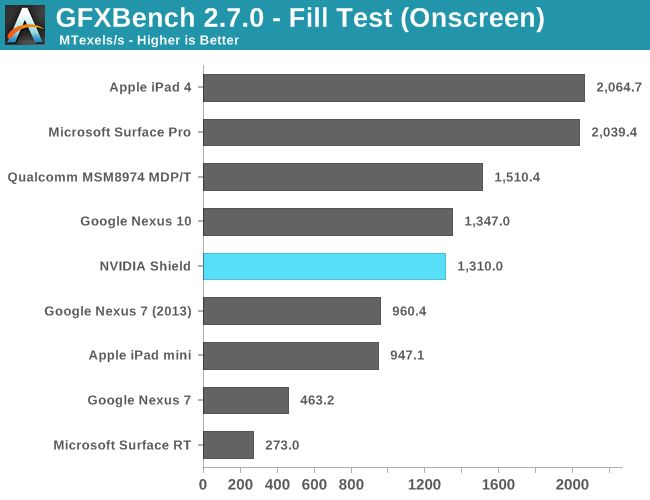
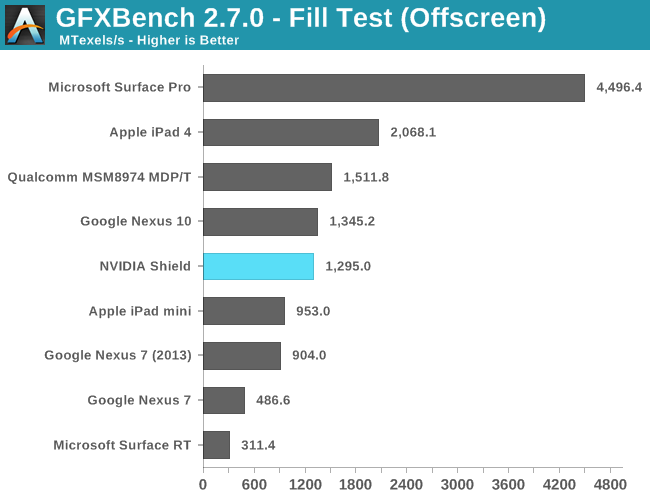
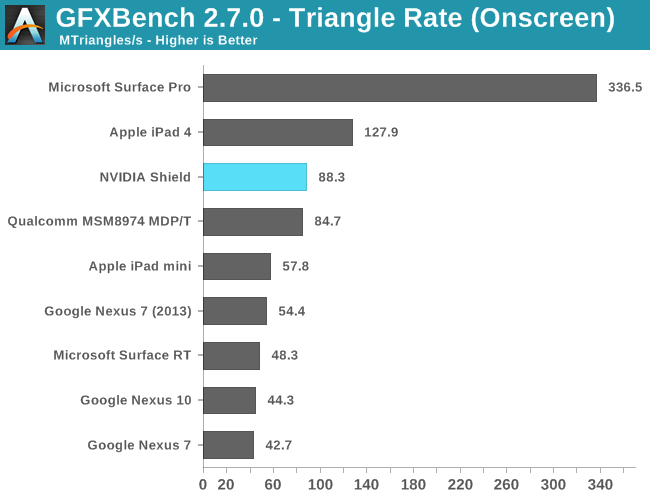
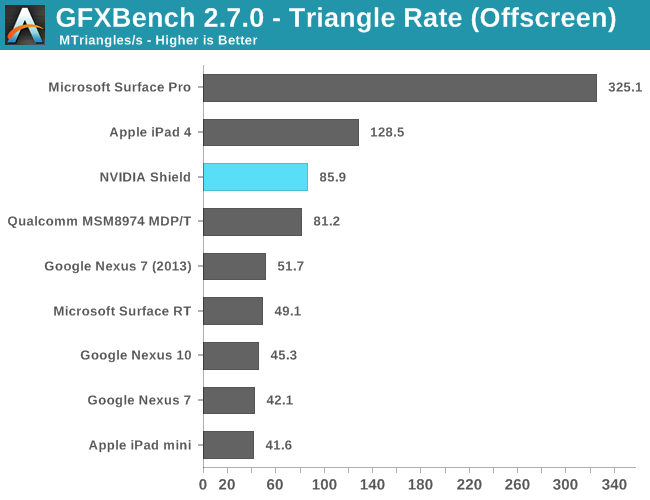
The fill rate tests put Shield significantly behind the iPad 4 and about on par with the Nexus 10. Looking at Triangle throughput we see Apple hold onto an advantage there as well, although Tegra 4 does show impressive gains over Tegra 3.
It's really in the pixel shader bound tests that Tegra 4 really excels:
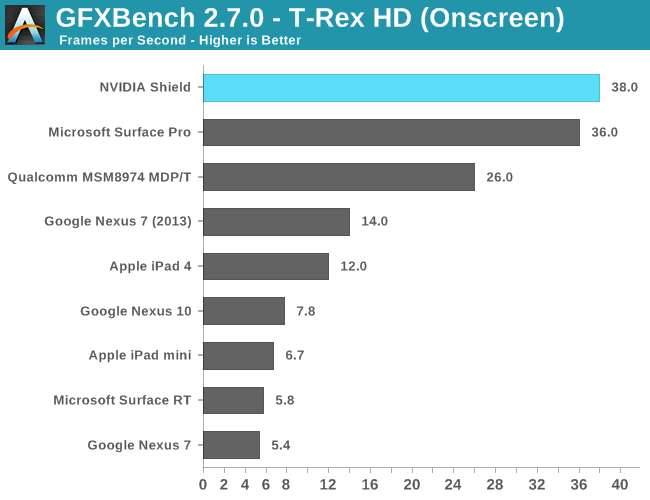
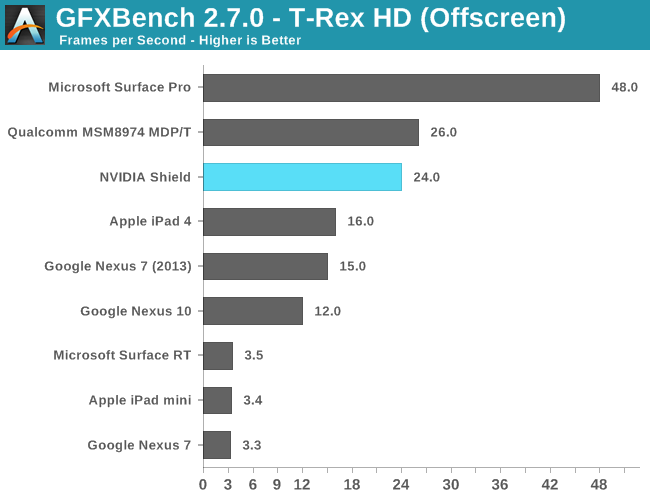
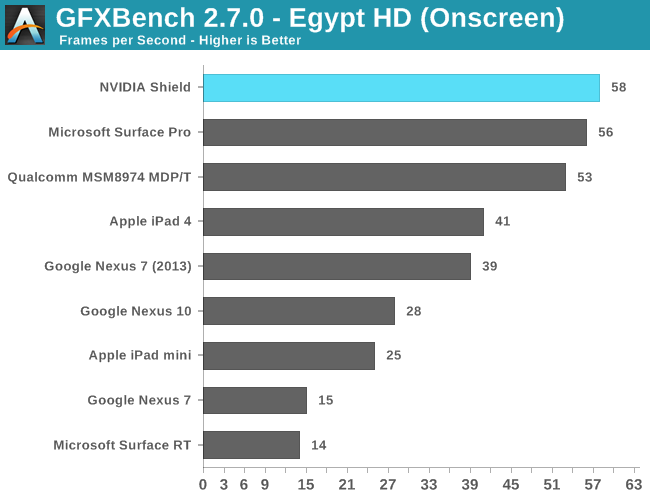
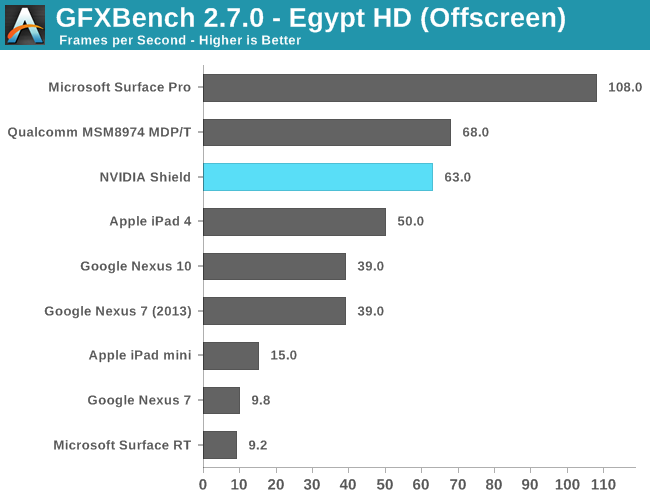
As promised, Tegra 4's GPU manages to outperform the iPad 4's PowerVR SGX 554MP4 in GFXBench 2.7. The 50% performance advantage is appreciable, and should be very nice on a high res display. It's a shame Shield is stuck with a 720p panel. Note that we're also half way to the performance of Intel's HD 4000 here. The Adreno 330 comparison is, once again, extremely close. Qualcomm pulls ahead by 8% and that's without a fan in a tablet chassis.
Originally published at https://www.anandtech.com/show/7190/nvidia-shield-review-tegra-4-crossroads-pc-mobile-gaming (Wayback Machine).