
Toshiba KIRAbook Ultrabook Review
Conclusion: So Very Close
Without having personally tested any of the ASUS Zenbooks, which at least around the "office" (disclaimer: there is not an office) are generally regarded as among the best ultrabooks on the market, I can't really speak too greatly on how the Toshiba KIRAbook measures up competitively. I can definitely tell you how the user experience measures up to the myriad non-ASUS ultrabooks I have tested, though.
The essential ingredients to any PC computing experience are the keyboard, the mouse/touchpad, the display, and responsiveness. Other factors only become relevant when they're extremes; an unusually fast GPU or CPU, or unusually high thermals or noise. When it comes to the user experience, Toshiba's KIRAbook offers one of the best you can have with an ultrabook. That needs to account for the slightly poorer keyboard quality stemming from the lack of thickness as well as the propensity for clickpads, both of which are compromises made when switching to an ultrabook. Yet Toshiba is able to eke halfway decent depth out of the keys, and the clickpad is serviceable if not mindblowing.
The big wins are the responsiveness and the display. Toshiba's SSD and healthy 8GB of RAM keep the KIRAbook running very smoothly, and the lack of bloatware is immensely appreciated. Display quality is, as I mentioned, absolutely stunning. There was also the pleasant surprise of the speakers, which are really as good as ultrabook speakers are going to get.
So why isn't the KIRAbook a slam dunk? The biggest reason is actually the price, because a starting price of $1,599 forces the KIRAbook into a class it has a much harder time competing in. If the entry level KIRAbook manages to appear in retail at $1,399 or even $1,299, it'll be a wicked deal and easily recommended. But starting at $1,599 and only going north produces some problems and throws design issues into sharp relief.
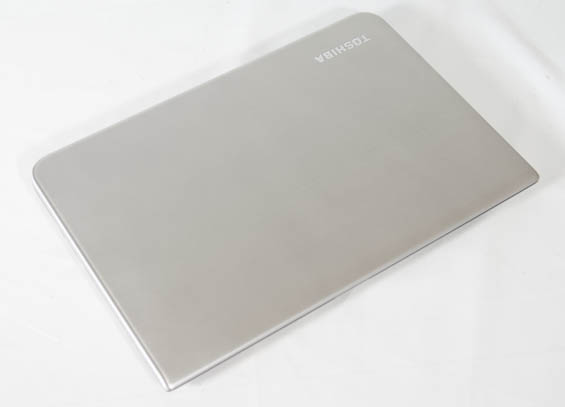
First, the lid flex is inexcusable at this price point, full stop. It's not horrible, but it's unnerving enough when you're dealing with a display as beautiful as this one is. The magnesium alloy that Toshiba is using also tragically doesn't look that great; it's not unattractive, but it looks like high rent plastic, which we can all agree wasn't what Toshiba was going for. Whether or not it's more sturdy than the aluminum alloy Apple uses (as Toshiba claims) becomes less relevant because it doesn't actually look better.
As far as the specs go, Toshiba did an admirable job and then inexplicably cheaped out with a vengeance on the wireless connectivity. Whether or not 5GHz connectivity is important may depend on the individual, but anyone spending $1.6k on a notebook probably shouldn't be using a cheap, $50 2.4GHz router and dealing with the interference of everyone else's cheap 2.4GHz routers. My smartphone does 5GHz, and a genuine dual band wireless card from Intel only adds $10 or so to the BoM, if that, so there's no excuse for this.
I also have a hard time recommending any model of the KIRAbook but the entry one. The $1,799 one is a joke; you're paying $200 just to add touchscreen capability to the KIRAbook. At least the $1,999 model (as reviewed) offers a faster processor and the expanded feature set of Windows 8 Pro, but the $200 price jumps are tough to justify.
Finally, the biggest fly in the ointment may actually be the impending launch of Haswell. If you pre-order and buy the first generation KIRAbook you're probably going to regret it in a few months; Haswell promises roughly 10% better IPC, and the low voltage models will enjoy a 2W lower TDP. It's tough to argue with better performance and less heat (and thus less noise), and hopefully in the refresh Toshiba will update the wireless card to something from the last year or two.
Is the KIRAbook a bad product? No, not at all, quite the opposite actually. But it's a good product that has a questionable price and poor timing, and that's ultimately where things go south. Price wise it's actually competitive with the PC market, but has a much rougher time competing with the 13.3" Apple Retina MacBook Pro, which actually starts at $100 less. That's the hard lesson PC manufacturers still haven't quite learned: you don't compete with Apple. You can make something that's ostensibly better than an Apple product, but if it's running Windows, you need to charge less for it. The best case scenario for the first generation KIRAbook is a fire sale after the Haswell-based refresh materializes, and that's a verdict I'm not at all happy to deliver for such a promising product.
Originally published at https://www.anandtech.com/show/6941/toshiba-kirabook-ultrabook-review (Wayback Machine).