
OPPO Find 5 Review
We’re pretty familiar with APQ8064 by now, it’s just quad-core Krait (or Krait 200 in the new Qualcomm branding scheme) and Adreno 320. Five months ago, this was world class, though obviously now outclassed by Snapdragon 600-based handsets. Phones are iterating very quickly nowadays, so it’s hard for any one SoC to stay on top of the market for more than 6 months at a time. Snapdragon S4 Pro devices started hitting shelves in November, and by the end of April, handsets with the next generation Krait were already hitting market. Even now, there are a multitude of quad-A15 handsets as well as Snapdragon 800 right around the corner. Ah yes, the never ending iterative cycle of the smartphone world.
Krait 200 doesn’t count as slow, but it clearly isn’t as fast as Krait 300 on a per-clock basis, and the higher frequencies of the newer Snapdragon parts gives those a solid performance edge. I don’t really have much else to say - this isn’t a new SoC, and we’ve seen it a few times - so I’ll just post the benchmarks. I, like Brian and Anand, am none too thrilled about the state of CPU benchmarks on Android, since they’re all browser-based, but until we get something better, this is what we have to work with.
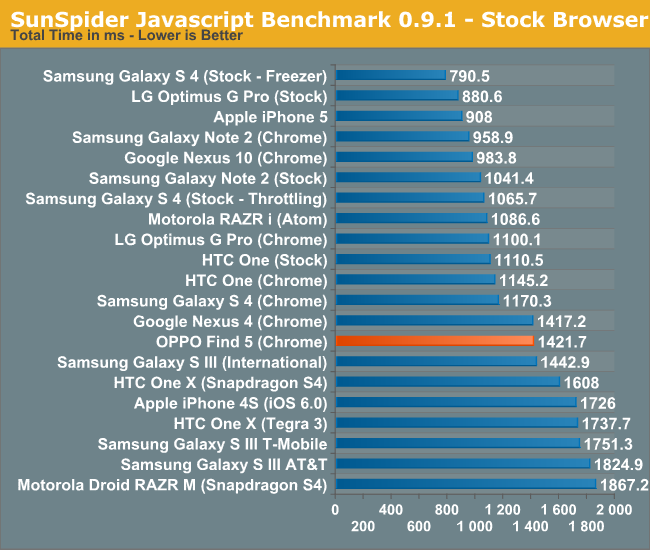
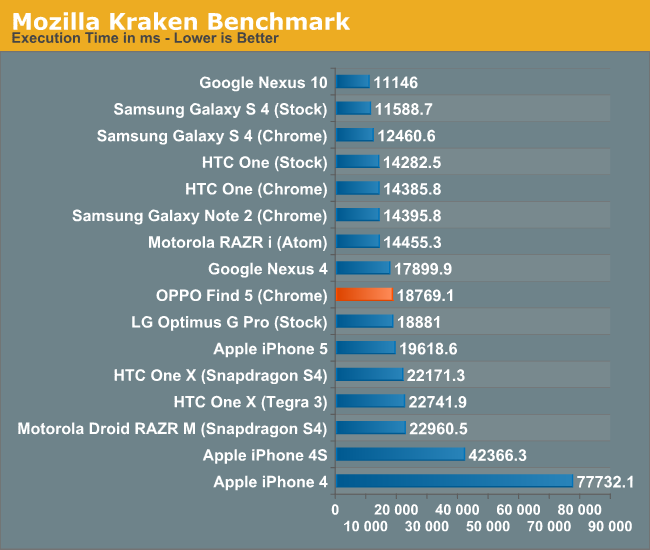
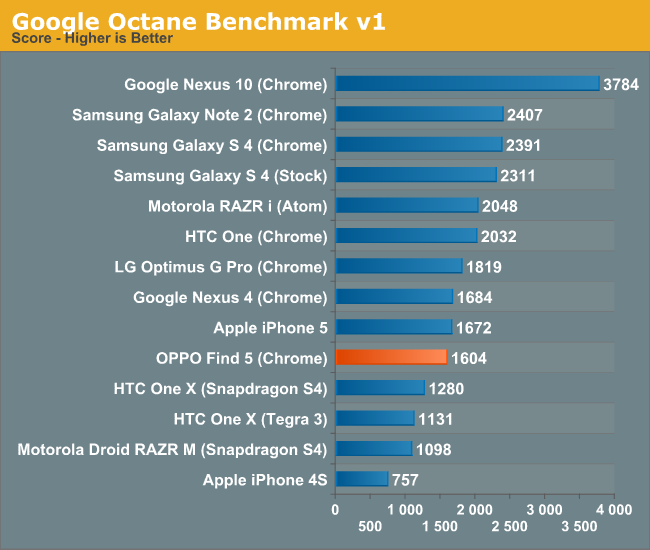
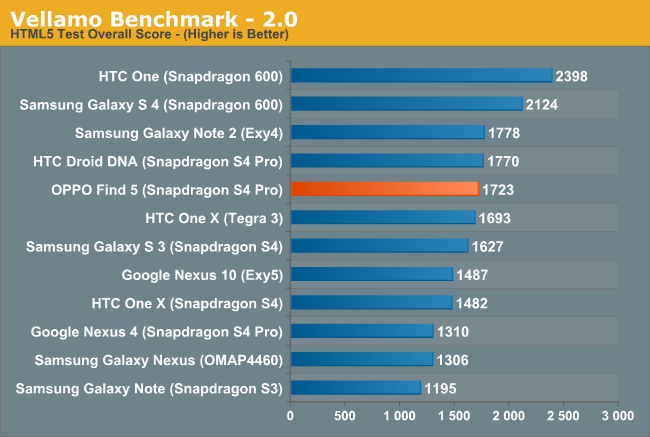
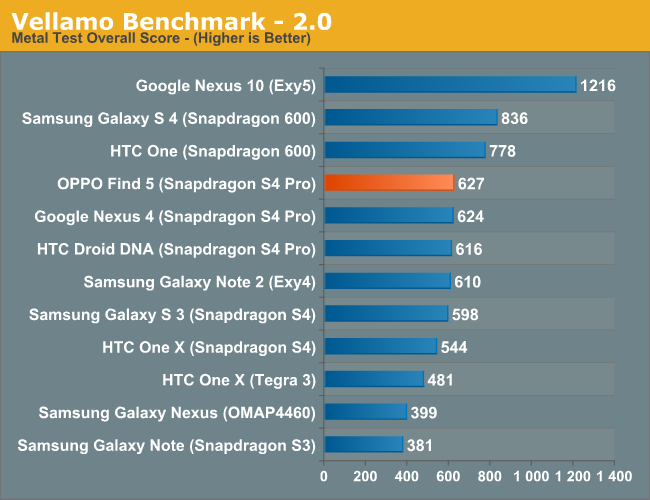
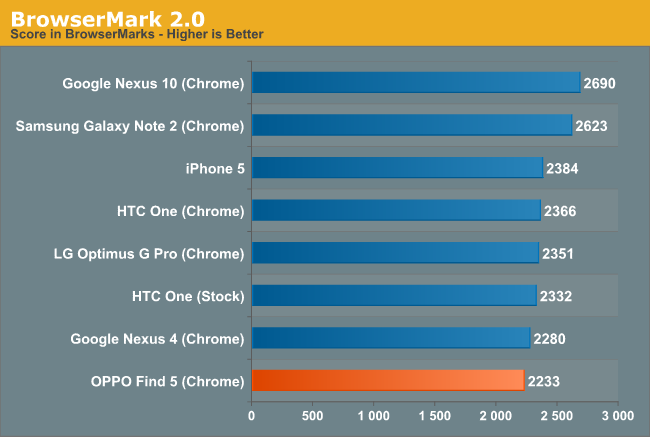
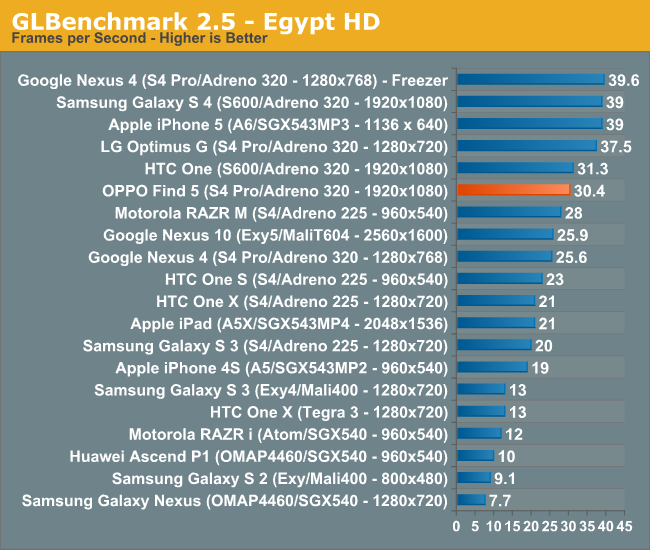
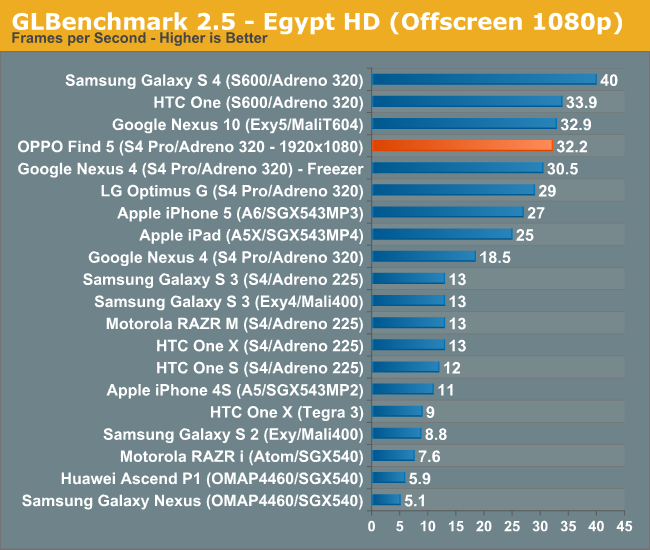
Power management is handled by Qualcomm’s PM8921 PMIC, which we’ve also seen in the Nexus 4, amongst others. The hardware here is actually pretty similar to what we see in the latest Nexus device (other than the display, camera, and baseband, which I’ll get to), which is another potential reason why it’s seen surprisingly quick adoption by third party developers (especially getting official support from Paranoid Android, who usually start with Nexus devices and let others port to more mainstream handsets like the Galaxy S3).
Throttling is becoming a big deal with phones, and it’s important to address it. The throttling thresholds for the OPPO start at 72C, at which point the maximum frequency of the cores drops to 1.18GHz, then 810MHz at 75C, eventually clocking all the way down to 384MHz at 90C. The eventual shutdown is triggered at 120C. I’m not sure what exactly I’d have to do to a phone to get it to 120C other than literally throwing it into a fire, but there you have it. In day to day use, I didn’t see it throttle, even when running benchmarks. I did induce a throttling scenario when using a high-current tablet brick to charge the Find 5 and running GLBenchmark to stress the system, but it’s nowhere near the Galaxy S4 in terms of throttling frequency. I never had a problem with throttling on either of my personal Nexus 4s, though we all know how much trouble Brian had on his evaluation unit, so your mileage may vary here.
Originally published at https://www.anandtech.com/show/6920/oppo-find-5-review (Wayback Machine).