
Dell U3014 LCD Review
I'm not too surprised, but the U3014 sure does calibrate quite well. Using CalMAN 5.1 and targeting the sRGB gamut, 200 cd/m2 of light output, and a 2.2 Power Gamma Curve, we obtained some mighty fine results.
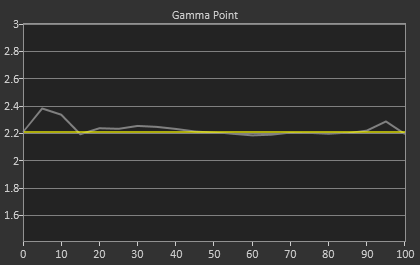
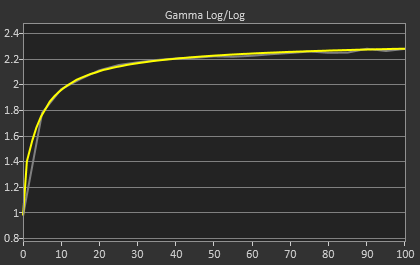
Grayscale performance went from fine to superb. We see almost no colorshift at all in the RGB balance, even down at 0%, and an average CCT of 6551. The Gamma is close to ruler flat with a small bump at 5%, but an overall average of 2.22, and our average grayscale dE2000 is just 0.64. Our contrast dropped slightly to 863:1, but that’s a small sacrifice for this grayscale performance.


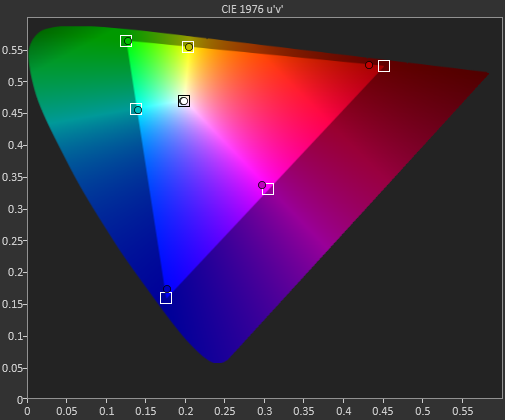
Colors were already good, but with the improved grayscale we dropped the average dE2000 down to 0.90. Color primary and secondary performance is pretty close to perfect here.


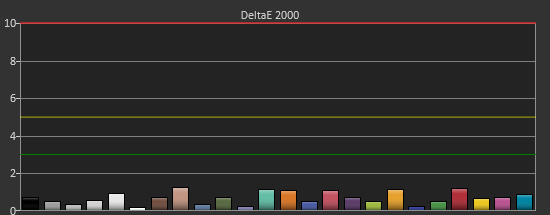
The Gretag chart saw a serious performance increase as well. Our average dE2000 is now 0.73, which means you can’t see any issues with the naked eye at this point. The tiny luminance errors are also totally gone, and if you’re looking for something to complain about on this chart, you’re going to have to keep looking. No error even gets close to 2.0, so this color is practically perfect.
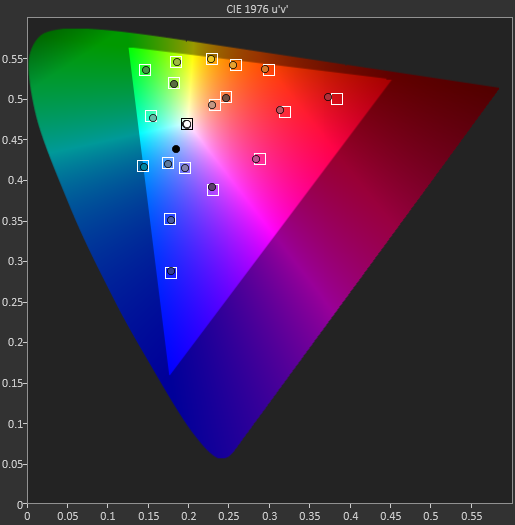
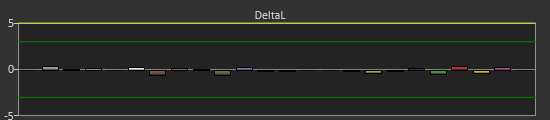
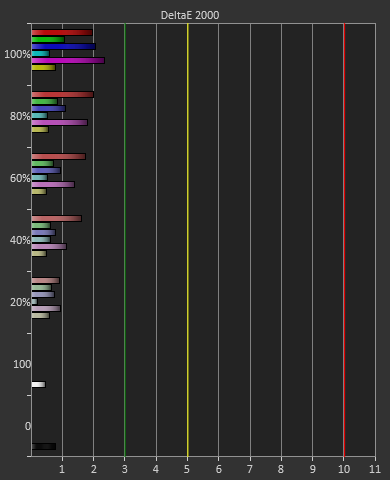
Saturations are just as perfect. Some numbers creep over a dE2000 of 1.0 but very few, and you can’t notice an error that small anyway. Unless you’re measuring with an instrument, it’s going to look perfect.
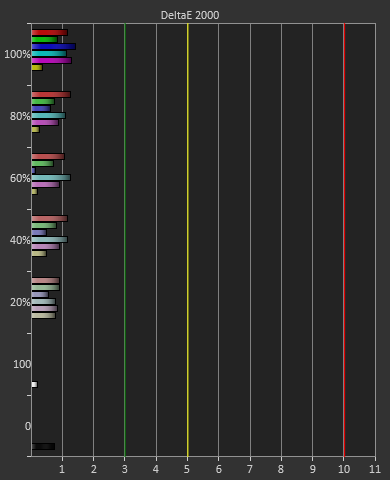
We also target print and photo applications, and for those we use the sRGB standards: 80 cd/m2 of light, and the sRGB gamma curve. Most of the numbers are directly comparable to the 200 cd/m2 numbers, so I’m going to focus on those that actually changed. First, the U3014 does a very good job of tracking the sRGB gamma curve. We can ignore the number, as unlike power the number varies across the curve, but we want to see how it lines up. The little bit from 0-5% where it doesn’t line up is likely because CalMAN can only measure those 2 points and would need to measure 1%, 2%, 3%, and 4% as well to track the curve better. Overall it tracks amazingly well, so it can do sRGB very easily.
Our color errors are slightly larger, with Red and Blue both being slightly unsaturated in comparison to 200 cd/m2 though the error levels are still very low on average. They just aren’t as exceptional as they were at 200 cd/m2.
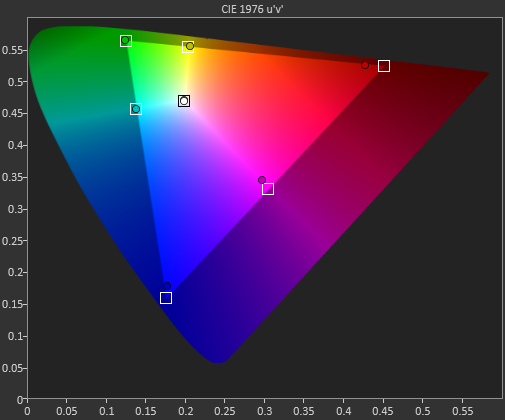

Finally we see that the saturations chart shows slightly more error as well, with some numbers creeping over 2.0 here. Even now they will still only be visible when directly next to the correct color sample, and even then it will be almost impossible to tell. For print and photo work, the U3014 will still work very well; it just seems to perform slightly better at high backlight levels.
Originally published at https://www.anandtech.com/show/6890/dell-u3014-lcd-review (Wayback Machine).