
In-Win GT1 Case Review: Fighting an Uphill Battle
- Posted in
- Cases/Cooling/PSUs
- In-Win
- ATX
Noise and Thermal Testing
When testing the In-Win GT1, expected performance isn't really relevant. The bottom line here is that In-Win has to beat Antec's GX700 because unless the user specifically needs the hotswap bay, the GX700's lower price and smarter fan controller are going to be a better draw.
There's an important note that needs to be made when comparing the GT1's results to previous test results. I've endeavored to get the new motherboard to produce thermal results nigh identical to the old one's, but motherboards can be quirky creatures. In my testing, I've found that while almost all results are comparable between the new bed and the old one, the margin of error on CPU thermals increases by about 2C when comparing to the old board. The new board also polls the core temperatures more frequently, which results in a notably lower overall idle temperature measurement, so keep that in mind. Idle temps on the CPU generally aren't a huge deal unless the delta is over 10C (which basically never happens), but this is worth noting nonetheless.
Ambient temperature for testing hovered around 22C, and the GT1 was tested with both fan settings.
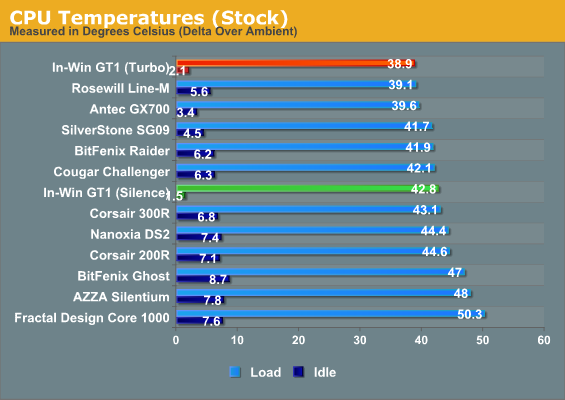
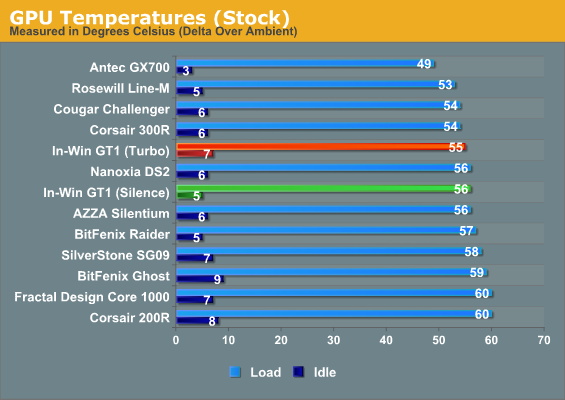
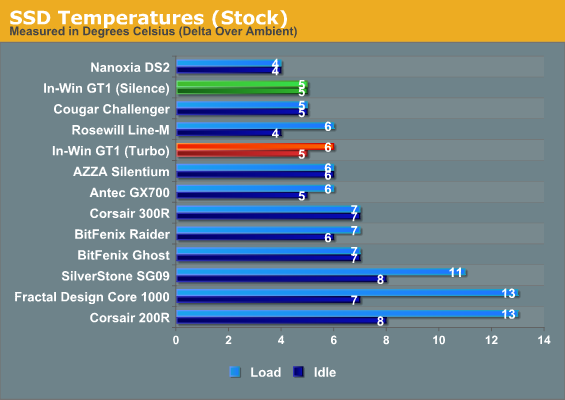
At its turbo setting, the GT1's CPU thermals are competitive with the GX700's best, but everything else is pretty much a wash. Unfortunately, the turbo setting also takes its toll on acoustics.
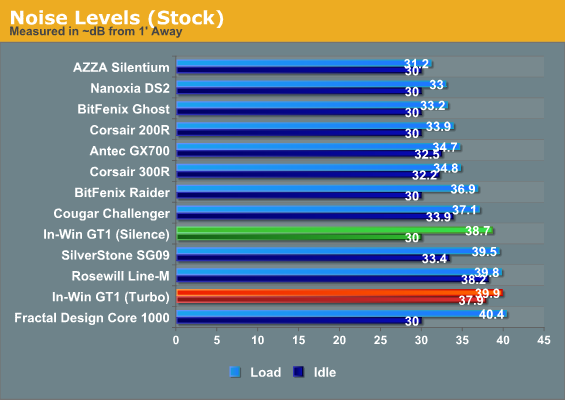
At its loudest the GX700 is still mighty efficient, while the GT1 produces a heck of a racket. The fact is that the GT1 just doesn't possess the cooling power to compete with the pair of 140mm fans in the top of the GX700.
The overclocked settings don't really help the situation.
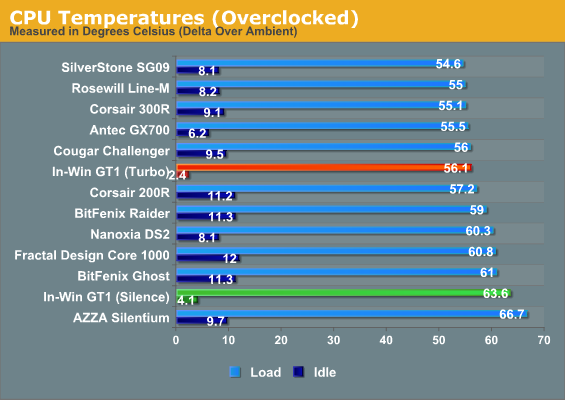
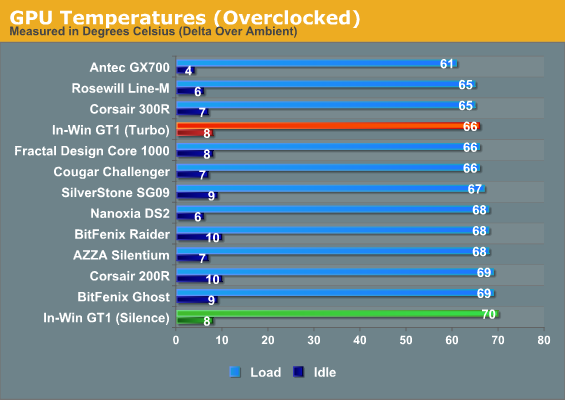
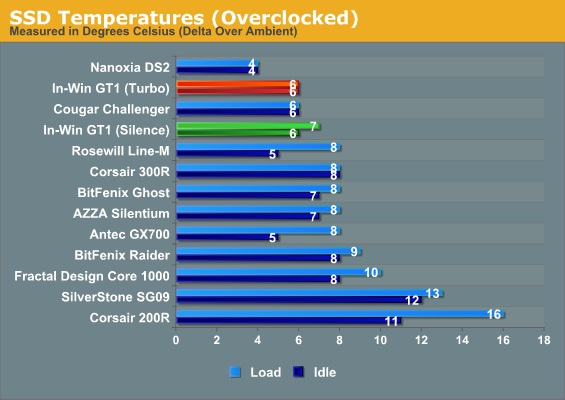
At its turbo setting, the GT1 is competitive; at its silent setting, it can keep the video card cool but the CPU loses a lot of thermal headroom.
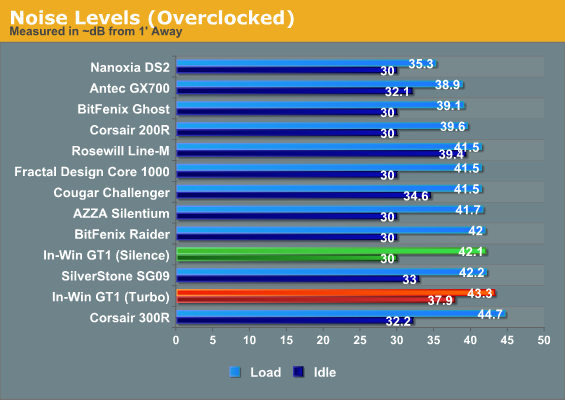
Unfortunately that "silence" setting is only good for idle noise; when the system kicks up it becomes one of the loudest we've tested. The more open air design of the GT1 does the end user no favors when it comes to noise.
Finally, I loaded the GT1 up with two GTX 580s in SLI and three hard drives to obstruct the front fans.
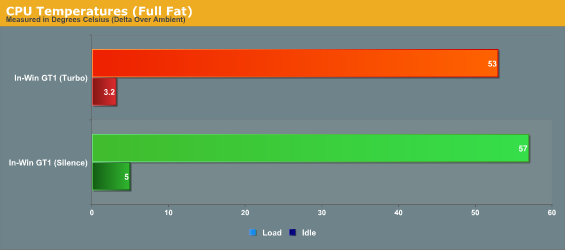
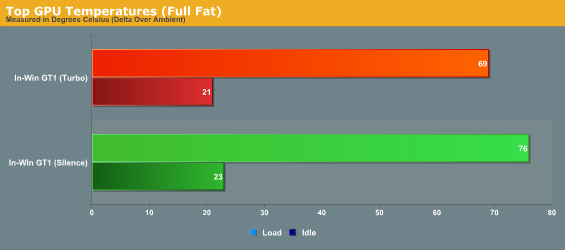
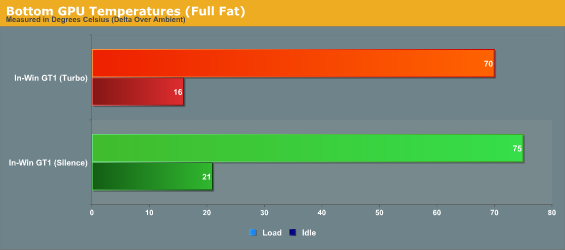
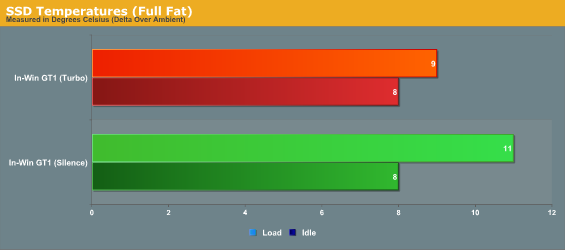
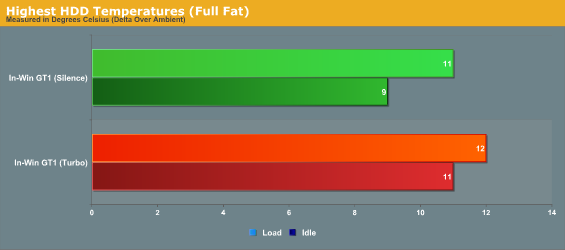
We don't have any comparative data yet, but we can at least say a couple of things for certain. First, the CPU actually runs cooler in this configuration than our standard overclocked one due to the blower coolers on the GTX 580s exhausting hot air instead of feeding it back into the case. Second, the GTX 580s are working hard. Top GPU temperatures were actually roughly the same between the two cards because they were both hitting thermal limits at around 92C-93C.
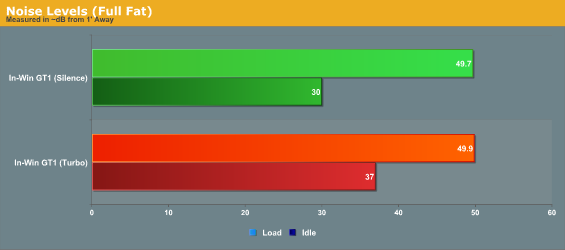
And the noise levels tell the rest of the story. Once the system was placed under load, the fans on the GTX 580s swallowed everything else alive and pushed the GT1 to nearly 50 decibels. In other words, this case is loud, and while you can put two high performance cards in it, I wouldn't recommend doing so. It can only barely handle this kind of configuration.
Originally published at https://www.anandtech.com/show/6821/inwin-gt1-case-review-fighting-an-uphill-battle (Wayback Machine).