
BitFenix Raider Case Review: All These Little Things
- Posted in
- Cases/Cooling/PSUs
- bitfenix
- ATX
Noise and Thermal Testing
Honestly, by the time I was done assembling the BitFenix Raider, I wasn't sure how to feel about the case itself, let alone have any expectations as to how it might perform. As it turns out, there's a reasonably potent enclosure design hiding out here if you're willing to extract it.
Ambient temperature during testing was around 22C. The Raider was tested with the middle drive cage's panel removed, and with the analog fan controller at both its lowest and highest settings.
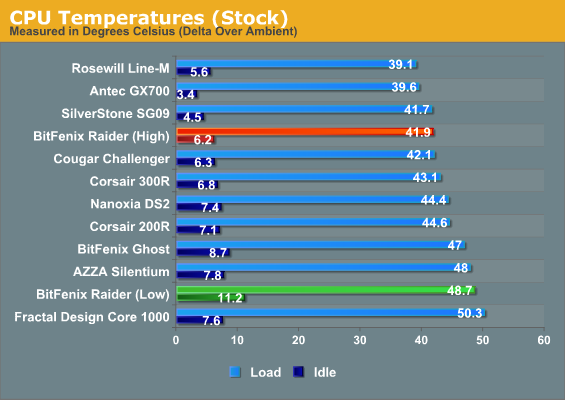
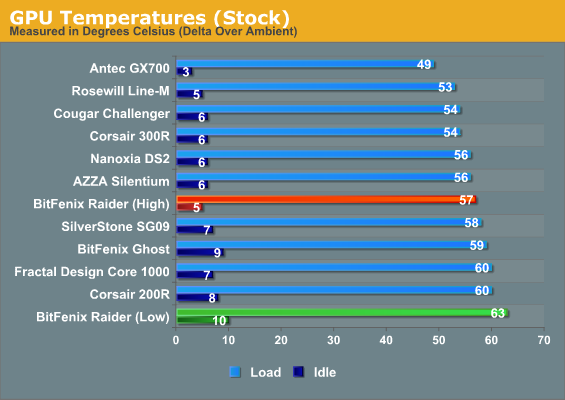
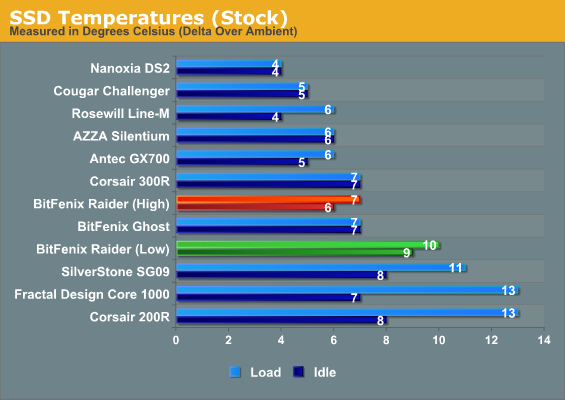
The Raider's low fan setting doesn't move a heck of a lot of air and the case puts in a mediocre showing as a result, but running the fans at full bore produces pretty competitive thermal results.
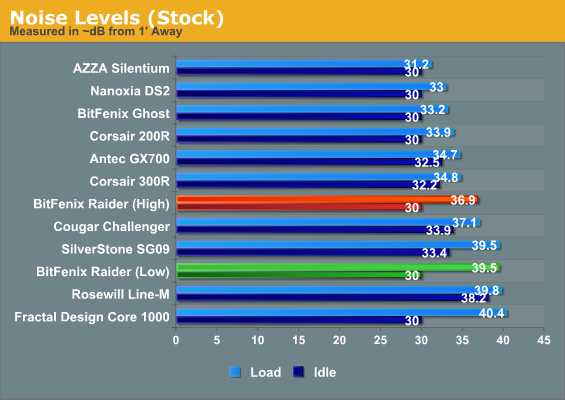
Despite all the hemming and hawing I do about fan controllers, the BitFenix Raider runs into the same "issue" Nanoxia's cases do: the fans included are so quiet and efficient on their own that cutting their speed is pointless. The Raider's Spectre fans are almost inaudible at their highest setting and produce far superior airflow, so there's no real reason to turn them down.
The Raider was able to produce competitive if not spectacular performance with our stock testbed, so naturally I was a little more curious to see how it would handle the increased thermal load of our overclocked bed.
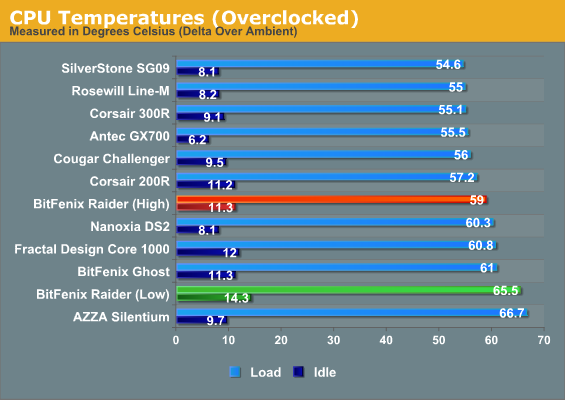
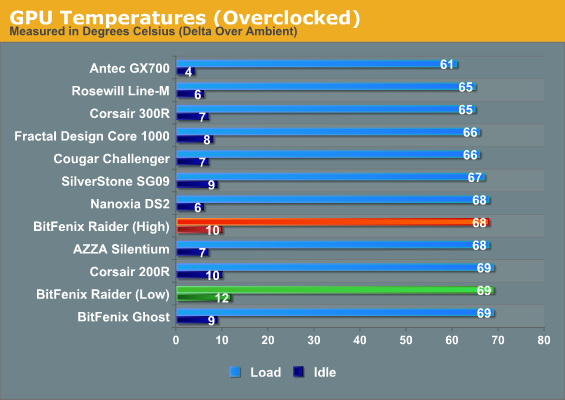
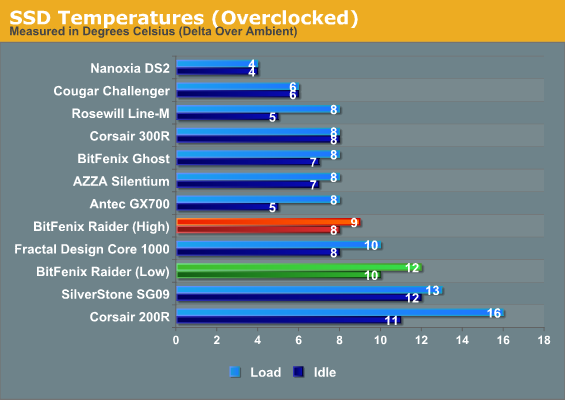
The Raider's not great, but it's still competitive if you ignore the low fan setting.
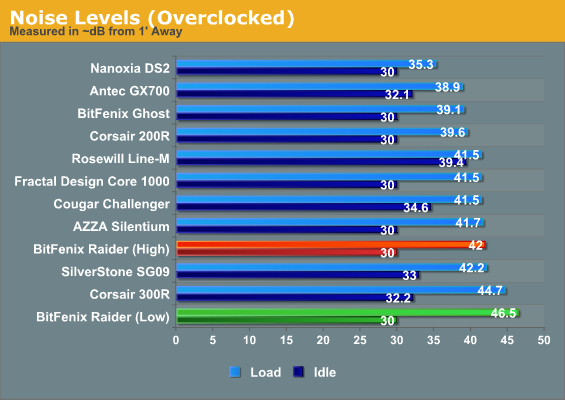
Once again, the "quieter" fan setting turns out to have the opposite effect, while the higher one produces noise results that are competitive without being exceptional.
Originally published at https://www.anandtech.com/show/6807/bitfenix-raider-case-review-all-these-little-things (Wayback Machine).