
Dell XPS 12 Review: A Jack of All Trades Flipscreen Ultrabook
Dell XPS 12 Tablet Performance Summary
We have a separate set of benchmarks for tablets, which focus a lot less on outright performance. Needless to say, the gap between Core i7 ULV and typical ARM and Atom tablet SoCs is pretty huge. Our tablet comparisons are going to use different devices, so let’s start with another table of the various tablets. You’ll note that the CPUs, Graphics, and Storage are all substantially faster on the Core i5/i7 devices. We've also tested the XPS 12 with multiple browsers, just to make things slightly more interesting.
| Tablet Configuration Overview | ||||
| Device | CPU | Graphics | Storage | Battery |
| Acer Aspire S7-391-9886 | Intel i7-3517U | HD4000 | 2x128GB SSD | 35Wh |
| Acer W510 | Intel Atom Z2760 | SGX540 | 64GB eMMC | 27Wh |
| Dell XPS 12 | Intel i7-3517U | HD4000 | 256GB SSD | 47Wh |
| Microsoft Surface Pro | Intel i5-3317U | HD4000 | 128GB SSD | 42Wh |
| Microsoft Surface RT | NVIDIA Tegra 3 | GeForce | 64GB eMMC | 31.5Wh |
| Samsung ATIV Smart PC | Intel Atom Z2760 | SGX545 | 64GB eMMC | 30Wh |
| Samsung ATIV Tab | Qualcomm APQ8060A | Adreno 225 | 64GB eMMC | 30Wh |
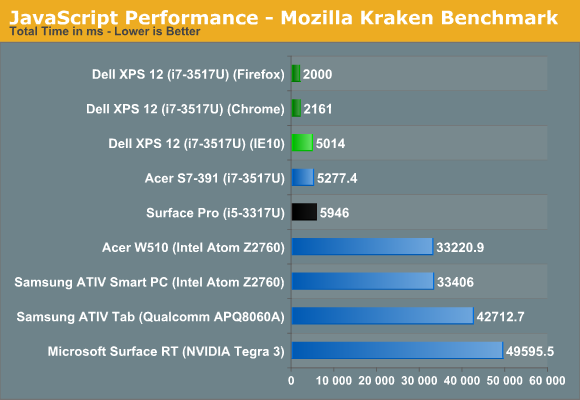
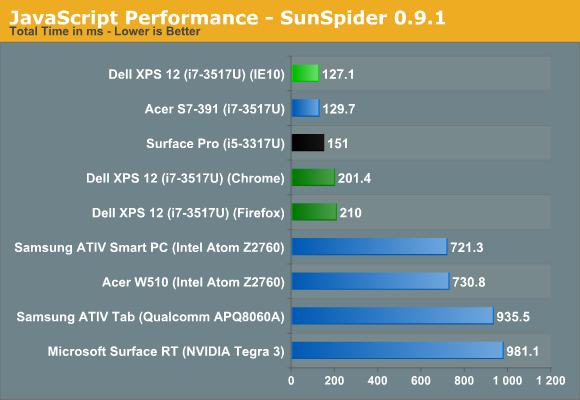
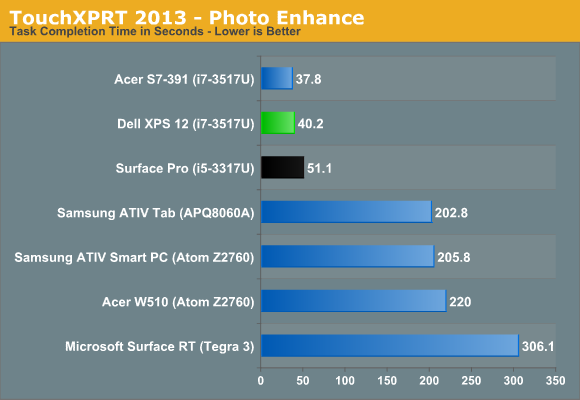
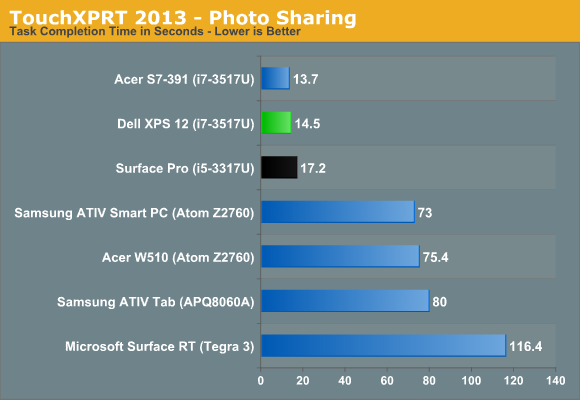
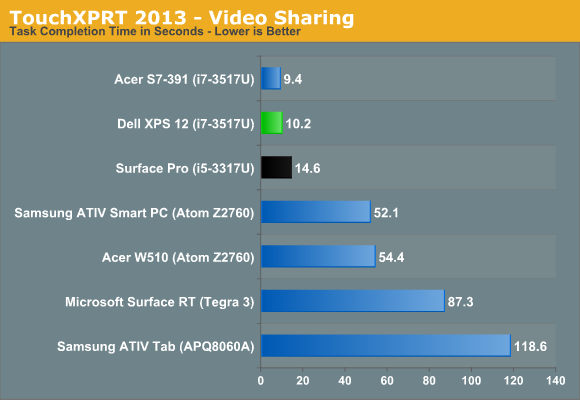
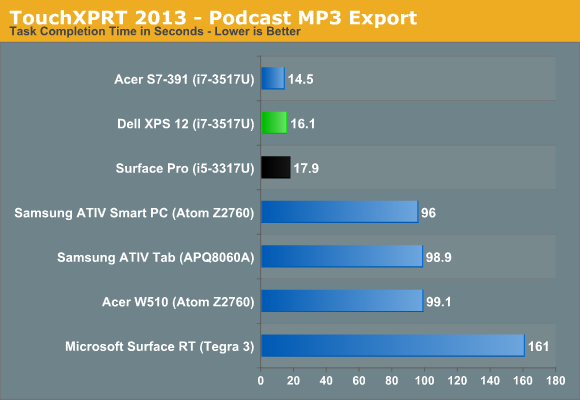
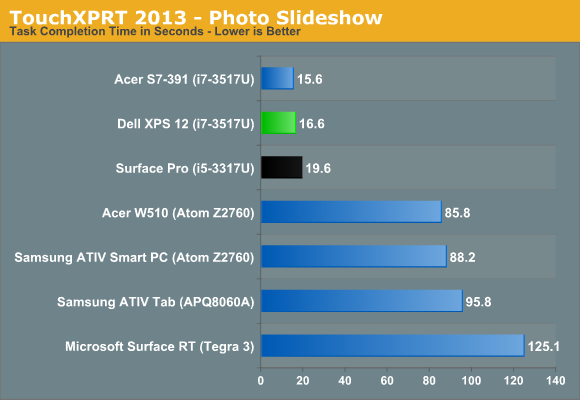
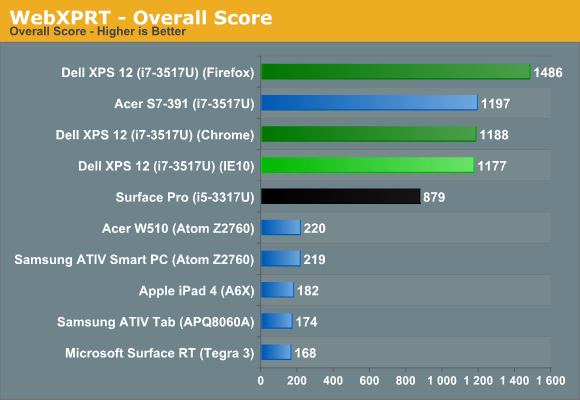
As we’ve noted in the past, while ARM and Atom can run a light OS like Android fine, and even Windows RT works well, that doesn’t mean we have anywhere near the same level of compute available compared to a full Core i5/i7 processor. And it’s not just about the performance shown in the above charts; start copying data to or from one of the Intel Core devices and you’ll notice a stark contrast compared to tablets with their slow eMMC storage and generally inferior WiFi and USB connections. Which is fine, considering the cost of the Surface Pro is the lowest of the Core offerings we’ve tested and still tips the scales at $900.
Intel has two paths going forward, and both are going to be quite interesting. On the one hand, Core gets updated with Haswell in the near future, which should lower power requirements and perhaps close the gap in battery life between Core and ARM/Atom. Whether they can actually close it or merely narrow it is the bigger question, but we’ll wait and see. On the other side of the equation, Atom will get a significant upgrade at the end of this year (or early 2014), and this will be the first time Intel has really put some effort into improving Atom performance. With a new architecture and a process shrink to 22nm, Intel’s codename Merrifield will be their most serious attempt at beating ARM and other SoCs and getting into more smartphones and tablets.
Originally published at https://www.anandtech.com/show/6750/dell-xps-12-review-a-jack-of-all-trades-flipscreen-ultrabook (Wayback Machine).